Indricotherium
The discovery of Indricotherium (also known as Paraceratherium or Baluchitherium) significantly expanded our understanding of mammalian evolution by…
How did the discovery of Indricotherium impact our understanding of mammal evolution?
The discovery of Indricotherium (also known as Paraceratherium or Baluchitherium) significantly expanded our understanding of mammalian evolution by demonstrating the extreme size potential of terrestrial mammals during the Oligocene Epoch and Miocene Epoch.123
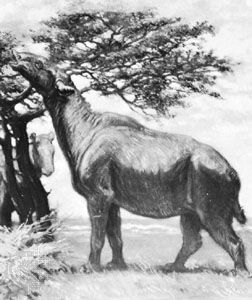
As a giant, hornless perissodactyl, Indricotherium represents the largest land mammal ever to exist, standing approximately 5.5 metres (18 feet) tall at the shoulder and weighing an estimated 30 tons. Its existence highlights the diverse evolutionary paths taken by rhinoceros ancestors, which diverged from early tapiroids to occupy various ecological niches.12
By studying these massive, long-necked browsers, paleontologists have gained insight into the specialized adaptations that allowed certain lineages to thrive in Asian environments millions of years ago. Its discovery underscores the remarkable morphological variety within the rhinoceros family, which includes both these colossal forms and smaller, more familiar relatives.12
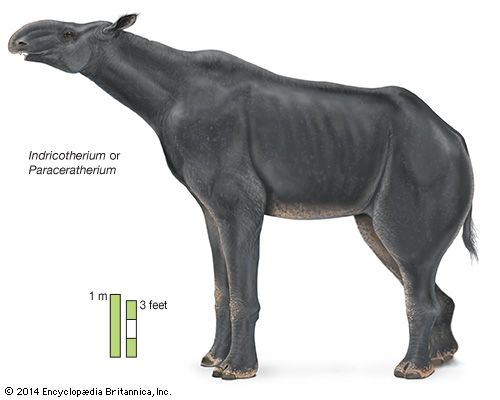
What unique features did Indricotherium have that set it apart from other prehistoric mammals?
Indricotherium possessed several unique physical characteristics that distinguished it from other prehistoric and modern mammals:
- Unmatched Size: It holds the distinction of being the largest land mammal to have ever existed, weighing an estimated 30 tons—more than four times the weight of a modern elephant.1
- Specialized Anatomy: Unlike modern rhinoceroses, which are known for their horns, Indricotherium was hornless. It featured a long neck and relatively long front legs, which allowed it to browse on the leaves and branches of trees, similar to a giraffe.14
- Proportional Features: Despite its massive body, which reached about 5.5 metres (18 feet) at the shoulder, its skull was relatively small in proportion, measuring over 1.2 metres (4 feet) in length.1
- Robust Build: It possessed massive, strongly constructed limbs designed to support its immense weight as it navigated its environment during the Late Oligocene and Early Miocene epochs.1
Are there any living animals that share similar characteristics with Indricotherium?
While no living animal matches the sheer scale of Indricotherium, it shares a biological lineage with modern rhinoceroses. Both belong to the order perissodactyls, a group of hoofed mammals that also includes horses and zebras.14
Indricotherium is considered a giant, hornless relative of the rhinoceros family. While modern rhinoceroses are characterized by their horns and smaller stature—weighing between 3 to 5 tons—they share the same evolutionary ancestry as this extinct giant. Additionally, Indricotherium’s habit of browsing on tree leaves and branches is a behavior more commonly associated today with the giraffe, which utilizes its long neck to reach high foliage, much like the ancient Indricotherium did.14
Despite these connections, the massive size of Indricotherium remains unique in the history of land mammals, far exceeding the dimensions of even the largest living elephants.14
What is Indricotherium and when did it live?
Indricotherium was a genus of giant, hornless perissodactyls that holds the distinction of being the largest land mammal to have ever lived. Related to the modern rhinoceros, this massive creature stood approximately 5.5 metres (18 feet) high at the shoulder and weighed an estimated 30 tons—more than four times the weight of a modern elephant.1
These animals lived during the Late Oligocene and Early Miocene epochs, a period spanning from approximately 30 million to 16.6 million years ago. Fossils of Indricotherium have been discovered in Asian deposits, revealing a creature with a long neck and relatively long front legs, which likely allowed it to browse on the leaves and branches of trees.1
Sources
- Indricotherium — Encyclopædia Britannica
- perissodactyl - Rhinoceroses — Encyclopædia Britannica
- Oligocene Epoch — Encyclopædia Britannica
- rhinoceros — Encyclopædia Britannica
Published on · 3 min read