Innoko River
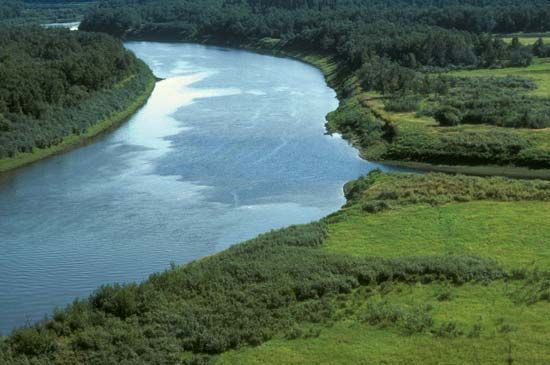
The Innoko River is a major tributary of the Yukon River located in west-central Alaska. While the river flows through the Innoko National Wildlife Refuge…
How does the Innoko River’s flow change seasonally, and what impact does this have on the surrounding area?
The Innoko River is a major tributary of the Yukon River located in west-central Alaska. While the river flows through the Innoko National Wildlife Refuge and its valley remains a largely untouched wilderness, the provided information does not contain specific details regarding its seasonal flow changes or the resulting environmental impacts on the surrounding area.
What is the origin of the name ‘Innoko River’?
The name “Innoko” was first recorded by the Russian explorer Lavrenty Zagoskin during his expedition between 1842 and 1844. It is believed to be derived from a word in the language of the Deg Xinag people, though the specific meaning of the term remains unknown.1
How long is the Innoko River, and what is its significance to the surrounding ecosystem?
The Innoko River spans approximately 500 miles (800 km) in length, flowing from the Kuskokwim Mountains to its confluence with the Yukon River near Holy Cross.1
Regarding its significance to the surrounding ecosystem, the river serves as a vital corridor through the Innoko National Wildlife Refuge. Its valley remains a largely pristine wilderness, providing a protected habitat that supports the region’s natural biodiversity. While the area experienced human activity during the 1907 gold rush, the lack of significant mineral deposits led to the abandonment of most mining camps, allowing the landscape to remain largely undisturbed by industrial development.1
Are there any environmental concerns or conservation efforts associated with the Innoko River?
The provided search results do not contain specific information regarding current environmental concerns or active conservation efforts for the Innoko River, other than noting that the river flows through the Innoko National Wildlife Refuge. This designation serves to protect the valley as a largely pristine wilderness area. While historical gold mining occurred in the region during the early 20th century, the lack of significant mineral deposits led to the abandonment of most settlements, allowing the landscape to remain largely undisturbed by industrial development.1
Sources
- Innoko River — Encyclopædia Britannica
- Yukon River - Physiography and hydrology — Encyclopædia Britannica
- Yukon–Charley Rivers National Preserve — Encyclopædia Britannica
Published on · 1 min read