Is It True That Squirrels Forget Where They Bury About Half of Their Food?
It is not entirely accurate to claim that squirrels forget half of their buried food. While it is certain that squirrels do not recover every nut they cache…
Is It True That Squirrels Forget Where They Bury About Half of Their Food?
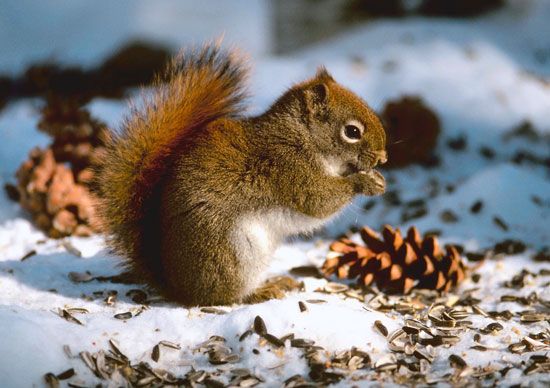
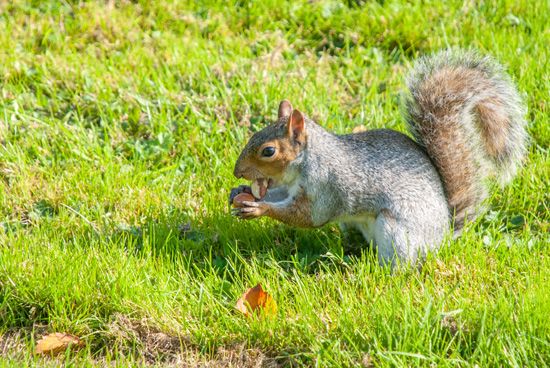
It is not entirely accurate to claim that squirrels forget half of their buried food. While it is certain that squirrels do not recover every nut they cache, it remains unclear whether these instances are due to genuine forgetfulness or a strategic choice to abandon certain stashes in favor of more accessible food sources.1
Rather than acting randomly, squirrels employ organized storage strategies. Some species use a single cache, while others distribute nuts across multiple locations. Research suggests squirrels utilize “spatial chunking,” a method where they group specific types of nuts together. This systematic approach, such as burying acorns of the same species in proximity, likely assists them in recalling cache locations.1
Ultimately, while some forgotten nuts may inadvertently contribute to the growth of new trees, the squirrels’ behavior appears to be a calculated effort to manage their food supply efficiently.1
How do forgotten nuts help the environment grow?
Forgotten nuts and acorns contribute to the environment by acting as a form of seed dispersal, specifically through a process known as synzoochory, where animals intentionally transport and cache seeds. When squirrels bury these nuts as part of their food storage strategy, they effectively plant them in the soil.12
If a squirrel does not return to retrieve a specific cache—whether due to forgetfulness or because it has abandoned the stash for more accessible food—the buried nut remains in the ground. Under the right conditions, these forgotten seeds can germinate and grow into new trees, thereby facilitating the expansion and regeneration of plant populations. This interaction highlights how the foraging behaviors of animals can have significant ecological benefits by helping plants colonize new areas.13
What is spatial chunking in animal behavior?
In the context of animal behavior, spatial chunking is a sophisticated cognitive strategy used by some species to organize and retrieve stored food. Rather than burying items randomly, animals that employ this method categorize their caches based on specific attributes, such as the type of food being stored.1
For example, research on fox squirrels has demonstrated their ability to sort different varieties of nuts and bury them in distinct, organized locations. By placing nuts of the same species in close proximity to one another—while keeping different types of nuts in separate, distant caches—the squirrels create a structured map of their food supply. This systematic approach is believed to reduce the cognitive load required to recall cache locations, making it easier for the animal to recover its food efficiently throughout the season.1
How do squirrels protect their food from other animals?
To protect their food from other animals, squirrels employ strategic caching behaviors rather than relying on a single, vulnerable location. While some species choose to store their food in one central cache, this approach carries the significant risk of losing the entire supply if another animal discovers it.1
To mitigate this risk, many squirrels utilize a strategy of scattering their caches across a wide area. By burying nuts and acorns in multiple, separate spots, they ensure that the theft or discovery of one cache does not result in the loss of their entire winter food supply. To manage these numerous locations, squirrels often use “spatial chunking,” an organized method where they group specific types of nuts together in distinct areas. This systematic planning not only helps the squirrels remember their own caches but also serves as a protective measure by diversifying the location of their resources.1
Sources
- Is It True That Squirrels Forget Where They Bury About Half of Their Food? — Encyclopædia Britannica
- Seed - Agents of dispersal — Encyclopædia Britannica
- Seed - Dispersal by animals — Encyclopædia Britannica
- What do squirrels eat? — Encyclopædia Britannica
Published on · 3 min read