Why Are Elephants’ Ears So Big?
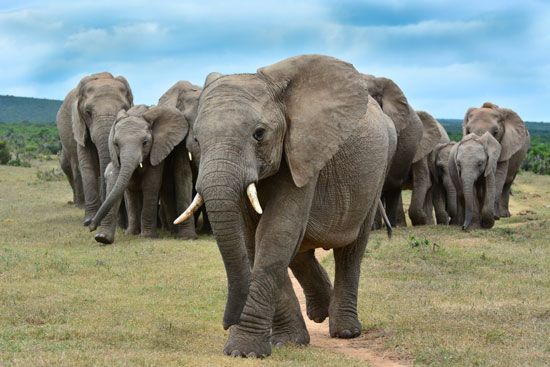
An elephant’s large ears serve several vital functions, with thermoregulation being the primary purpose.
Why Are Elephants’ Ears So Big?
An elephant’s large ears serve several vital functions, with thermoregulation being the primary purpose.1
Because elephants live in warm climates, they must manage their body temperature by transferring excess heat to the environment. The ears contain a network of blood vessels near the surface of the skin; when the elephant flaps its ears, it facilitates forced convection, allowing this heat to escape.1
Beyond temperature control, the large external structure of the ear helps the animal hear by directing sounds toward the inner ear. Furthermore, ears are used for communication; for instance, an elephant may spread its ears wide to appear larger and intimidate potential threats.1
How do African and Asian elephants’ ears differ in size?
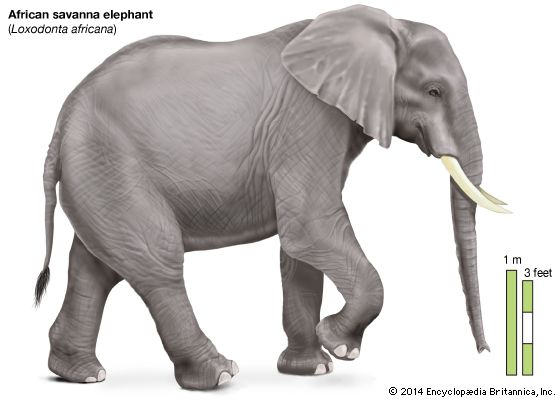
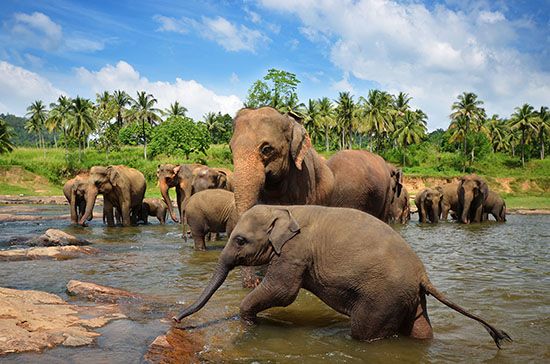
The most straightforward way to distinguish between African and Asian elephants is by examining their ears, which differ significantly in size and shape.2
- African Elephants: These elephants possess much larger ears that are often described as being shaped like the continent of Africa. Because they inhabit hotter climates, they require these larger surface areas to dissipate more body heat through thermoregulation.21
- Asian Elephants: These elephants have noticeably smaller, rounded ears.23
Beyond size, the two groups can be further identified by their head shapes: African elephants have rounded heads, whereas Asian elephants have a twin-domed head characterized by a distinct divot line running up the center. Additionally, while both male and female African elephants can grow tusks, only male Asian elephants typically develop them.23
What other physical traits help elephants survive in hot climates?
Beyond their ears, elephants utilize several other physical traits and behaviors to survive in hot climates:
- Trunk Usage: Elephants use their trunks to spray water, mud, and dust onto their bodies. This layer provides protection against the sun and helps them stay cool through evaporation.1
- Pharyngeal Pouch: Located near the larynx, this structure is believed to assist in carrying water for self-spraying and may also aid in heat absorption, particularly for the sensitive area around the brain.4
- Sweat Glands: While elephants lack large concentrations of sweat glands across their bodies, they do possess a few in their feet, which provide a minor contribution to cooling.5
- Behavioral Adaptations: Elephants actively seek out water holes to bathe in water or mud, which is a critical behavior for managing body temperature in high-heat environments.54
How do elephants use their trunks to communicate?
The elephant trunk is a vital tool for communication, serving both as a sensory organ and a means of social interaction.
- Social Interaction: When elephants meet, they often engage in physical contact by touching each other’s faces or intertwining their trunks. This “trunk-shake” is comparable to a human handshake, serving as a gesture of greeting, assurance, or a way to assess the strength of another individual.4
- Sound Production: Elephants use their trunks to modify the size of their nostrils as air passes through, allowing them to produce a wide range of vocalizations. These include low-frequency sounds like growls and roars, as well as high-frequency sounds such as trumpets and barks. Additionally, elephants can create sounds by beating their trunks against hard surfaces, trees, or even their own tusks.86
- Threat Displays: In situations of conflict or perceived danger, elephants may use their trunks to throw objects or swivel them in the air like an “olfactory periscope” to sniff for information about their surroundings.84
Sources
- Why Are Elephants’ Ears So Big? — Encyclopædia Britannica
- What’s the Difference Between Asian and African Elephants? — Encyclopædia Britannica
- Asian elephant: Top Questions — Encyclopædia Britannica
- What are elephant trunks used for? — Encyclopædia Britannica
- African bush elephant — Encyclopædia Britannica
- elephant - Sound production and water storage — Encyclopædia Britannica
- Thermoreception - Behaviour and thermoregulation — Encyclopædia Britannica
- elephant - The trunk (proboscis) — Encyclopædia Britannica
Published on · 3 min read