How Do Monkeys and Apes Trim Their Fingernails?
Monkeys and apes do not have a single, universal method for maintaining their nails. Because these primates lack access to standard grooming tools, they rely…
How Do Monkeys and Apes Trim Their Fingernails?
Monkeys and apes do not have a single, universal method for maintaining their nails. Because these primates lack access to standard grooming tools, they rely on a combination of natural wear and personal habits to keep their nails from becoming too long, which could otherwise impede their fine motor skills or grooming abilities.1
Common methods include:
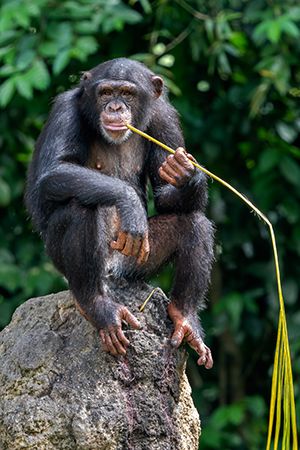
- Biting: Many primates, such as chimpanzees, have been observed biting their nails down.1
- Natural Wear: Daily activities—including climbing trees, harvesting food, and engaging in social conflicts—frequently cause nails to break or wear down naturally.1
- Passive Maintenance: Some individuals simply allow their nails to grow until they break off on their own. There is significant variation in preference; some primates appear content to let their nails grow long, despite the potential impact on their dexterity.1
In captivity, some primates have even been observed using human tools like nail files.1
What is the difference between primate nails and claws?
The primary difference between primate nails and the claws found on most other mammals lies in their shape, function, and evolutionary purpose. While most mammals possess claws or hooves, primates are characterized by having flat nails on their fingers and toes, though some primate species retain claws on certain digits alongside a flat nail on the big toe (hallux).14
Functional Differences
- Claws: These are typically pointed and curved, making them highly effective for specialized tasks such as digging, gouging, scratching into tree bark, and climbing.12
- Nails: The development of flattened nail plates is thought to reflect a shift away from digging and defensive combat. Instead, nails serve as protective barriers for the sensitive skin at the fingertips and provide the necessary firmness to perform fine motor movements. They are essential for picking up small objects and maintaining a precise grip, tasks for which claws would be largely ineffective.12
Both structures are composed of keratin, but nails grow continuously and require regular wear or maintenance to prevent them from becoming too long, which would otherwise impede a primate’s dexterity and grooming abilities.12
How do primates use their hands for tool use and grooming?
Primates utilize their hands for a sophisticated range of activities, primarily driven by the evolution of the opposable thumb, which enables both power and precision grips.5
Tool Use
Primates, particularly chimpanzees, demonstrate advanced tool use that is often transmitted through social learning. Their manual dexterity allows them to:6
- Extract Food: They use probes made of grass, vines, or sticks to “fish” for termites and ants.6
- Process Resources: They employ stones, roots, and wood as hammers and anvils to crack open hard nuts.6
- Hygiene and Utility: Chimpanzees use “leafy sponges” to drink water and leaves to wipe their mouths or other body parts.6
- Strategic Combinations: They often use tools in succession or as “tool sets,” such as using a stout stick to dig into a mound before using a slender wand to extract insects.6
Grooming
Grooming is a vital social behavior that reinforces bonds and hierarchies. Because primates have flat nails rather than claws, their hands are uniquely suited for the delicate work of picking insects, dirt, or debris from a companion’s fur. This fine motor control is essential for maintaining hygiene and social cohesion within their communities.78
Why are nails considered an important evolutionary trait for primates?
Nails are considered a significant evolutionary trait for primates because they represent a functional shift away from the specialized requirements of digging, gouging, and defensive combat associated with claws or hooves.110
The development of flattened nail plates provides several key advantages:
- Enhanced Dexterity: Nails provide a firm backing for the sensitive skin at the fingertips, which is essential for performing fine motor movements and manipulating small objects.110
- Tactile Sensitivity: By protecting the vulnerable tips of the fingers and toes, nails allow primates to utilize specialized nerve endings, such as Meissner’s corpuscles, to increase tactile sensitivity, which is vital for navigating arboreal environments.42
- Grooming Efficiency: Unlike claws, which can impede the ability to pick off insects or debris, flat nails facilitate the delicate grooming behaviors necessary for maintaining hygiene and social cohesion within primate groups.110
Ultimately, the transition to nails reflects an evolutionary adaptation that prioritized manual precision and tactile feedback, supporting the complex manipulative skills that characterize the primate order.1011
Sources
- How Do Monkeys and Apes Trim Their Fingernails? — Encyclopædia Britannica
- human skin - Nails — Encyclopædia Britannica
- monkey — Encyclopædia Britannica
- primate — Encyclopædia Britannica
- primate - Hands and feet — Encyclopædia Britannica
- chimpanzee - Intelligence — Encyclopædia Britannica
- human evolution - Refinements in hand structure — Encyclopædia Britannica
- human muscle system - Changes in the muscles of the upper limb — Encyclopædia Britannica
- chimpanzee - Social behaviour — Encyclopædia Britannica
- Tertiary Period - Primates — Encyclopædia Britannica
- hand — Encyclopædia Britannica
Published on · 3 min read