Squirrel
There are 272 recognized species of squirrels belonging to the family Sciuridae, which are organized into 51 genera and found worldwide in virtually any…
How many species of squirrels exist, and where are they found around the world?
There are 272 recognized species of squirrels belonging to the family Sciuridae, which are organized into 51 genera and found worldwide in virtually any environment with vegetation.1
These rodents are categorized into two primary subfamilies:
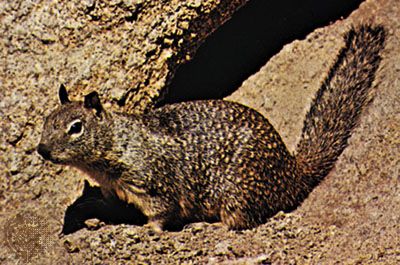
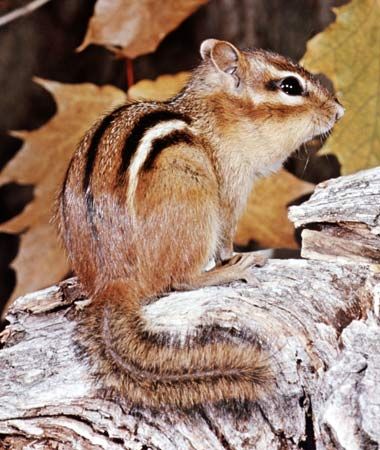
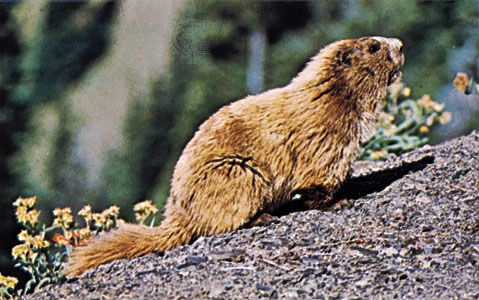
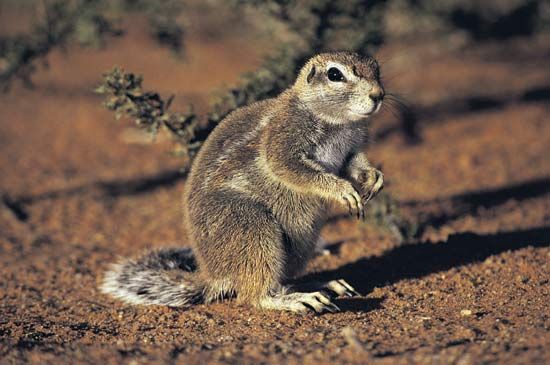
- Subfamily Sciurinae: This group includes 230 species across 36 genera, encompassing tree squirrels (122 species), ground squirrels (62 species), chipmunks (25 species), marmots (14 species), prairie dogs (5 species), and Asian rock squirrels (2 species).1
- Subfamily Pteromyinae: This subfamily consists of 42 species of flying squirrels distributed across 15 genera.1
Squirrels inhabit a vast range of global regions, from the boreal forests of North America and Eurasia to the tropical rainforests of South America, Africa, and Southeast Asia. While they are widespread, they do not occur naturally east of the Philippines and Sulawesi. Most species, particularly those in the tree squirrel category, are concentrated in tropical rainforests.1
What unique adaptations do squirrels have for their arboreal lifestyle?
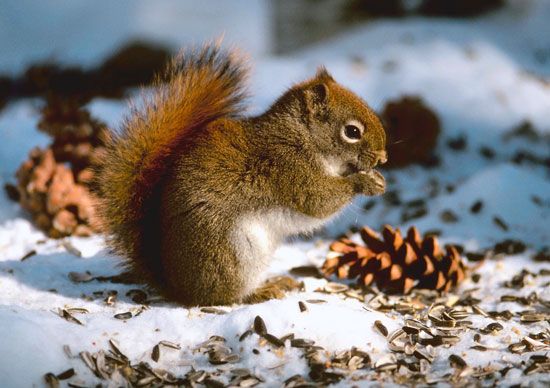
Tree squirrels possess a suite of specialized physical adaptations that enable their agile, arboreal lifestyle:
- Claws and Feet: They are equipped with large, strong, curved, and very sharp claws that allow them to navigate vertical surfaces and slim branches with ease. Their feet feature bald soles with prominent, fleshy pads, and their forefeet include four long digits plus a short, stubby thumb.3
- Flexible Anatomy: Their ankle joints are highly flexible and capable of rotation, a critical adaptation that enables them to descend trees headfirst with their hind feet splayed flat against the trunk.3
- Body Structure: Generally, tree squirrels have slender, lanky bodies and long, muscular limbs that support their climbing and leaping abilities.3
- Locomotion: When climbing, they use an alternate gait sequence of forelegs and hind legs, essentially hopping up trees. When descending, they maintain a similar gait but move head-downward.13
- Sensory and Balance Features: Their large, bright eyes provide an alert demeanor, while their broad, short heads taper to muzzles adorned with long whiskers for sensory input. Their long, bushy tails serve as essential tools for balance as they navigate the canopy.3
How have squirrels adapted to urban environments, and what challenges do they face?
Squirrels, as rodents, are well-suited to urban environments because they are generalists capable of surviving across a wide range of environmental conditions. Unlike specialist species that require specific habitats, squirrels thrive in cities due to their ability to exploit the resources and structural similarities provided by human infrastructure, such as landscaping and food subsidies from human activity.6
However, urban life presents significant challenges:
- Habitat Fragmentation: The conversion of natural areas into residential and industrial zones fragments ecosystems into smaller patches. This creates “edge habitats” that are often suboptimal for many species.6
- Environmental Stressors: Urban areas are characterized by higher levels of pollution, including heavy metals and human-made organic compounds. Cities also experience higher temperatures and altered water runoff patterns compared to natural environments.6
- Noise and Disturbance: Increased noise levels from transportation corridors can interfere with communication, forcing some urban animals to adapt their behaviors, such as altering the pitch or volume of their vocalizations to be heard.6
- Genetic Differentiation: Over time, urban populations may show evidence of genetic divergence from their rural counterparts as they adapt to these modified landscapes.6
We could dive deeper into how specific urban wildlife management strategies aim to mitigate these habitat challenges.
What is the evolutionary history of squirrels within the larger rodent family?
Squirrels belong to the family Sciuridae, which is part of the order Rodentia and the suborder Sciuromorpha (squirrel-like rodents).17
The evolutionary history of the family Sciuridae is documented by the fossil record, which traces tree squirrels back to the Late Eocene Epoch (approximately 41.3 to 33.7 million years ago) in North America. By the Miocene Epoch (23.8 to 5.3 million years ago), these rodents had established a presence in Africa and Eurasia.1
Within the family Sciuridae, there are two primary subfamilies: Sciurinae and Pteromyinae (flying squirrels). While some earlier researchers speculated that flying squirrels might have evolved from different ancestral groups, current evidence from fossils and anatomical studies suggests that all living flying squirrel species are closely related and likely evolved from a tree squirrel ancestor during the Oligocene Epoch (33.9 to 23 million years ago).18
The broader order Rodentia itself dates back to the Late Paleocene Epoch, with origins likely in Eurasia. Understanding the precise relationships between rodent families remains a subject of ongoing scientific study, involving the analysis of DNA, comparative anatomy, and new fossil discoveries.7
Sources
- squirrel — Encyclopædia Britannica
- ground squirrel — Encyclopædia Britannica
- What do squirrels eat? — Encyclopædia Britannica
- rodent - Form and function — Encyclopædia Britannica
- Locomotion - Climbing birds and mammals — Encyclopædia Britannica
- Urban ecosystem - The structure of urban ecosystems — Encyclopædia Britannica
- rodent - Evolution and classification — Encyclopædia Britannica
- list of rodents — Encyclopædia Britannica
- flying squirrel — Encyclopædia Britannica
- tree squirrel — Merriam-Webster
Published on · 4 min read