Island Lake
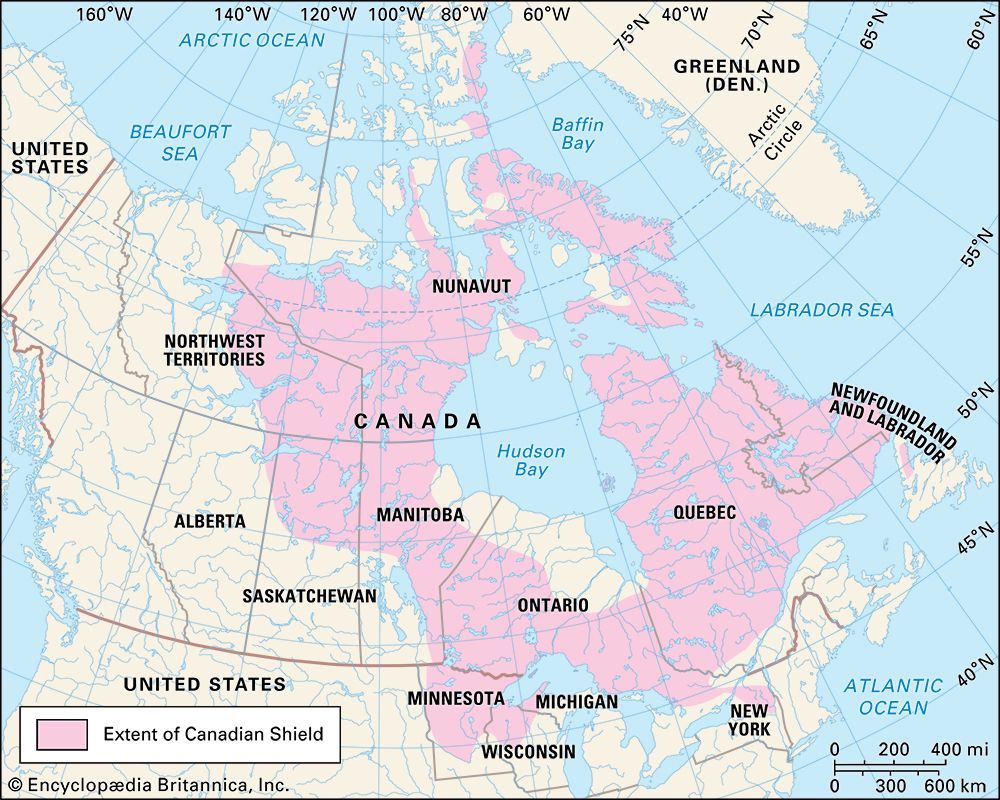
Island Lake is a lake located in east-central Manitoba, Canada, situated near the Ontario border. Spanning 55 miles (88 km) in length and 20 miles (32 km) in…
What is Island Lake?
Island Lake is a lake located in east-central Manitoba, Canada, situated near the Ontario border. Spanning 55 miles (88 km) in length and 20 miles (32 km) in width, it covers an area of 472 square miles (1,222 square km). The lake is part of the Hudson Bay drainage system, fed by several rivers and draining northward into Goose Lake via the Island Lake River.1
Characterized by a deeply indented shoreline, the lake features numerous islands, including Jubilee, Confederation, and Loon Foot. The area has a history of human activity, notably the establishment of a Hudson’s Bay Company post in 1824 and the discovery of gold in the 1920s. Today, the settlement of Island Lake is located on the northern shore.1
How do lakes form in the Canadian Shield?
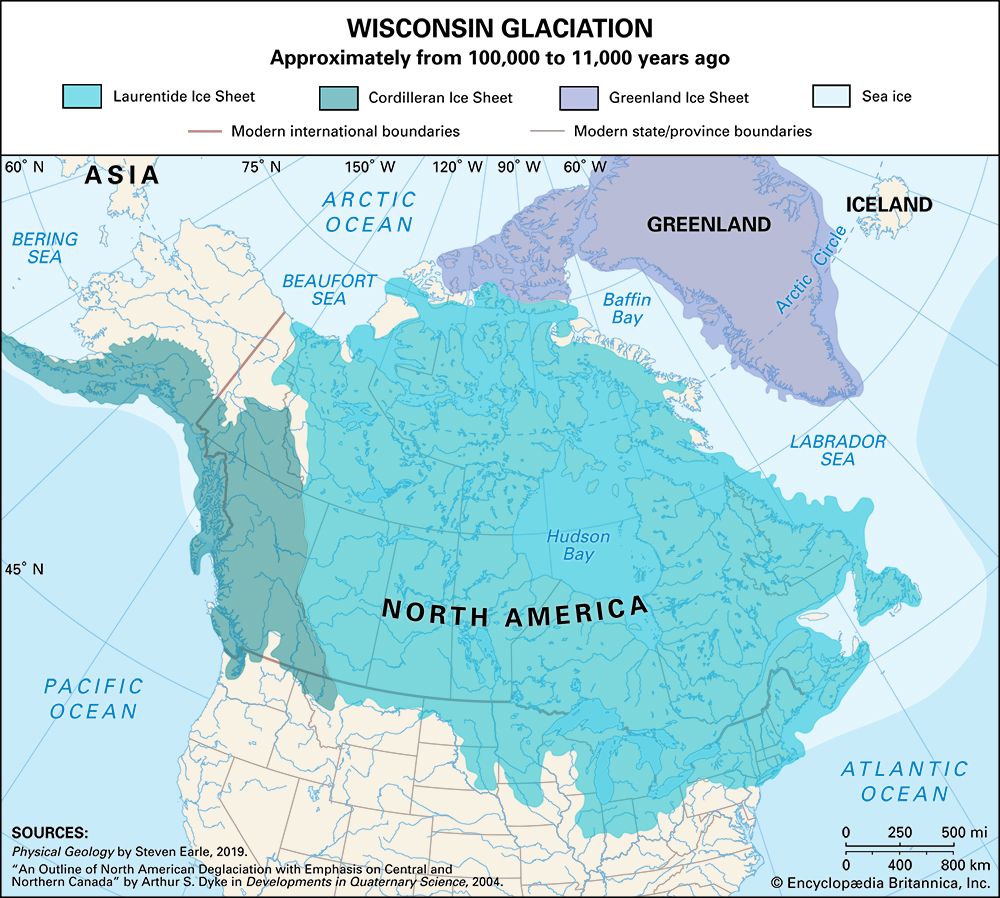
The formation of lakes in the Canadian Shield is primarily the result of glaciation during the Pleistocene Epoch.345
As vast continental glaciers moved across the region, they scraped the land bare, removing weathered rock and creating irregular basins and rocky, ice-smoothed hills. When the climate warmed and these massive ice sheets retreated, large deposits of remnant ice were left behind in these depressions. As this ice melted, it filled the basins, creating a vast, complex network of hundreds of thousands of lakes and swamps that are often interconnected by rivers and streams.345
In many areas, this process resulted in an “amphibious landscape” where standing water covers a significant portion of the surface. These basins are often shallow and may contain numerous islands and bays, characteristic of the ice-scoured terrain found throughout the shield.65
What role did the Hudson’s Bay Company play in Canadian history?
The Hudson’s Bay Company (HBC) played a foundational role in Canadian history, serving as both a dominant economic force and a political authority for two centuries. Incorporated in 1670, the company was granted proprietary control over Rupert’s Land—a vast territory spanning from Labrador to the Rocky Mountains—to manage the fur trade.78
The company’s influence was profound:
- Colonial Governance: It maintained political control over Rupert’s Land until 1870, acting as the de facto government for much of what is now Canada.8
- Economic Expansion: Through its network of trading posts, the HBC facilitated commerce with Indigenous peoples, including the Cree, Innu, and Inuit, while competing fiercely with the North West Company until their 1821 merger.78
- Territorial Integration: In 1870, the company sold its remaining territories to the Canadian government, a pivotal step in the formation of the modern Dominion of Canada.79
What are the environmental impacts of gold mining near lakes?
Gold mining near lakes poses significant environmental risks, primarily through the contamination of water and the physical destruction of landscapes. A common method, cyanide leach mining, is frequently associated with large-scale water pollution and the creation of massive open-pit scars on the land. The scale of this impact is substantial, as the production of just one ounce of gold can generate 79 tons of mine waste.10
A critical concern regarding mining operations is the release of toxic substances, such as mercury, into aquatic ecosystems. Once in the water, mercury can be converted by bacteria in muddy sediments into organic mercurials, which are then concentrated by fish and other aquatic life. This process poses severe health risks to humans and wildlife that consume these contaminated organisms, as seen in cases of mercury poisoning. Furthermore, mining activities often lead to the destruction of forests and the poisoning of rivers, which can have devastating consequences for local ecosystems and Indigenous communities.111210
Sources
- Island Lake — Encyclopædia Britannica
- list of lakes - North America — Encyclopædia Britannica
- Canadian Shield: Top Questions — Encyclopædia Britannica
- Canadian Shield — Encyclopædia Britannica
- lake - Basins formed by glaciation — Encyclopædia Britannica
- North America - Lakes of North America — Encyclopædia Britannica
- Hudson’s Bay Company — Encyclopædia Britannica
- Rupert’s Land — Encyclopædia Britannica
- Native American - Subarctic and Arctic peoples — Encyclopædia Britannica
- lake - Economy and ecology — Encyclopædia Britannica
- mercury poisoning — Encyclopædia Britannica
- Gold standard - Con 3: A gold standard and gold mining harm the environment and Indigenous communities. — Encyclopædia Britannica
- zinc group element — Encyclopædia Britannica
- Ontario - Environmental concerns — Encyclopædia Britannica
Published on · 3 min read