Hudson Bay
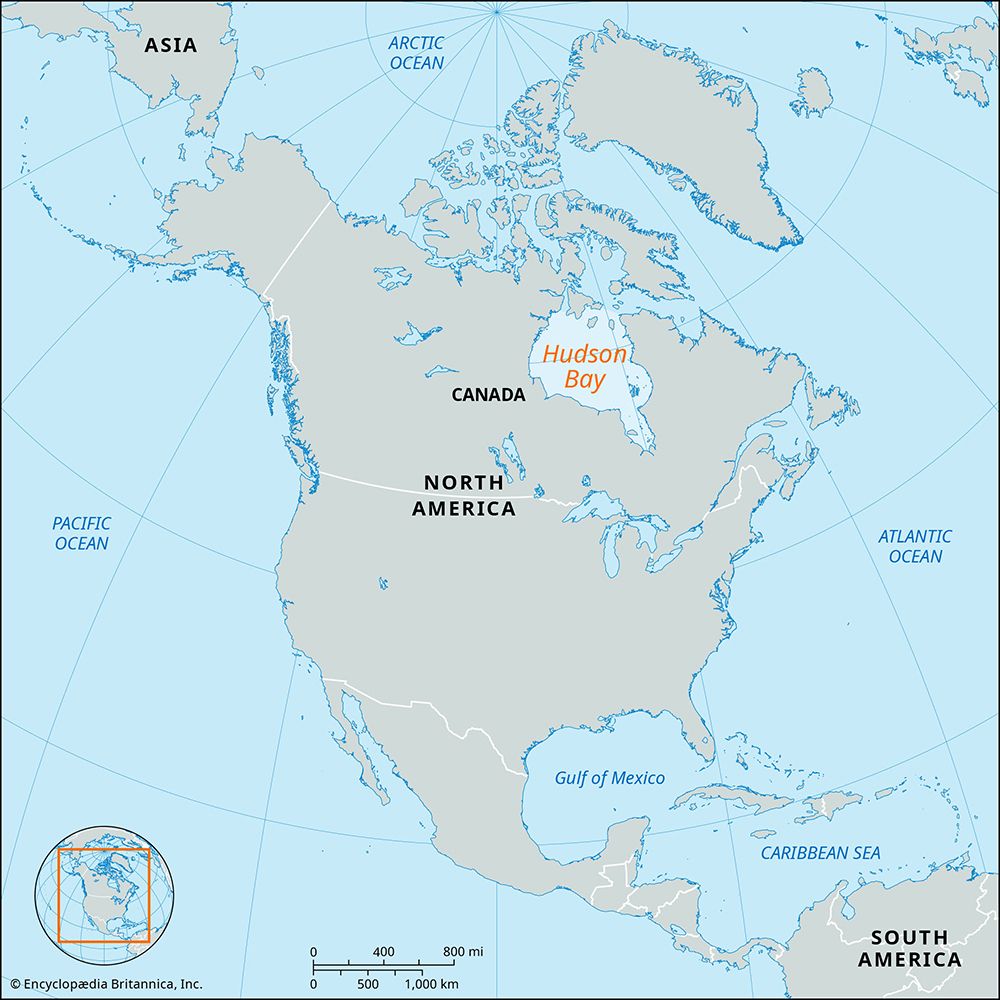
Hudson Bay is a vast inland sea located in east-central Canada. Covering an area of approximately 316,000 square miles (819,000 square km), it is bounded by…
What is Hudson Bay and where is it located in Canada?
Hudson Bay is a vast inland sea located in east-central Canada. Covering an area of approximately 316,000 square miles (819,000 square km), it is bounded by the territory of Nunavut to the north and west, Manitoba and Ontario to the south, and Quebec to the east.1
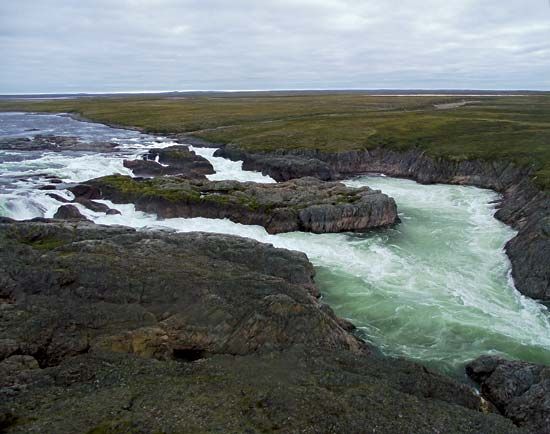
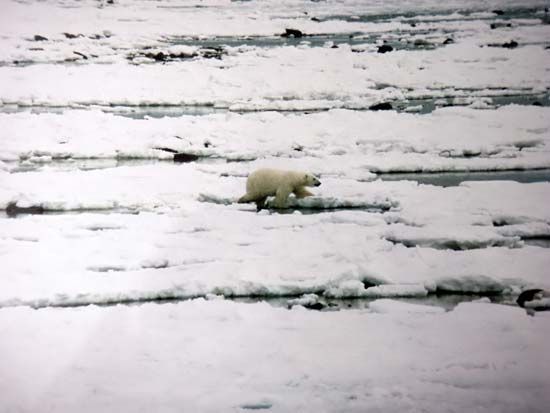
The bay connects to the Atlantic Ocean via the Hudson Strait and to the Arctic Ocean through the Foxe Channel. Named after the explorer Henry Hudson, who reached the area in 1610 while searching for a Northwest Passage, the region is characterized by a severe continental climate and a shallow, smooth floor. Its coastal environment features permafrost, marshy lowlands, and rocky cliffs, supporting diverse wildlife including seals, polar bears, and various migratory birds.1
How does Hudson Bay influence the climate of the surrounding region?
Hudson Bay exerts a significant influence on the climate of the surrounding region, primarily through its role in heat exchange and the presence of sea ice. The bay is characterized by a severe continental climate, with temperatures ranging from extreme winter lows of −60 °F (−51 °C) to summer highs of 80 °F (27 °C).2
The bay’s influence on the atmosphere is driven by several key processes:
- Thermal Regulation: During winter, the bay acts as a source of heat and moisture when open water is exposed. Significant turbulent heat and mass transfer occur from leads and polynyas (openings in the ice) to the atmosphere, which can affect weather processes hundreds of kilometers downstream.4
- Ice-Albedo Feedback: The presence of ice significantly alters the surface albedo. Snow-covered ice reflects a large portion of solar radiation, keeping the surface cool. Conversely, as ice melts in the summer, the resulting open water and meltwater ponds absorb more solar energy, which accelerates further melting and influences regional temperatures.4
- Atmospheric Patterns: The region is dominated by polar continental air masses, especially in winter. The bay’s transition from a frozen state to open water contributes to frequent fogs in the spring and autumn, while the clearing of ice later in the season influences the onset of winter weather patterns.52
How deep is Hudson Bay, and how does its depth compare to other bodies of water?
Hudson Bay is characterized by a shallow and relatively smooth floor. It has an average depth of 330 feet (100 meters) and reaches a maximum depth of approximately 900 feet (270 meters).2
When compared to other nearby bodies of water, such as Ungava Bay, Hudson Bay is generally shallower. Ungava Bay, located off the Hudson Strait, has a maximum depth of 978 feet (298 meters), making it deeper than the deepest recorded point in Hudson Bay.8
What indigenous communities have lived around Hudson Bay, and how has the bay influenced their cultures?
The Inuit, Cree, and Innu are the primary Indigenous peoples who have historically inhabited the regions surrounding Hudson Bay. These communities have long adapted their lifestyles to the bay’s severe continental climate and rich ecosystem, relying on the land and water for their livelihood.29
Cultural Influence and Adaptation
The bay has profoundly shaped the cultures of these groups through its seasonal cycles and resources:
- Subsistence and Seasonal Cycles: Indigenous groups traditionally followed seasonal patterns, moving to shorelines to hunt migratory birds like ducks and geese for winter supplies or gathering at lakes and bays to fish. The bay provided essential resources, including fish, seals, and other marine mammals, which were central to their survival.102
- Trade and Colonial Interaction: The arrival of the Hudson’s Bay Company in the 17th century introduced a new economic dynamic. Indigenous groups, particularly the Cree, Innu, and Inuit, engaged in the fur trade, often playing colonial powers against one another to secure advantageous terms.9
- Community and Kinship: The establishment of trading posts led to the emergence of “Home Guard” bands. These communities often formed close relationships with company employees, leading to intermarriage and new forms of kinship. Over time, many families adopted a two-part annual cycle: trapping on their lines during winter and gathering at trading posts during the summer for social interaction, marriages, and community events.910
- Modern Cultural Preservation: Despite modern influences, traditional elements remain vital. Public policy and initiatives have helped promote Inuit art—such as stone carvings and prints—which serves as both a source of income and a means of sharing their cultural heritage with the world.11
Sources
- Hudson Bay — Merriam-Webster
- Hudson Bay — Encyclopædia Britannica
- Hayes River — Encyclopædia Britannica
- Nunavut - Climate — Encyclopædia Britannica
- North America - The cool temperate zone — Encyclopædia Britannica
- sea ice - Interactions with the oceans , atmosphere , and climate — Encyclopædia Britannica
- Hudson Bay Lowland — Encyclopædia Britannica
- Ungava Bay — Encyclopædia Britannica
- Native American - Subarctic and Arctic peoples — Encyclopædia Britannica
- Nunavut - Cultural life — Encyclopædia Britannica
- American Subarctic peoples - Settlement and housing — Encyclopædia Britannica
Published on · 3 min read