Koko Nor
The provided search results do not contain specific information regarding the religious or cultural importance of Koko Nor lake to local populations, such as…
What is the cultural and religious importance of Koko Nor lake to the local populations?
The provided search results do not contain specific information regarding the religious or cultural importance of Koko Nor lake to local populations, such as rituals, sacred status, or specific spiritual practices associated with the water itself.
The available documentation notes that the region around the lake has been a historical crossroads for various groups, including Tibetans, Mongols, Han, and Hui, and that it served as a meeting point for traders and Buddhist pilgrims traveling between Lhasa and Chang’an during the Tang dynasty. Additionally, the area is the birthplace of Tsong-kha-pa, the founder of the Dge-lugs-pa (Yellow Hat) sect of Tibetan Buddhism, though the text does not explicitly link this to the lake’s own cultural or religious significance. Today, the lake is primarily recognized as a major tourist destination known for its natural setting and migratory birdlife.
How does Koko Nor lake compare to other large lakes in China?
Koko Nor, located in Qinghai province, is distinct among China’s major lakes due to its status as a large, high-altitude mountain lake situated in an internal drainage basin. Unlike many of China’s prominent freshwater lakes—such as Dongting Lake and Lake Poyang, which are connected to the Yangtze River and help regulate its flow—Koko Nor lacks a river outlet.14
Key comparisons include:
- Hydrology and Salinity: While lakes integrated into river systems are typically freshwater, Koko Nor is brackish, containing salt (sodium chloride) because it is an endorheic (internal drainage) lake.14
- Origin: Many of China’s lakes were formed by different geological processes. For instance, Lake Jingpo was created by a lava dam, whereas Koko Nor originated in a tectonic depression and was later shaped by ancient glacial meltwater.14
- Environment: Situated at approximately 10,500 feet (3,200 meters) above sea level, Koko Nor exists in a much more arid, high-altitude environment compared to the dense, water-rich networks found in the Yangtze or Pearl River basins.15
How does the elevation of Koko Nor lake affect its climate and surroundings?
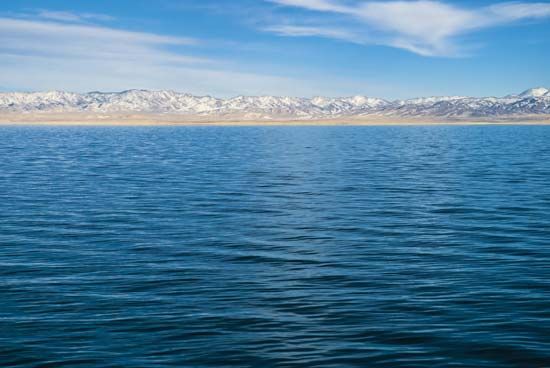
The high elevation of Koko Nor, situated at approximately 10,500 feet (3,200 meters) above sea level, is a primary driver of its distinct climate and surrounding environment.1
Climate Impacts
The lake’s altitude and its location within a mountain depression contribute to a comparatively dry, continental climate. This elevation influences seasonal temperature and precipitation patterns:1
- Temperature: The region experiences long, cold, and windy winters, during which the lake surface freezes from November to March, with ice reaching up to 2 feet (60 cm) in thickness. In contrast, summers are short and warm, with lake water temperatures reaching 64–68 °F (18–20 °C).1
- Precipitation: The surrounding mountain ranges act as barriers to maritime winds, resulting in limited annual precipitation, which ranges from 10 to 20 inches (250 to 500 mm) depending on the specific shore or mountain slope. The majority of this moisture—over 70 percent—falls during the summer months of July and August.16
Environmental Surroundings
The elevation supports a unique high-altitude ecosystem:
- Vegetation: The area features luxuriant steppe grasses, such as wormwood and derris, which provide high-quality grazing land for the livestock of local nomadic populations. Fir forests are found in the higher mountain regions.1
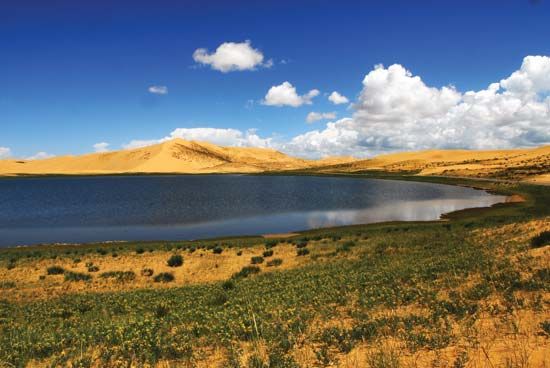
- Topography: The lake is bordered by the South Qinghai Mountains, which feature distinct, continually snowcapped peaks. The high-altitude environment also hosts diverse wildlife, including blue sheep, wolves, and various migratory birds.1
Where is Koko Nor lake located in China, and what is its significance?
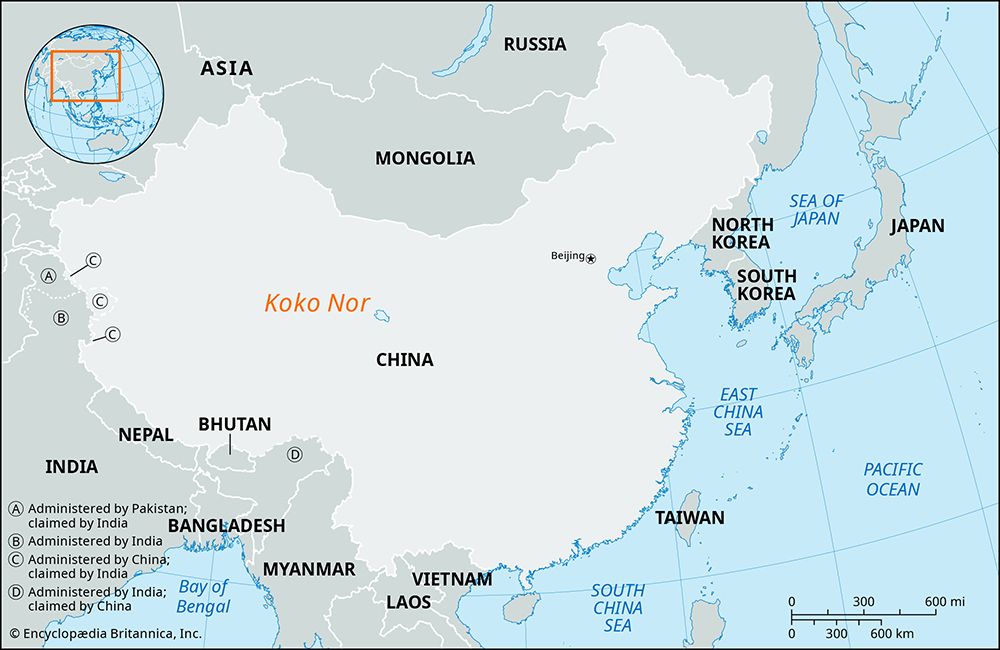
Koko Nor, whose name is derived from Mongolian words meaning “blue lake,” is located in Qinghai province in west-central China. Situated within a depression of the Qilian Mountains at an elevation of approximately 10,500 feet (3,200 meters), it is the largest mountain lake in Central Asia that lacks a river outlet.1
The lake holds significant geographical and ecological importance:
- Geological History: The Koko Nor depression formed roughly 2.5 million years ago. Originally draining into the Machu River, the lake became isolated due to mountain uplift, eventually forming a large, deep body of water from ancient glacial meltwater during the Pleistocene Epoch.1
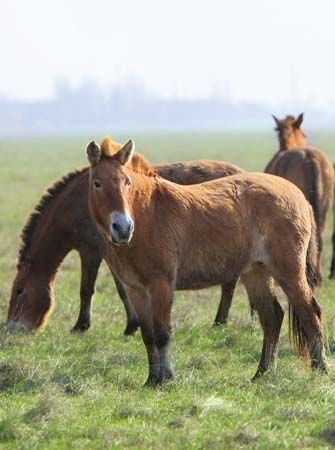
- Biodiversity: The surrounding region supports diverse wildlife, including the Przewalski’s horse, blue sheep, and various migratory birds. The area is also known for Bird Island and gained international attention in the early 21st century following an outbreak of avian influenza.1
- Cultural Significance: The basin is home to diverse populations, including Han, Tibetans, Mongols, and Hui, many of whom are nomads who utilize the area’s luxuriant steppe grasses for grazing livestock.1
Sources
- Koko Nor — Encyclopædia Britannica
- Qinghai - Cultural life — Encyclopædia Britannica
- Qinghai - History of Qinghai — Encyclopædia Britannica
- Asia - Lakes of Asia — Encyclopædia Britannica
- China - Drainage — Encyclopædia Britannica
- Qinghai - Land — Encyclopædia Britannica
Published on · 3 min read