Isthmus of Tehuantepec
The Isthmus of Tehuantepec has been a significant region for Mexico’s energy sector since the early 20th century, when foreign investors began exploiting…
How has the Isthmus of Tehuantepec played a role in Mexico’s energy sector?
The Isthmus of Tehuantepec has been a significant region for Mexico’s energy sector since the early 20th century, when foreign investors began exploiting petroleum fields in the area shortly after the first commercial discoveries near Tampico.1
Following the nationalization of the oil industry in 1938 and the creation of Petróleos Mexicanos (Pemex), the isthmus remained a key site for infrastructure and production. The region hosts critical energy facilities, including a major oil refinery located at Salina Cruz, which serves as a terminus for the railroad crossing the isthmus. Additionally, the broader region—extending into nearby states like Veracruz and Tabasco—has seen the development of significant petrochemical plants, such as those at Coatzacoalcos, which support the processing and export of energy-related products.12
While Mexico’s energy policy has shifted through various reforms regarding private investment and state control, the isthmus continues to be a vital node in the nation’s refining and distribution network.1
What indigenous groups have historically inhabited the Isthmus of Tehuantepec region?
The Isthmus of Tehuantepec is home to a diverse array of indigenous groups, each with distinct cultural and linguistic traditions. Notable groups historically and currently inhabiting the region include:
- Tehuana: Centered in the town of Tehuantepec, the Tehuana people are well-known for their matriarchal social organization and distinctive gold jewelry.1
- Ikoot: These indigenous people reside along the Pacific coast of the isthmus. Their economy is primarily based on fishing and agriculture, and they maintain a traditional system of civil and religious office-holding known as the escalafón.4
- Mixe-Zoquean Peoples: This group includes the Mixe, who live in the rugged mountains of northeastern Oaxaca, and the Popoluca, who inhabit parts of eastern Veracruz and Oaxaca. These groups share a common linguistic origin and traditional agricultural practices centered on corn, beans, and squash.5
- Zapotec: While their culture varies by habitat, the Zapotec are a significant population in eastern and southern Oaxaca. They maintain an agricultural base and a society often organized around central villages.6
- Tequistlatec: Centered in the Sierra Madre del Sur of Oaxaca, this group relies on agriculture, hunting, and gathering.7
Where is the Isthmus of Tehuantepec located in Mexico, and what major bodies of water does it separate?
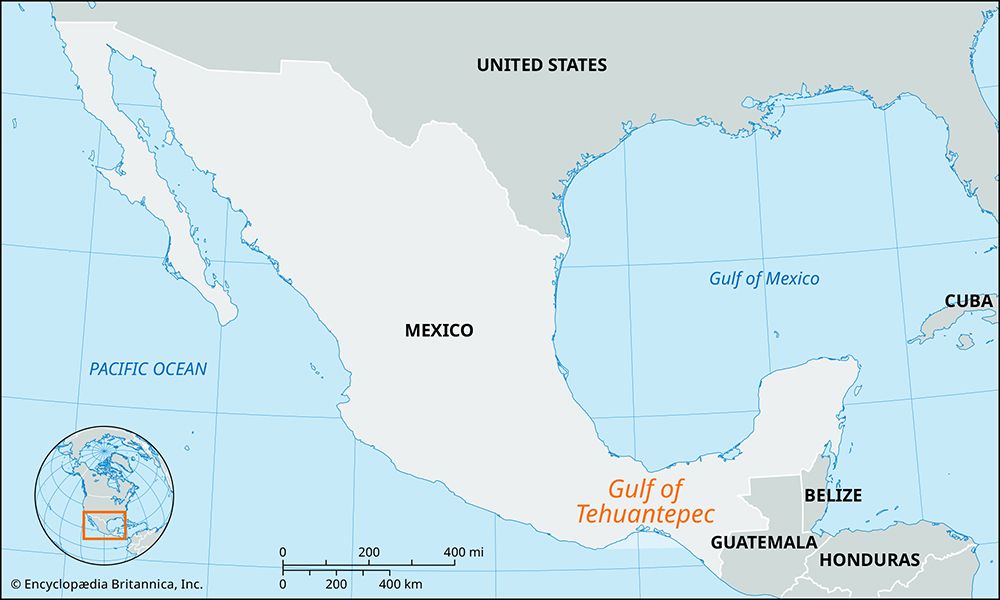
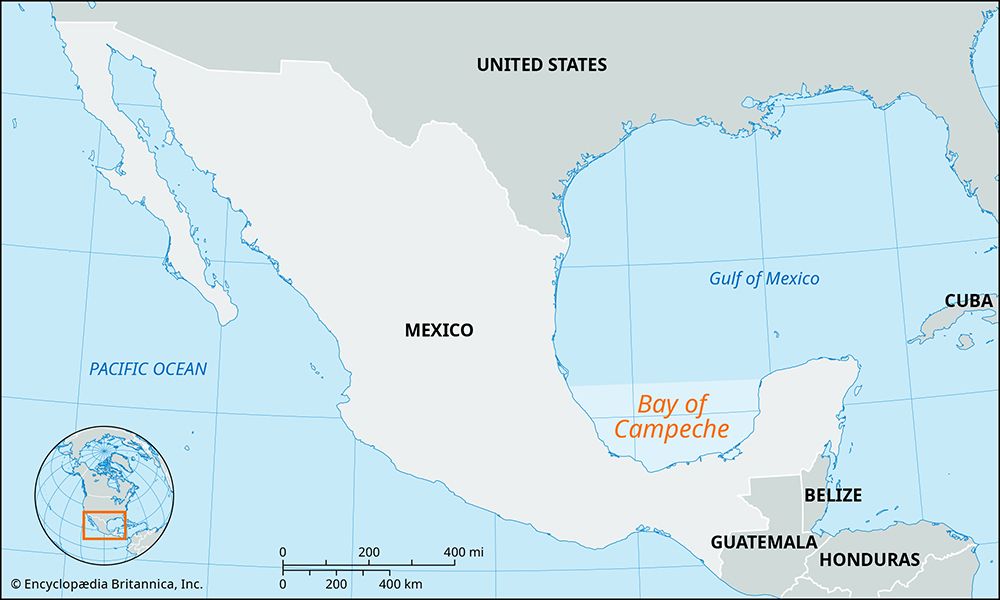
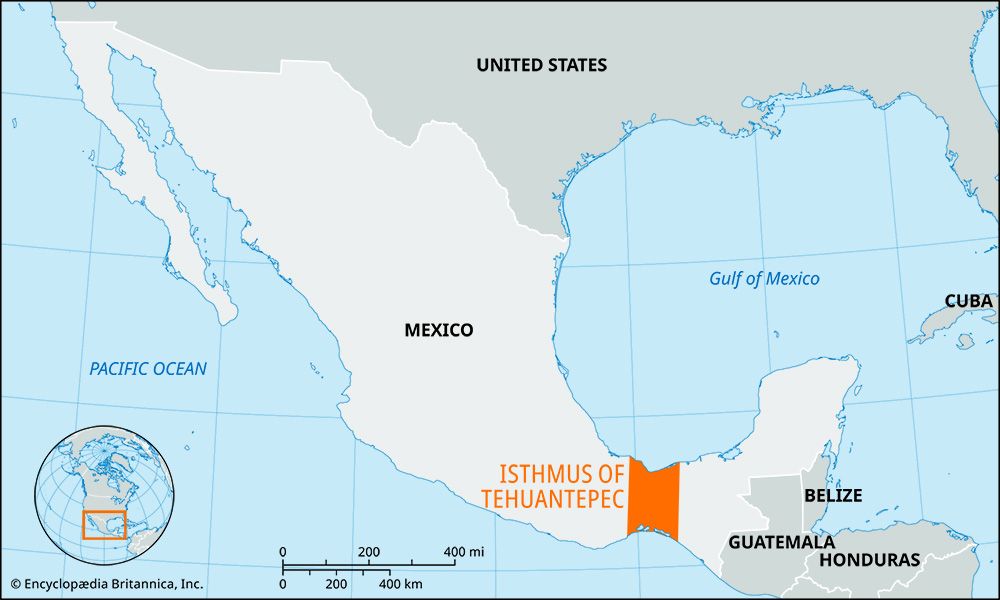
The Isthmus of Tehuantepec is located in southern Mexico. It serves as a narrow land bridge that separates two major bodies of water: the Gulf of Campeche (an arm of the Gulf of Mexico) to the north and the Gulf of Tehuantepec on the Pacific Ocean to the south.1
At its narrowest point, the isthmus measures 137 miles (220 km) across, creating a strategic, albeit challenging, transit route between the Atlantic and Pacific oceans.1
How does the climate of the Isthmus of Tehuantepec compare to other parts of Mexico?
The climate of the Isthmus of Tehuantepec is characterized primarily as hot, distinguishing it from the cooler, high-elevation regions found elsewhere in Mexico. While much of Mexico’s climate is determined by vertical temperature zones—ranging from the tierra templada (temperate land) to the tierra fria (cold land) at higher altitudes—the isthmus remains consistently warm due to its lower elevation.110
The region exhibits a distinct climatic split based on its geography:
- Northern Side: This area is swampy and densely covered with tropical forest, reflecting high moisture levels similar to other windward slopes in Mexico.110
- Southern Pacific Slopes: These slopes are notably drier, benefiting from Pacific winds that provide relief from the heat.1
Unlike regions in the Mexican highlands where elevation creates significant temperature variations, the isthmus experiences little seasonal temperature fluctuation, typical of tropical zones. Its moisture patterns are also influenced by the surrounding terrain, though it lacks the extreme rain-shadow effects seen in the high mountain ranges of the Sierra Madre.101
Sources
- Isthmus of Tehuantepec — Encyclopædia Britannica
- Mexico - Resources and power — Encyclopædia Britannica
- Gulf of Tehuantepec — Encyclopædia Britannica
- Zapotec — Encyclopædia Britannica
- Tequistlatec — Encyclopædia Britannica
- Mixe-Zoquean — Encyclopædia Britannica
- Tehuantepec, Isthmus of — Merriam-Webster
- Ikoot — Encyclopædia Britannica
- Mixtec — Encyclopædia Britannica
- Sierra Madre - Climate — Encyclopædia Britannica
Published on · 3 min read