Jordan Valley
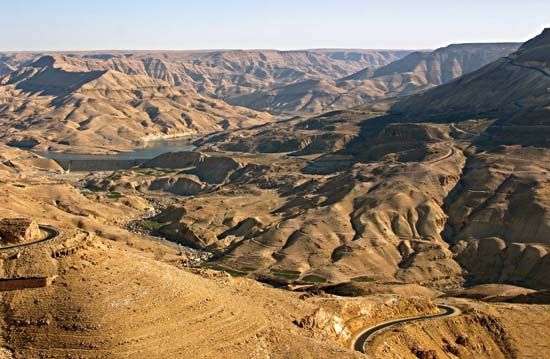
The Jordan Valley is a rift valley located in the Middle East that forms a segment of the East African Rift System. It follows the north-south course of the…
What is Jordan Valley?
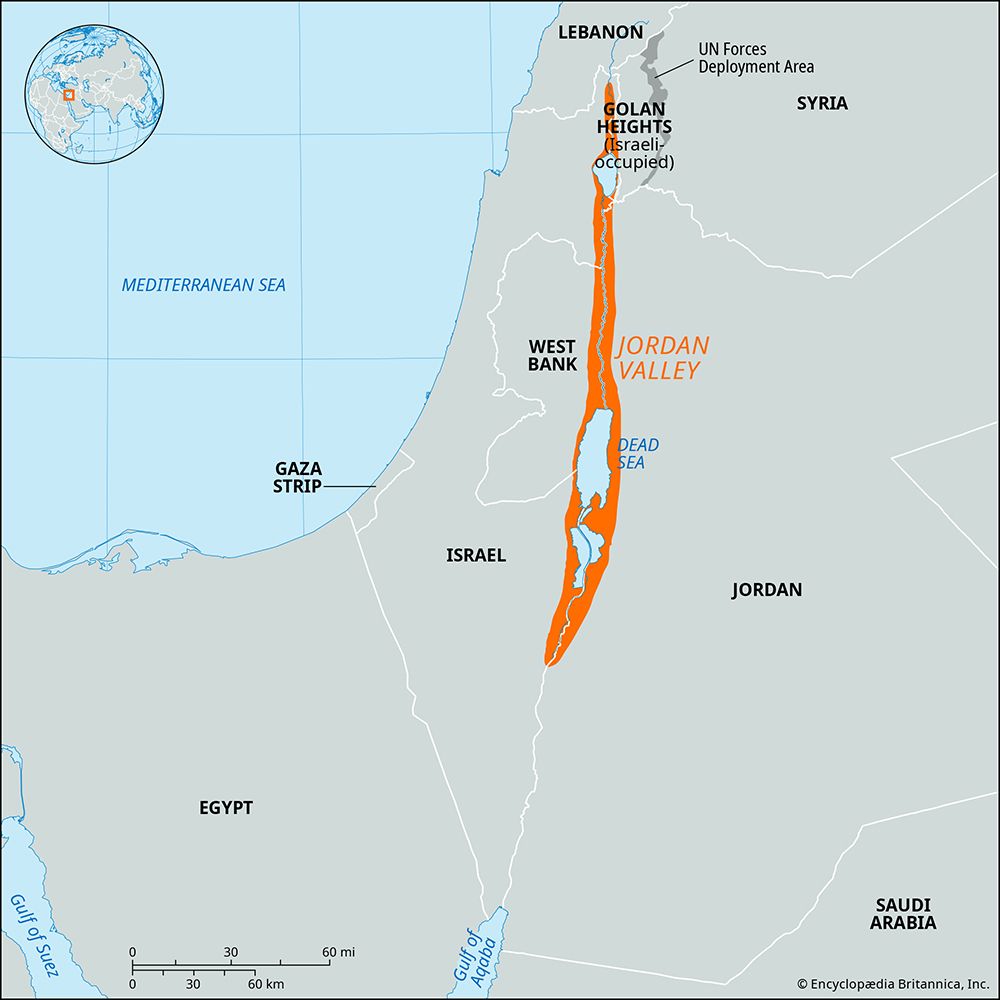
The Jordan Valley is a rift valley located in the Middle East that forms a segment of the East African Rift System. It follows the north-south course of the Jordan River from the Sea of Galilee to the Dead Sea.123
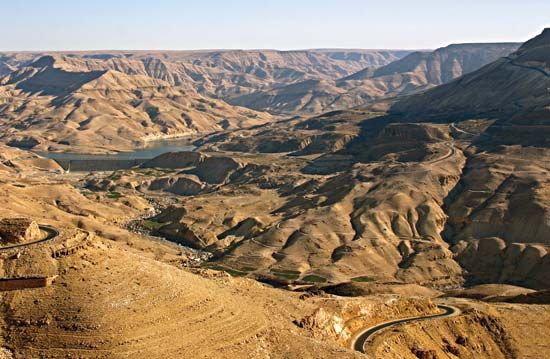
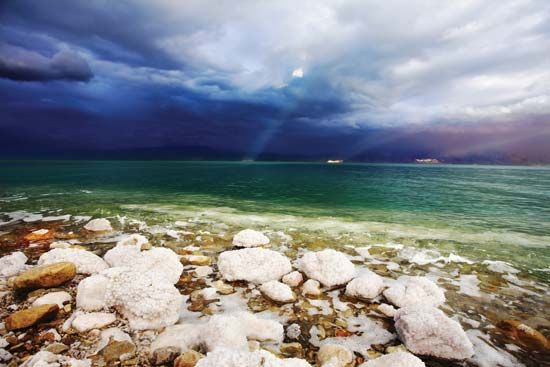
The valley is a long, narrow trough typically about 6 miles (10 km) wide, characterized by steep walls that shield it from wind and contribute to its arid climate. It contains the lowest natural point on Earth’s surface, dropping more than 1,400 feet (430 meters) below sea level at the Dead Sea.123
Administratively, the valley lies along the border between Jordan and the West Bank, as well as Israel. Since the 1967 Six-Day War, the region has been a central point of contention in the Israeli-Palestinian conflict, particularly regarding security and the viability of a future Palestinian state.2
How does the East African Rift System shape the geography of the region?
The East African Rift System is a massive geological feature extending approximately 4,000 miles (6,400 km) from Jordan in the north to Mozambique in the south. It has profoundly shaped the geography of the regions it traverses through several key processes:
- Formation of Structural Depressions: The rift has created long, narrow troughs and deep valleys that lie significantly lower than the surrounding landscape. In the north, this includes the Jordan Valley, which contains the Dead Sea—the lowest natural point on Earth’s surface at over 1,400 feet (430 meters) below sea level.134
- Topographic Contrast: Adjacent plateaus typically slope upward toward the rift, creating steep escarpments that can drop 2,000 to 9,000 feet (600 to 2,700 meters) to the valley floor. These sheer walls often shield the valleys from wind, contributing to arid climates in regions like the Jordan Valley.134
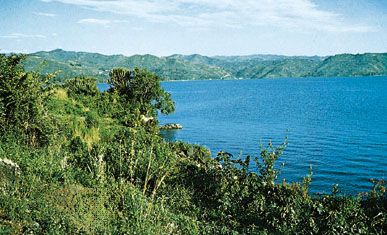
- Hydrological Systems: The rift’s structural depressions dictate the flow of major waterways, such as the Jordan River and the Shire River, and host numerous deep, fjordlike lakes, including Lake Tanganyika and Lake Malawi.13
- Volcanism: Over the last 30 million years, the separation of the African and Arabian plates has been accompanied by extensive volcanic activity, resulting in the formation of major massifs such as Mount Kilimanjaro and Mount Kenya.3
Why is the Dead Sea considered the lowest point on Earth?
The Dead Sea is considered the lowest point on Earth’s surface because it occupies a deep graben—a downfaulted block of the Earth’s crust—within the East African Rift System.51
This geological depression was formed millions of years ago during the Miocene Epoch as tectonic plates shifted, causing the crust to fracture and drop. Because the region is shielded by surrounding highlands and the water evaporates faster than it is replenished by precipitation or inflow from the Jordan River, the lake level has receded significantly over time.156
By the mid-2010s, the surface of the Dead Sea had dropped to approximately 1,410 feet (430 meters) below sea level, and it continues to decline by about 3 feet (1 meter) annually due to water diversion and commercial use. This unique combination of tectonic subsidence and high evaporation rates maintains its status as the lowest natural point on the planet.51
What are some of the challenges of farming in an arid valley?
Farming in an arid valley presents significant environmental and logistical challenges, primarily centered on the management of water and soil health.
Water Scarcity and Management
Arid valleys often receive minimal rainfall, making irrigation an absolute necessity for crop production irrigation an absolute necessity for crop production. However, water is frequently limited, and reliance on surface irrigation—such as flooding—can lead to significant water loss through evaporation and transportation inefficiencies loss through evaporation and transportation inefficiencies. Furthermore, in regions like the Jordan Valley, the diversion of river water for agricultural use has contributed to broader environmental issues, such as the declining water levels of the Dead Sea.103119
Soil Salinity
A critical challenge in arid agriculture is the accumulation of soluble salts in the soil. This occurs because:10
- Evaporation: As water evaporates or is transpired by plants, salts are left behind in the soil profile.10
- Inadequate Leaching: Without sufficient rainfall or excess irrigation water to flush these salts downward, they accumulate to levels that inhibit plant growth.10
- Irrigation Quality: All irrigation water contains some salt; over time, this can lead to salt build-up and the formation of “sodic soils,” which are often hard, cloddy, and nearly impervious to water and roots.1011
Erosion and Degradation
Dryland farming often relies on annual crops, which leave the soil exposed and vulnerable to erosion by wind and torrential rains during fallow periods. This process can strip away vital nutrients, leading to land degradation and, in severe cases, the abandonment of croplands.12
Sources
- Jordan Valley: Top Questions — Encyclopædia Britannica
- Jordan Valley — Encyclopædia Britannica
- Jordan River — Encyclopædia Britannica
- East African Rift System — Encyclopædia Britannica
- Dead Sea — Encyclopædia Britannica
- Dead Sea - Physiography and geology — Encyclopædia Britannica
- Dead Sea - Salinity — Encyclopædia Britannica
- tectonic basins and rift valleys - Rift valleys — Encyclopædia Britannica
- land reclamation - Reclamation of salt-affected soils — Encyclopædia Britannica
- Origins of agriculture - Irrigation — Encyclopædia Britannica
- water scarcity - Engineering technologies — Encyclopædia Britannica
- Fruit farming - Irrigation — Encyclopædia Britannica
- desertification - Rain-fed croplands — Encyclopædia Britannica
Published on · 4 min read