Italian Peninsula
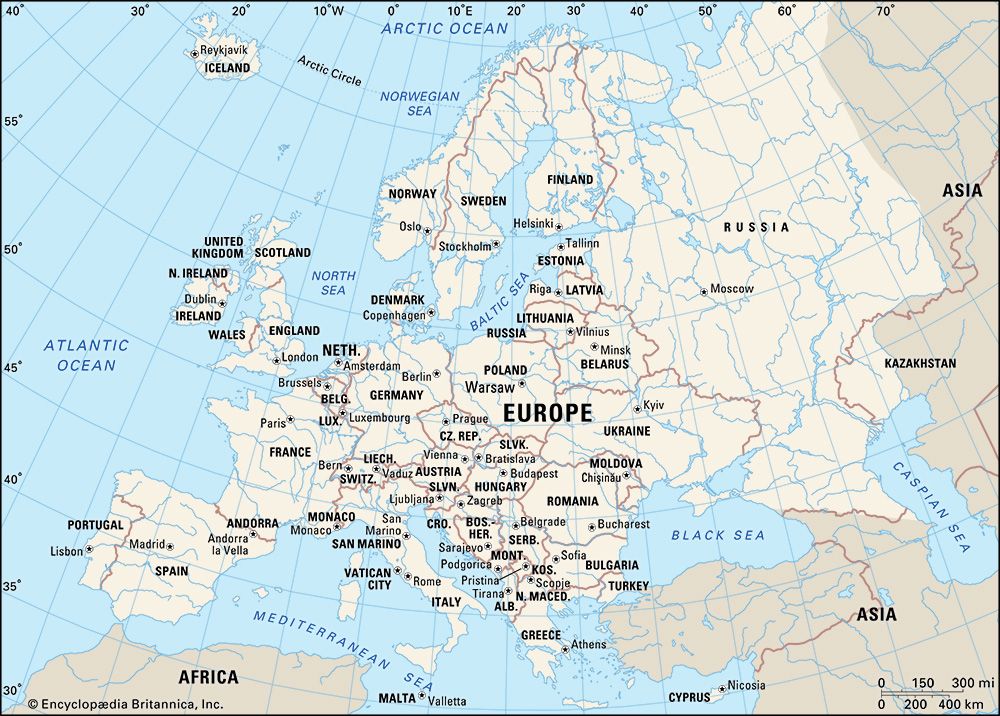
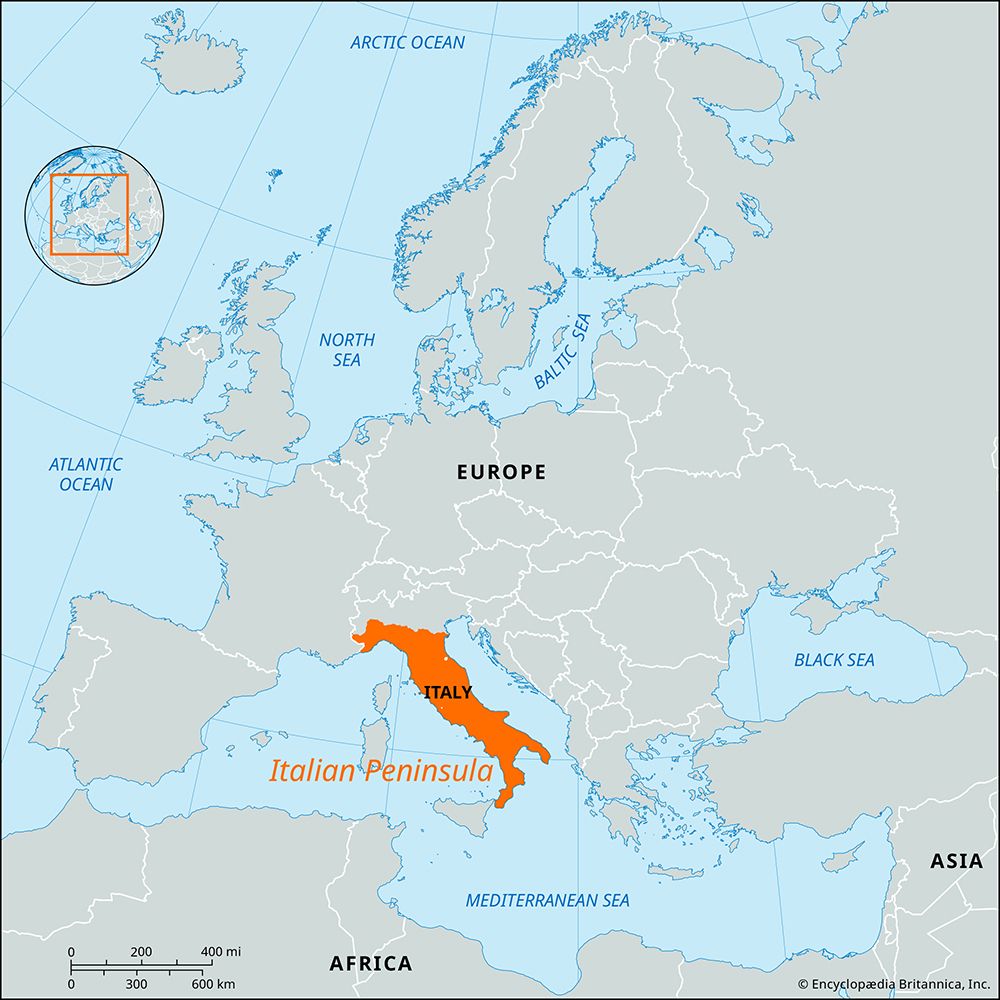
The Italian Peninsula is one of the three major peninsulas of southern Europe, alongside the Balkan and Iberian peninsulas.
What is Italian Peninsula?
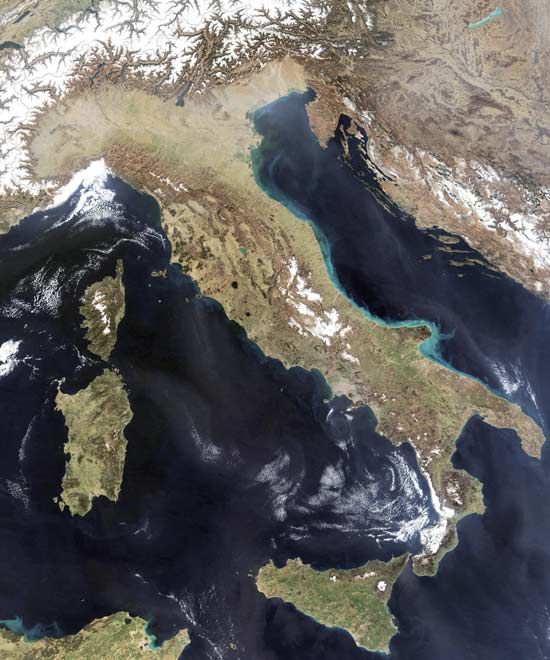
The Italian Peninsula is one of the three major peninsulas of southern Europe, alongside the Balkan and Iberian peninsulas.1
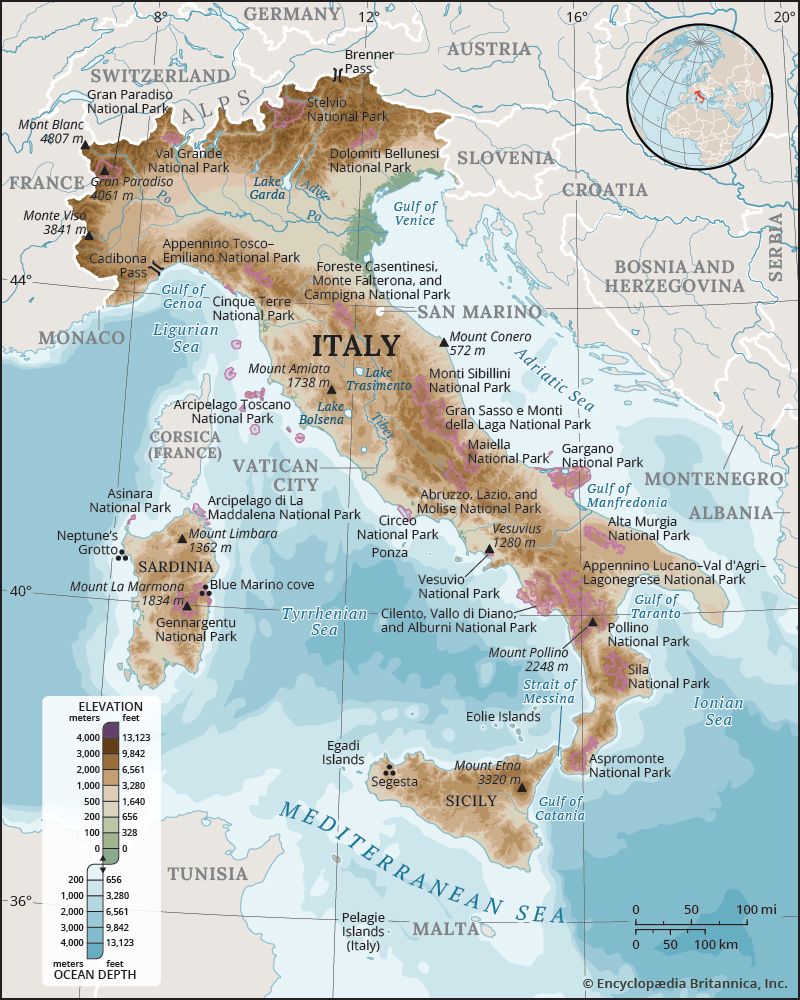
Extending southward from the Po River region for approximately 600 miles (960 km), the peninsula reaches a maximum width of 150 miles (240 km). It is defined by its surrounding waters: the Adriatic Sea to the east, the Ionian Sea to the south, and the Tyrrhenian and Ligurian seas to the west.1
The geography is dominated by the Apennines, a volcanic mountain chain that runs the length of the peninsula, while lowlands are primarily situated along the coasts. Politically, the peninsula comprises the majority of Italy and includes the independent republics of San Marino and Vatican City.1
What are the Apennine Mountains and why are they significant?
The Apennine Range is a series of mountain ranges that forms the physical backbone of the Italian peninsula, stretching approximately 870 miles (1,400 km) from the Cadibona Pass in the northwest to the Egadi Islands off the coast of Sicily Egadi Islands off the coast of Sicily.5
Significance and Characteristics
The Apennines are significant for several geological, ecological, and historical reasons:
- Geological Structure: As a younger range within the Alpine system, the Apennines are tectonically active. The range is characterized by a thrust-belt structure and frequent seismic activity, with over 40,000 recorded earthquakes since 1000 CEearthquakes](https://www.britannica.com/science/earthquake-geology) since 1000 CE. This instability has resulted in a chain of volcanoes along the western side, including active sites like Mount Vesuvius and Mount Etna.65
- Landscape and Climate: The mountains act as a climatic barrier, influencing the weather patterns of the peninsula and protecting coastal regions from harsh winds. The rugged terrain, shaped by water erosion, has historically made travel and communication between Italian towns difficult, contributing to the country’s long history of regional independence and cultural diversity.276
- Biodiversity: Much of the lower Apennine chain remains near-wilderness, serving as a vital habitat for species rarely found elsewhere in Western Europe, such as wolves, wild boars, and the brown “marsicano” bear.78
How did the Roman Empire influence the development of the Italian Peninsula?
The Roman Empire played a foundational role in shaping the Italian Peninsula, transforming a collection of diverse cultures into a more cohesive society through several key processes:
Infrastructure and Connectivity
The Romans constructed an extensive network of Roman roads, such as the Via Appia and Via Flaminia. These highways were primarily built for military purposes but became vital arteries for communication, trade, and the spread of Latin language and culture across the peninsula. Even after the fall of the empire, these routes continued to serve as the foundation for medieval and modern travel networks.10311
Social and Political Integration
- Colonization: Rome established Latin colonies throughout Italy, which were modeled on Rome’s own urban planning and social hierarchy. This helped replicate Roman civic life in new regions.10
- Citizenship: Following the Social War, Roman citizenship was extended to all of Italy, formally unifying the peninsula under one political identity.12
- Administrative Organization: Emperor Augustus divided Italy into 11 administrative regions, a structure that helped organize the peninsula’s governance.12
Cultural Legacy
Roman influence fostered a degree of cultural homogeneity, as local elites were drawn into the Roman ruling class through bonds of friendship and patronage. Furthermore, the survival of Roman cities as political and economic centers ensured that the peninsula’s urban identity remained tied to its classical heritage, with many medieval cities continuing to follow original Roman street plans.1011
What are the main differences between the Balkan, Iberian, and Italian peninsulas?
The Balkan, Iberian, and Italian peninsulas are the three major landmasses of southern Europe, each defined by distinct geographical and geological characteristics.1
The Italian Peninsula
The Italian Peninsula serves as the central of the three, extending approximately 600 miles southward into the Mediterranean Sea. Its physical backbone is formed by the Apennine Range, a tectonically active, volcanic mountain chain that experiences frequent earthquakes. The peninsula is bordered by the Adriatic, Ionian, Tyrrhenian, and Ligurian seas, and its climate is significantly modified by its mountainous terrain and proximity to the sea.1517
The Iberian Peninsula
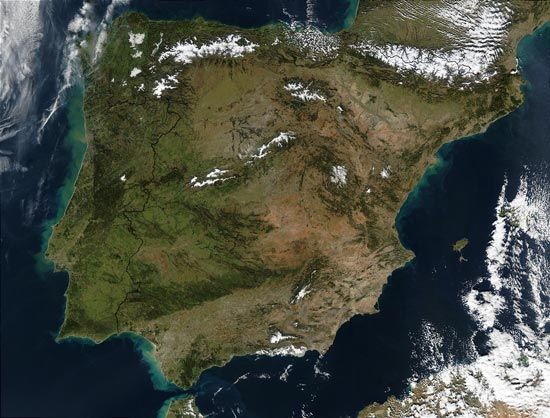
Located to the west of Italy, the Iberian Peninsula is characterized by large interior tablelands, such as the Meseta Central, composed of Paleozoic rocks. These plateaus are flanked by Alpine-type mountain ranges, and its lowlands are primarily found in interior basins or along the coasts.1819
The Balkan Peninsula
The Balkan Peninsula is the easternmost of the three. It is bordered by Italy to the northwest and is defined by a fragmented, predominantly mountainous and plateau landscape. Geologically, parts of the Balkans, such as the Dinaric Alps, share structural similarities with the Apennines.20185
Sources
- Italian Peninsula — Encyclopædia Britannica
- Italy - Climate of Italy — Encyclopædia Britannica
- Italy — Encyclopædia Britannica
- Italy - Characteristics of the period — Encyclopædia Britannica
- Apennine Range — Encyclopædia Britannica
- Apennine Range - Geology — Encyclopædia Britannica
- Italy — Encyclopædia Britannica
- Apennine Range - Plant and animal life — Encyclopædia Britannica
- Apennine Range - Physiography — Encyclopædia Britannica
- ancient Rome - Rome and Italy — Encyclopædia Britannica
- Roman road system — Encyclopædia Britannica
- Romance languages - Latin and the protolanguage — Encyclopædia Britannica
- Rome - Rebuilding and repopulation — Encyclopædia Britannica
- Italy - Socioeconomic developments in the city — Encyclopædia Britannica
- Italy - Cultural institutions — Encyclopædia Britannica
- Western architecture - Roman and early Christian — Encyclopædia Britannica
- Balkans: Top Questions — Encyclopædia Britannica
- Europe - Southern Europe — Encyclopædia Britannica
- history of Europe - Romans — Encyclopædia Britannica
- Europe - Mediterranean climate — Encyclopædia Britannica
- Italy - Italy in the early Middle Ages — Encyclopædia Britannica
Published on · 4 min read