Dinaric Alps
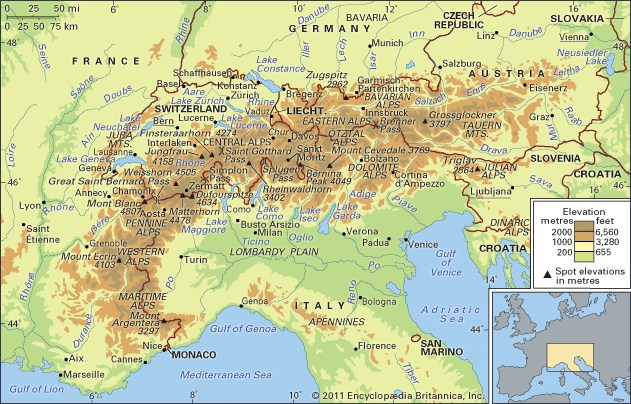
The Dinaric Alps are a major mountain range in southeastern Europe, forming a southeastern division of the Eastern Alps. The range runs parallel to the…
What is Dinaric Alps?
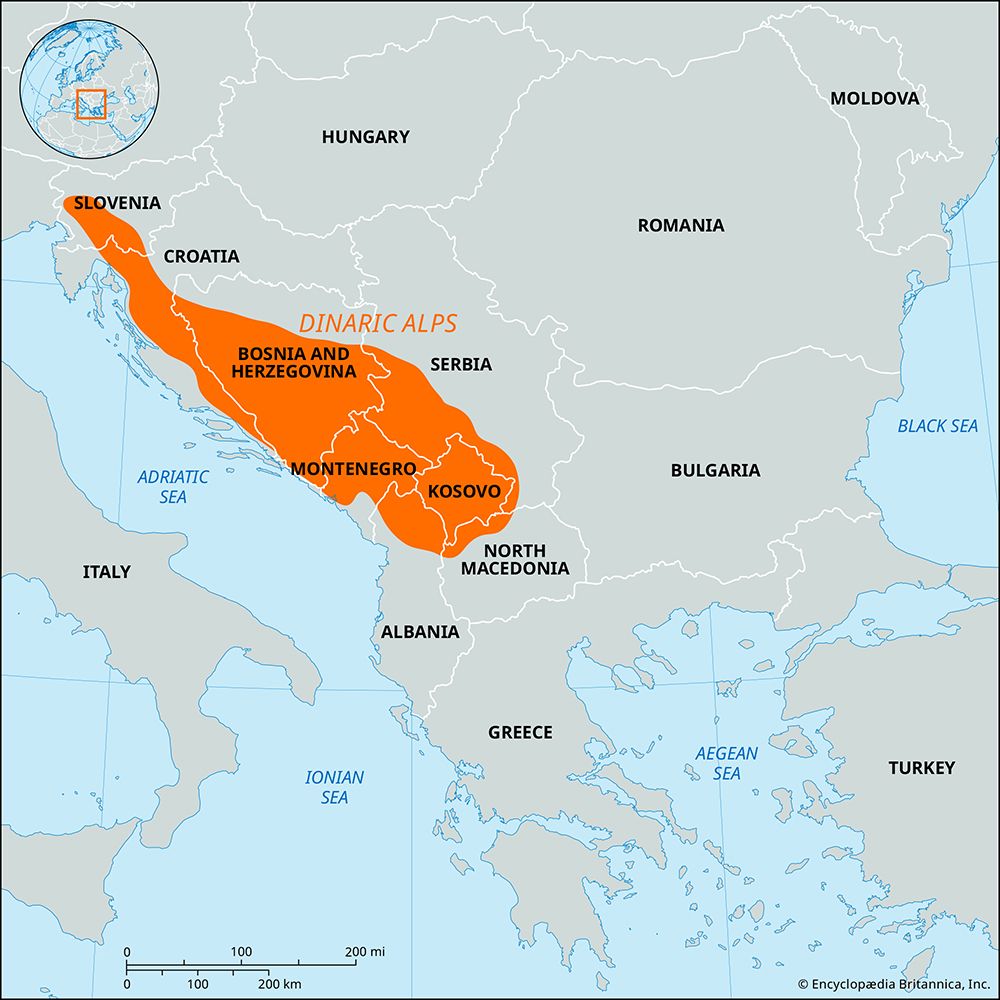
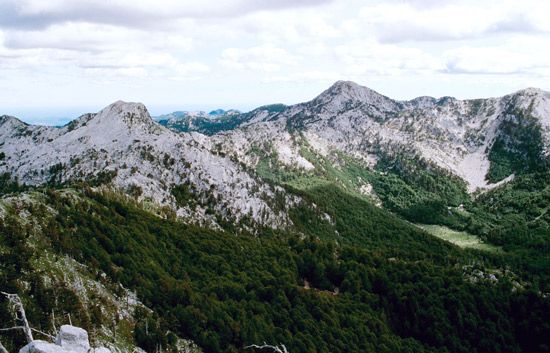
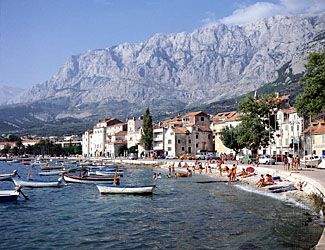
The Dinaric Alps are a major mountain range in southeastern Europe, forming a southeastern division of the Eastern Alps. The range runs parallel to the Adriatic Sea coast, extending from Trieste and Slovenia in the north through Croatia, Bosnia and Herzegovina, and Montenegro, reaching as far south as Albania.12
Geologically, the range is part of the complex tectonic mosaic created by the Alpine orogeny, driven by the compression of the African plate into Europe. The landscape is characterized by limestone formations that, while creating a rugged coast with many natural harbors, often restrict access to the interior. Despite this, the range contains isolated interior basins that support fertile soil and dense populations. The highest peak is Mount Jezercë (Maja e Jezercës) in the North Albanian Alps, which reaches an elevation of 8,839 feet (2,694 meters).31
How did the Alpine orogeny shape the landscape of the Dinaric Alps?
The Alpine orogeny was a major mountain-building event occurring between 65.5 million and 2.6 million years ago, driven primarily by the northward compression of the African plate into Europe. This tectonic activity fundamentally shaped the landscape of the Dinaric Alps through several key processes:52
- Tectonic Collision: The Dinaric Alps formed as part of a complex tectonic mosaic resulting from the convergence of the African continent—specifically the Italian peninsula promontory—with Europe.26
- Crustal Deformation: The intense pressure from this collision caused the crumpling of rock strata, significant uplift, and extensive faulting. This process elevated the region, transforming it from a marine environment into a rugged mountain range.52
- Sedimentary Folding: Much of the range is composed of sedimentary rock, such as limestone, which was deposited on the margins of the ancient Tethys Sea. During the orogeny, these layers were detached, folded, and thrust upward.26
- Metamorphism: The thickening of the crust and the associated increase in pressure and temperature during the collision led to the metamorphism of preexisting rocks, further defining the geological character of the region.56
What are some of the major rivers that originate in the Dinaric Alps?
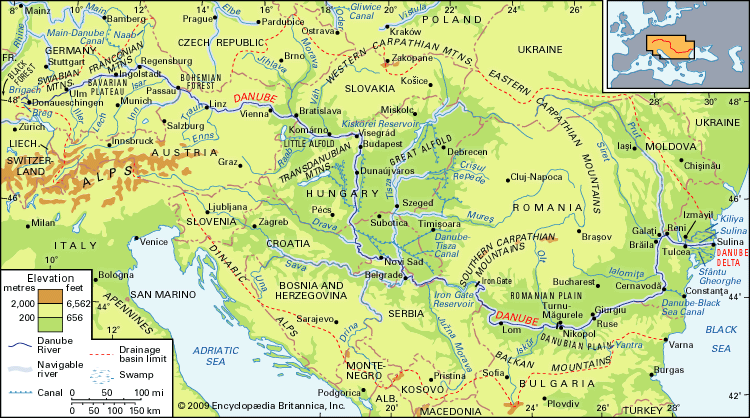
Several significant rivers originate in or are closely associated with the Dinaric Alps, a region characterized by complex drainage patterns due to its extensive karst topography, where many waters flow underground.718
Key rivers include:
- Sava River: Originating in Slovenia, it serves as a major waterway that forms part of the northern boundary of the Dinaric region and eventually flows into the Danube River.71
- Neretva River: This river flows from the southeast through the karst region, assuming a sharp southwestern course before emptying into the Adriatic Sea.7
- Una River: Flowing north, this river serves as a tributary to the Sava and meanders along parts of the border between Croatia and Bosnia and Herzegovina.71
- Drina River: Flowing north, it forms part of the eastern boundary of the region and is a significant tributary of the Sava.79
- Krka and Cetina Rivers: Located in the Dalmatian region, these rivers are notable for their hydroelectric potential and their flow into the Adriatic Sea.1
- Bosna and Vrbas Rivers: These rivers flow northward from the mountainous interior to join the Sava.7
How does the limestone terrain of the Dinaric Alps affect local agriculture?
The limestone terrain of the Dinaric Alps significantly influences local agriculture by creating a stark contrast between the rugged, inaccessible mountain ranges and the productive interior basins.
- Barriers to Access: The extensive limestone ranges act as a physical barrier, effectively prohibiting natural access to the agricultural hinterland from the coast. This isolation has historically limited the integration of coastal and inland farming economies.1
- Fertile Basins: Despite the challenging nature of the surrounding karst landscape, the interior basins of the range contain fertile soils. These areas support agriculture and are home to relatively dense populations, serving as the primary hubs for cultivation within the mountainous region.1
Sources
- Dinaric Alps — Encyclopædia Britannica
- Europe - Mesozoic and Cenozoic eras — Encyclopædia Britannica
- Dinaric Alps — Merriam-Webster
- Alps - Plant and animal life — Encyclopædia Britannica
- Alpine orogeny — Encyclopædia Britannica
- mountain - The western segment of the system — Encyclopædia Britannica
- Bosnia and Herzegovina - Drainage — Encyclopædia Britannica
- Bosnia and Herzegovina - Relief — Encyclopædia Britannica
- Drava River — Encyclopædia Britannica
- Croatia - Drainage — Encyclopædia Britannica
- cave - Geographic distribution of karst terrain — Encyclopædia Britannica
- Alps - Physiography — Encyclopædia Britannica
Published on · 3 min read