Arctic Ocean
Exploration of the Arctic Ocean has evolved from early, often perilous, attempts to navigate its waters to modern scientific research. Notable expeditions…
What are some of the major expeditions that have explored the Arctic Ocean?
Exploration of the Arctic Ocean has evolved from early, often perilous, attempts to navigate its waters to modern scientific research. Notable expeditions include:
- The Jeannette Expedition (1879): Led by George Washington De Long, this U.S. mission aimed to reach the North Pole via Wrangel Island. The ship became trapped in ice and drifted for 22 months before sinking, providing early evidence of the transpolar drift.1
- The Fram Expedition (1893–1896): Norwegian explorer Fridtjof Nansen intentionally froze his ship, the Fram, into the ice to study the Arctic Ocean. This mission yielded significant scientific data and confirmed the existence of a deep basin beneath the polar sea.12
- The Franklin Expedition (1845): Sir John Franklin led an ill-fated attempt to find the Northwest Passage. Both ships, the Erebus and the Terror, were lost, and the crew perished, though the wrecks were rediscovered in the 21st century.3
- Scientific Drift Stations: Beginning in 1937 with the Soviet “North Pole 1” station, researchers established floating bases on ice floes to conduct long-term observations of the Arctic environment.2
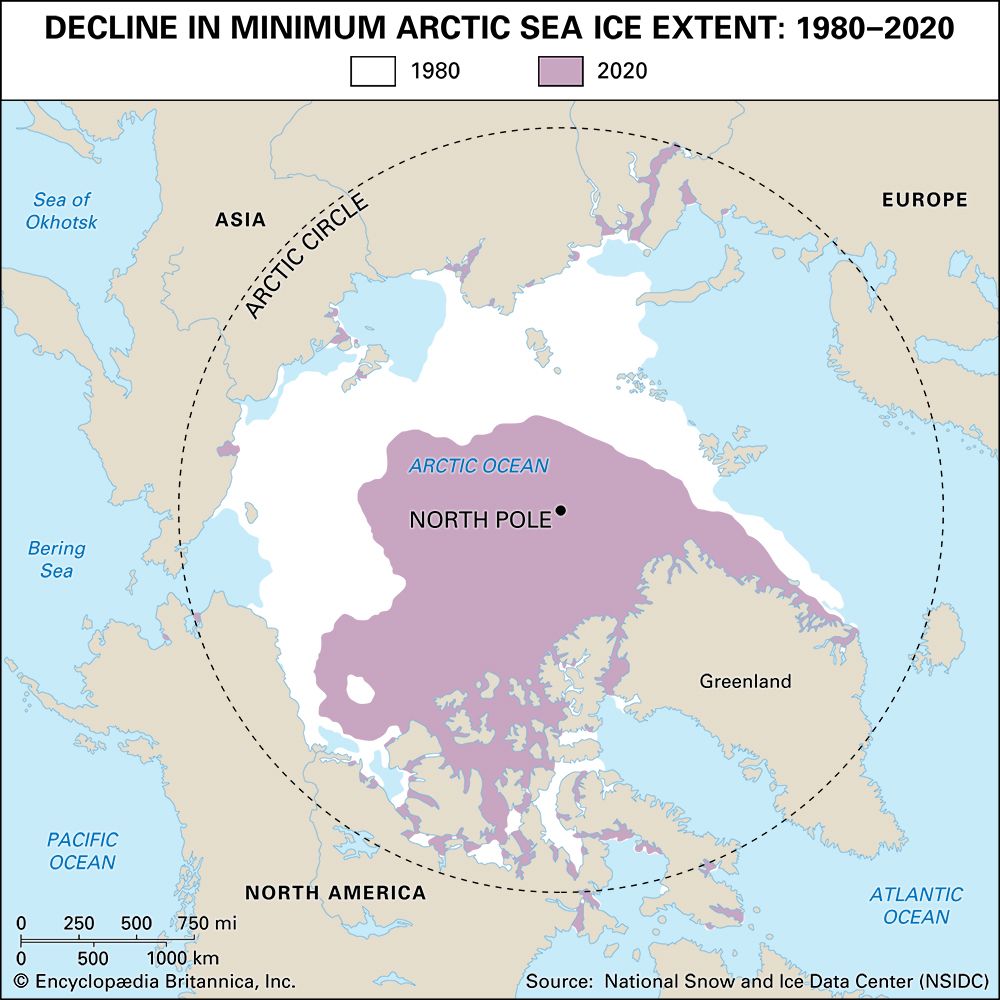
How is climate change specifically impacting the Arctic Ocean region?
Climate change is profoundly altering the Arctic Ocean, with impacts that are both localized and globally significant. Because the Arctic is particularly sensitive to global warming, it is experiencing temperature increases far exceeding the global average.6
Key Impacts on the Arctic Ocean
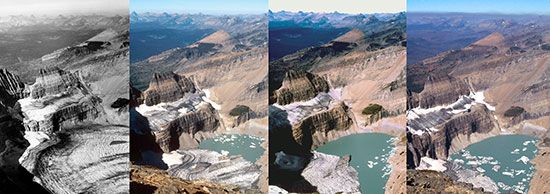
- Sea Ice Loss: The Arctic has seen a significant reduction in both the extent and thickness of sea ice since the mid-20th century. As ice melts, it exposes darker open water, which absorbs more solar radiation than reflective ice. This creates an ice-albedo positive feedback loop, where increased heat absorption accelerates further melting.786
- Ocean Acidification: The Arctic Ocean is absorbing large quantities of carbon dioxide, leading to increased acidity. This reduces the availability of carbonate ions, threatening marine calcifiers like cold-water corals and pteropods, which are critical components of the Arctic food web.9
- Freshwater Input and Circulation: Melting glaciers, particularly from Greenland, are dumping massive amounts of fresh water into the North Atlantic. This reduces surface salinity and density, which can weaken the Atlantic Meridional Overturning Circulation (AMOC), a vital system for global heat distribution.10
- Ecosystem Disruption: Warming waters and shifting ice cover are forcing species to migrate, disrupting traditional food chains and threatening the survival of animals like polar bears that rely on sea ice for hunting and habitat.711
How have human activities affected the Arctic Ocean ecosystem?
Human activities have significantly impacted the Arctic Ocean ecosystem, creating complex environmental challenges that threaten its integrity and sustainability.1312
Industrial and Economic Pressures
- Resource Extraction: Oil and gas development and mining have caused large-scale surface disturbances, including the creation of swampy terrain and the degradation of permafrost. These activities also pose risks of spills, such as the Exxon Valdez disaster, which are particularly difficult to manage in ice-filled waters.1312
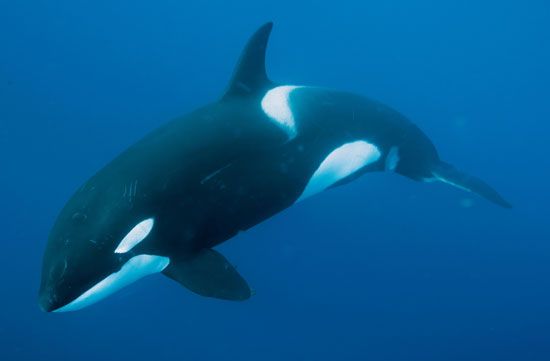
- Shipping Impacts: Increased maritime traffic introduces noise pollution, which disrupts the communication and navigation of marine mammals like whales. Additionally, the release of ballast water often introduces invasive species into the ecosystem.14
- Pollution: The region is affected by air pollution from industrial plants, which contributes to ice fog and deposits particulate matter. Furthermore, microplastics have been detected in Arctic sea ice and beaches, entering the food web and potentially bioaccumulating in wildlife.1315
Wildlife and Habitat Alteration
- Hunting: Historically, populations of polar bears, walrus, and caribou were severely reduced by hunting, leading to the establishment of protective legislation and wildlife refuges.13
- Climate Feedback: Human-driven climate change is accelerating the loss of sea ice, which reduces critical habitats and alters the albedo of the region, further intensifying warming.1216
What countries border the Arctic Ocean?
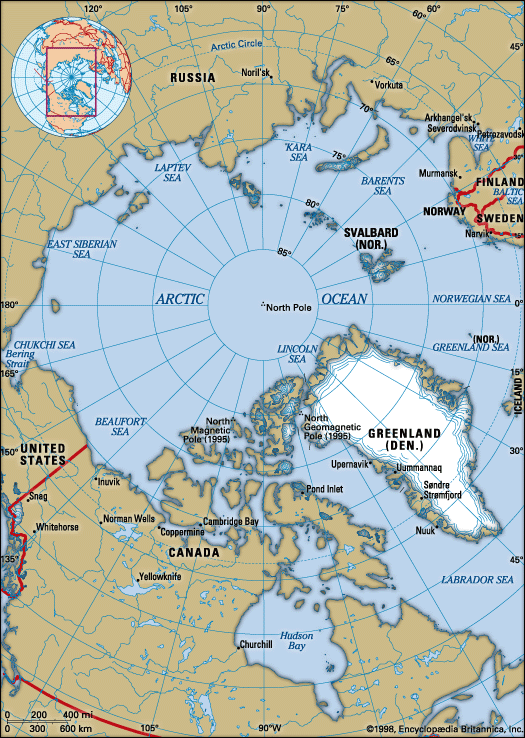
The countries that border the Arctic Ocean are those with landmasses adjacent to its waters. These nations are often referred to as the Arctic states and include:
While Finland, Iceland, and Sweden are also considered Arctic countries and are members of the Arctic Council, they do not have coastlines that border the Arctic Ocean itself.1918
Sources
- Arctic - The Fram expedition — Encyclopædia Britannica
- Roald Amundsen — Encyclopædia Britannica
- Arctic - Study and exploration — Encyclopædia Britannica
- Arctic - The Arctic Ocean — Encyclopædia Britannica
- Sir John Franklin — Encyclopædia Britannica
- sea ice - Interactions with the oceans , atmosphere , and climate — Encyclopædia Britannica
- Global warming - Ice melt and sea level rise — Encyclopædia Britannica
- sea ice - The emerging impacts of recent changes to sea ice — Encyclopædia Britannica
- Atlantic Meridional Overturning Circulation — Encyclopædia Britannica
- ocean acidification — Encyclopædia Britannica
- ocean warming — Encyclopædia Britannica
- Tundra - Effects of human activities and climate change — Encyclopædia Britannica
- Arctic - Environmental concerns — Encyclopædia Britannica
- Teshekpuk Lake — Encyclopædia Britannica
- plastic pollution - Plastic pollution in oceans and on land — Encyclopædia Britannica
- plastic pollution — Encyclopædia Britannica
- shipping — Encyclopædia Britannica
- Arctic Council — Encyclopædia Britannica
- Arctic Ocean - Topography of the ocean floor — Encyclopædia Britannica
- Arctic Ocean - Oceanography — Encyclopædia Britannica
- list of islands - Canada — Encyclopædia Britannica
- Arctic - Administration — Encyclopædia Britannica
- Arctic - The Arctic in international affairs — Encyclopædia Britannica
Published on · 3 min read