Jatropha
Jatropha is a genus of approximately 175 species of herbs, shrubs, and trees belonging to the spurge family. These plants are characterized by their milky…
What is Jatropha and where does this plant originate from?
Jatropha is a genus of approximately 175 species of herbs, shrubs, and trees belonging to the spurge family. These plants are characterized by their milky juice and are found in both New World and Old World tropics, where they are often cultivated as ornamentals or utilized for their oils.1
Regarding their origins, different species of Jatropha are native to various tropical regions:
- Mexico and Central America: The barbados nut (J. curcas) originates from this region.1
- Guatemala and Honduras: The tartogo, or gouty jatropha (J. podagrica), is native here.1
- South America: The coral plant (J. multifida) is native to this continent.1
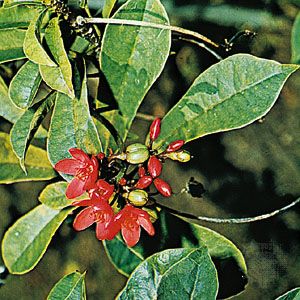
- Cuba: The peregrina (J. integerrima) originates from Cuba.1
- Texas to Central America: J. berlandieri is distributed across this range.1
What species of Jatropha are commonly cultivated, and how do they differ?
Several species of Jatropha are commonly cultivated for their ornamental value or practical utility. They differ significantly in size, appearance, and primary use:
- Barbados nut (J. curcas): A tree reaching 6 meters in height with yellow-green flowers and three- to five-lobed leaves. It is primarily cultivated for its seeds, which yield cooking oil, soap, and a strong purgative; the seeds are edible only if roasted to remove toxins.1
- Tartogo or Gouty jatropha (J. podagrica): A garden curiosity featuring a short, swollen trunk at the base. It produces erect red flower clusters throughout most of the year and has three- to five-lobed palmate leaves.1
- Coral plant (J. multifida): A plant growing up to 3 meters tall, noted for its large, deeply cut, 11-lobed leaves and clusters of small, coral-red flowers.1
- Peregrina (J. integerrima): A shrub reaching 5 meters in height with spadelike leaves that are sharply lobed at the base. It is valued for its year-round crimson flower clusters.1
- J. berlandieri: A small perennial reaching 30 centimeters in height, distinguished by its long-stalked, purple flowers.1
How is Jatropha used in agriculture and industry?
Jatropha species, particularly the barbados nut (J. curcas), serve several practical roles in agriculture and industry:
- Oil Production: The seeds of the barbados nut are a source of oil used in the manufacturing of soap and for cooking purposes.
- Medicinal Use: The plant produces a strong purgative, which has historically been utilized for its medicinal properties.
- Food Source: While the seeds are poisonous in their raw state, they can be consumed safely if they are thoroughly roasted to neutralize the toxins.
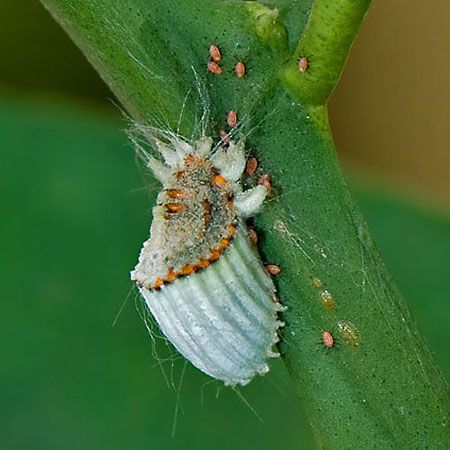
- Industrial Varnish: The plant supports the production of lac, a resinous substance secreted by scale insects that feed on the leaves. This substance is processed to create a high-quality varnish used for finishing instruments such as guitars.
Beyond these practical applications, many species within the genus are widely cultivated as ornamental plants in tropical gardens due to their unique foliage and vibrant flower clusters.
Are there any medicinal or traditional uses of Jatropha plants?
Jatropha plants, particularly the barbados nut (J. curcas), have been utilized for various traditional and practical purposes. The seeds of this species are a well-known source of a strong purgative, which has historically been used for its medicinal effects.1
Beyond its purgative properties, the plant has other traditional applications:
- Culinary use: The seeds are consumed as a food source, provided they are thoroughly roasted to neutralize their natural toxins.1
- Industrial utility: The seeds are processed to produce oil used in the manufacture of soap and for cooking. Additionally, the plant supports the production of lac—a resinous substance secreted by scale insects that feed on the leaves—which is used to create a fine varnish for musical instruments like guitars.1
While these uses are documented, it is important to note that the raw seeds contain poisonous compounds, necessitating careful preparation before consumption.1
Sources
- jatropha — Encyclopædia Britannica
Published on · 3 min read