Jog Falls
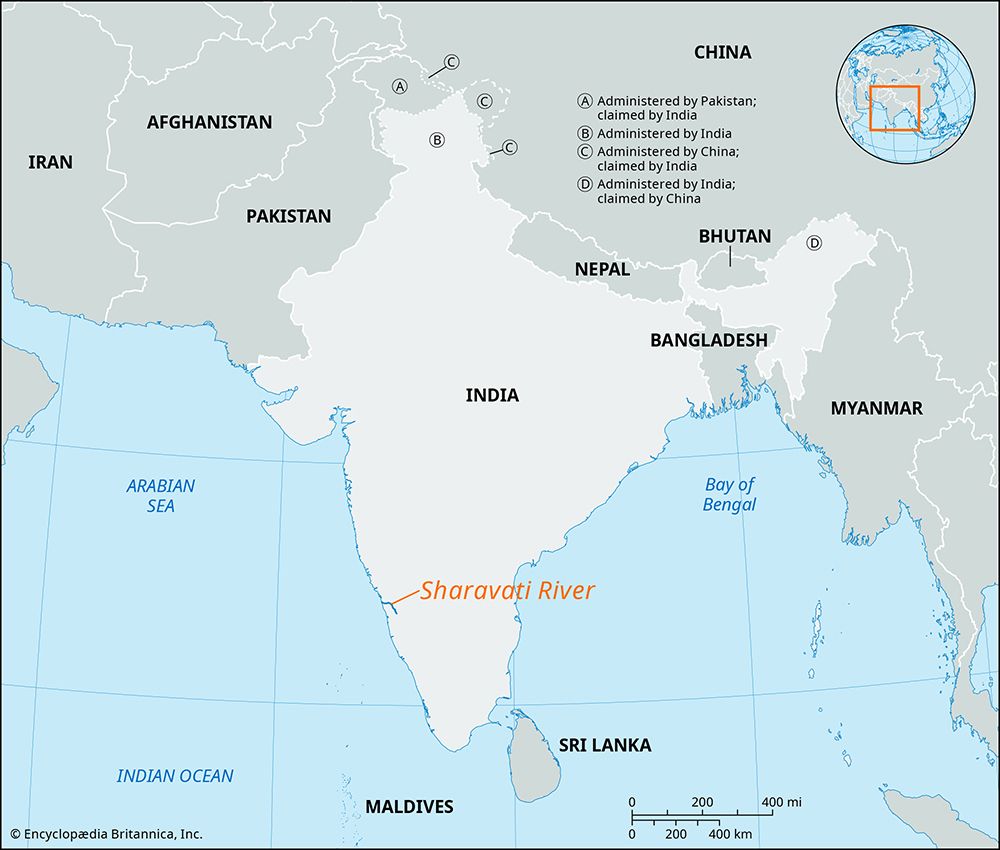
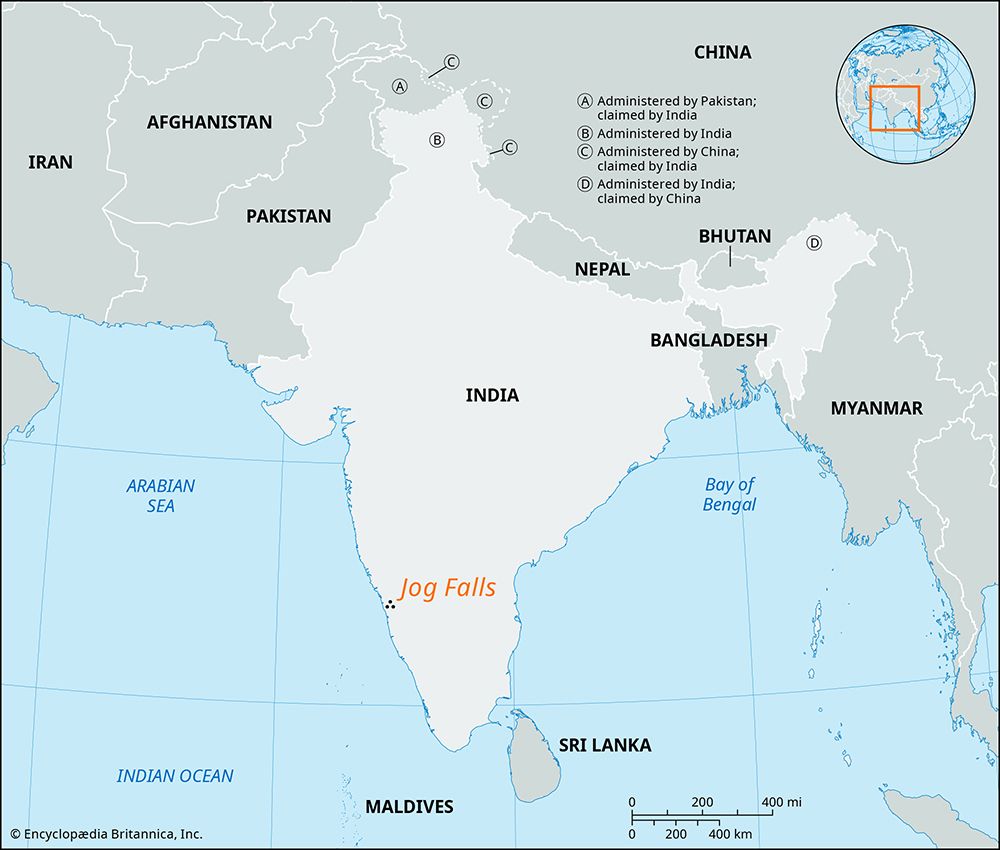
Jog Falls is a spectacular cataract located on the Sharavati River in the southwestern Indian state of Karnataka. Situated 18 miles upstream from the river's…
What is Jog Falls?
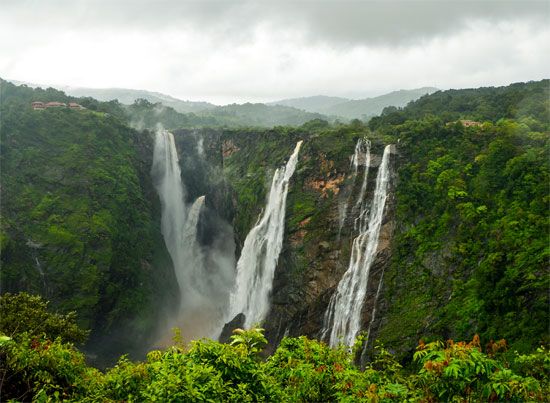
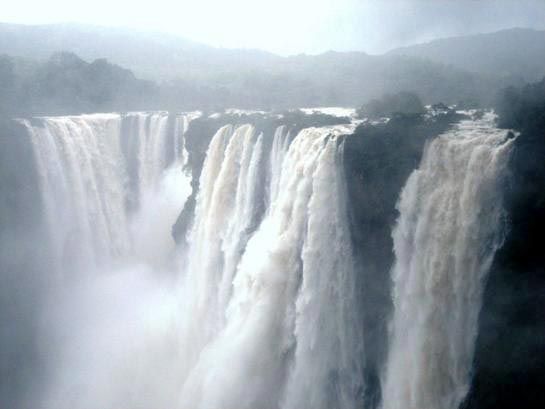
Jog Falls is a spectacular cataract located on the Sharavati River in the southwestern Indian state of Karnataka. Situated 18 miles upstream from the river’s mouth at the Arabian Sea, the falls plunge 830 feet (253 meters) into a deep chasm.1
As the water descends, it divides into four distinct cascades:
- Raja (Horseshoe)
- Roarer
- Rocket
- Ranee (Queen or La Dame Blanche)1
These falls serve as a major scenic attraction, with viewing points available from bungalows on both banks of the river. Additionally, the site is significant for its hydropower development, which utilizes the river’s flow downstream.1
How does the Sharavati River contribute to India’s energy needs?
The Sharavati River plays a vital role in India’s energy infrastructure, primarily through the development of large-scale hydroelectric projects located near Jog Falls in the state of Karnataka.23
Key facilities contributing to the region’s power supply include:
- Mahatma Gandhi Hydroelectric Power Station: Located a short distance downstream from the falls, this station is a significant contributor to the state’s electricity grid.2
- Sharavathi Valley Project: This major project, situated near the cataract, generates a substantial portion of the electricity required for Karnataka.2
These facilities are highly productive; the hydroelectric plants on the river generate enough power to meet local industrial demands within Karnataka while also distributing surplus energy to neighboring states. By harnessing the river’s flow, these projects serve as a cornerstone for the region’s economic and industrial energy needs.32
What are the seasonal changes that affect the appearance of Jog Falls?
The provided search results do not contain information regarding the seasonal changes that affect the appearance of Jog Falls. While the sources confirm the falls are a leading scenic attraction on the Sharavati River and note the presence of a hydropower project, they do not detail how seasonal variations influence the water flow or the visual characteristics of the four cascades.
Sorry, the Britannica knowledge base does not contain this information.
How do waterfalls like Jog Falls form in nature?
Waterfalls like Jog Falls form when a river encounters a sudden, vertical drop in its path, creating a major interruption in the river’s natural flow. While rivers typically work to smooth out their gradients through erosion and deposition, waterfalls persist as temporary features where specific geological or structural conditions exist.1
Primary Causes of Waterfall Formation
- Differential Erosion: This is one of the most common causes. When a river flows from a resistant rock layer to a softer one, it erodes the weaker rock more rapidly, steepening the gradient at the junction. In some cases, a hard cap rock overlies weaker strata; as the softer material is eroded from beneath, the cap rock eventually breaks off, causing the waterfall to migrate upstream.15
- Tectonic Activity: Movements along a fault can create cliffs or scarps across a river’s path. As the Earth’s crust shifts, these vertical displacements force the river to drop abruptly.6
- Glaciation: During the ice ages, glaciers often over-deepened main valleys, leaving tributary valleys “hanging” high above the main valley floor. When the ice retreats, streams from these hanging valleys must fall to join the main drainage system below.61
- Landform Structure: Features like uplifted plateaus or steep scarp slopes can naturally create conditions where rivers must drop over significant heights to reach lower elevations.61
Over time, the energy of the falling water—often creating a plunge pool at the base—works to eventually wear away the waterfall, moving the river toward a smooth, concave profile.1
Sources
- Jog Falls — Encyclopædia Britannica
- Sharavathi River — Encyclopædia Britannica
- Himachal Pradesh - Resources and power — Encyclopædia Britannica
- Karnataka - Resources and power — Encyclopædia Britannica
- river - Falls attributable to differential erosion — Encyclopædia Britannica
- river - Falls attributable to discordance of river profile — Encyclopædia Britannica
- waterfall — Encyclopædia Britannica
Published on · 3 min read