Jojoba
Jojoba (Simmondsia chinensis) is a leathery-leaved shrub belonging to the box family (Buxaceae), native to the southwestern United States and northern…
What is Jojoba?
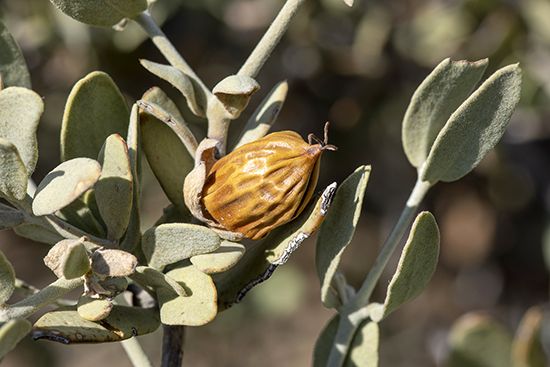
Jojoba (Simmondsia chinensis) is a leathery-leaved shrub belonging to the box family (Buxaceae), native to the southwestern United States and northern Mexico. Growing up to 2 meters (7 feet) tall, the plant is often cultivated as hedge material in arid regions.1
The plant is primarily valued for its seeds, which contain a high-quality liquid wax commonly referred to as jojoba oil. This oil is chemically similar to sperm oil and is widely utilized in the cosmetics industry. You can find it as an ingredient in various products, including soaps, shampoos, and hair conditioners, where it is prized for its restorative properties.12
Why is jojoba oil considered a liquid wax instead of a traditional oil?
Jojoba oil is technically classified as a liquid wax rather than a traditional vegetable oil because of its chemical structure. While most vegetable oils are triglycerides—esters formed by three fatty acid molecules linked to a molecule of glycerol—jojoba oil is composed primarily of long-chain esters of fatty acids and fatty alcohols.13
Because it lacks the glycerol backbone found in typical plant-derived triglycerides, it does not function as a fat in the same way that oils like corn or soybean oil do. Instead, its chemical composition is remarkably similar to sperm oil, which is also a wax ester. This unique molecular structure gives jojoba its distinct physical properties and stability, making it highly valued in the cosmetics industry for its restorative effects on skin and hair.134
What makes jojoba oil a good substitute for sperm oil?
Jojoba oil serves as an effective substitute for sperm oil primarily because of their shared chemical composition. Both substances are composed of long-chain wax esters rather than the triglycerides found in typical vegetable oils, which gives them similar physical properties and performance characteristics.51
Historically, sperm oil was prized for its ability to function as a superior lubricant that could resist extreme pressures in high-speed machinery and precision instruments, as well as its utility in cosmetics and soap manufacturing. Because jojoba oil is equal in quality to sperm oil, it provides a sustainable, plant-based alternative that replicates these functional benefits without the need for harvesting from endangered whale populations. This makes jojoba a vital resource for industries that previously relied on sperm oil for its unique stability and restorative properties.51
How does the jojoba plant survive in arid desert environments?
The jojoba plant (Simmondsia chinensis) is well-adapted to arid environments, primarily through its physical characteristics. It is a stiff-branched shrub that features leathery leaves, which help the plant minimize water loss in harsh, dry climates.1
Native to the southwestern United States and northern Mexico, its ability to thrive in these regions has led to its use as a hardy hedge material in arid areas, where it is often used as a substitute for boxwood.1
Sources
- Jojoba — Encyclopædia Britannica
- jojoba — Merriam-Webster
- Triglyceride — Encyclopædia Britannica
- Fat - Chemical composition of fats — Encyclopædia Britannica
- sperm oil — Encyclopædia Britannica
Published on · 2 min read