Kalanchoe
The genus Kalanchoe consists of approximately 120 species of succulent plants in the Crassulaceae family. While they share a need for direct sunlight and…
What are some popular species of Kalanchoe, and how do they differ?
The genus Kalanchoe consists of approximately 120 species of succulent plants in the Crassulaceae family. While they share a need for direct sunlight and infrequent watering, they are often categorized by their distinct foliage or floral displays.1
Notable Species
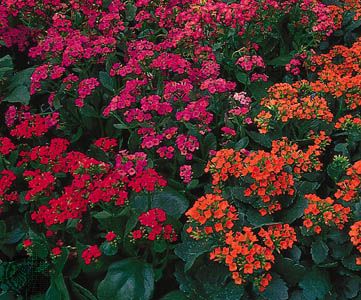
- Florist’s Kalanchoe (K. blossfeldiana): Widely marketed as a houseplant, this species is primarily valued for its vibrant, long-lasting flowers, which can remain fresh for up to eight weeks.1
- Panda Plant (K. tomentosa): Known for its unique, fuzzy foliage, this species is a popular choice for those interested in ornamental leaf textures.1
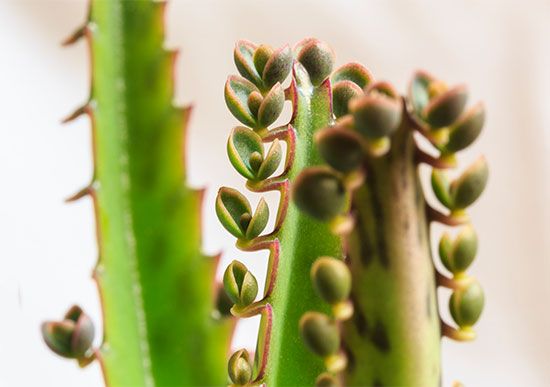
- Devil’s Backbone or Mother of Thousands (K. daigremontiana): This species is distinct for its ability to produce clonal plantlets along its leaf margins, a unique reproductive trait.1
- Velvet Leaf or Felt Bush (K. beharensis): Recognized for its shrub-like growth and distinctive, velvety leaf texture.1
- Penwiper Plant (K. marmorata): Valued primarily for its unusual foliage patterns.1
What are the main characteristics of Kalanchoe plants?
Kalanchoe is a genus of approximately 120 species of succulent plants belonging to the stonecrop family (Crassulaceae). Primarily native to Madagascar and tropical Africa, these plants are popular as houseplants due to their relatively carefree nature.1
Physical Characteristics
- Growth Habit: Most are perennial herbaceous plants, though some species grow as shrubs or annuals.1
- Foliage: They feature thick, fleshy leaves that are often waxy or hairy and typically arranged oppositely along the stems.12
- Flowers: The flowers appear in shades of yellow, orange, or red, with parts occurring in multiples of four.12
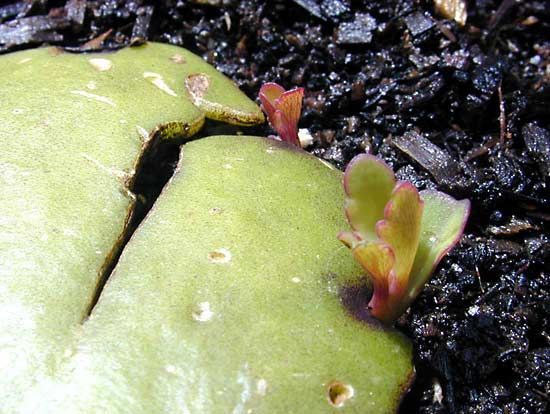
- Reproduction: Many species can be easily propagated from leaf or stem cuttings. Some are notable for producing clonal plantlets along their leaf margins or at the base of the plant.12
- Metabolism: Like other members of their family, they utilize Crassulacean Acid Metabolism (CAM), a specialized form of photosynthesis adapted for arid environments.2
How should Kalanchoe plants be cared for, including watering and light requirements?
To ensure your Kalanchoe plants thrive, it is important to provide conditions that mimic their native arid environments. As succulent plants, they are generally hardy and easy to maintain as houseplants when the following needs are met:1
Light Requirements
Kalanchoe species thrive best when provided with considerable direct sunlight. While they are adaptable and can survive in bright, indirect light, consistent exposure to direct sun helps maintain their health and vigor.1
Watering Requirements
These plants are highly sensitive to overwatering. You should only water your Kalanchoe when the soil has become thoroughly dry. Ensuring the soil dries out completely between waterings prevents the roots from sitting in excess moisture, which is essential for avoiding rot in these succulent species.1
Propagation
If you wish to expand your collection, all species can be readily propagated from leaf or stem cuttings, making them an excellent choice for those interested in plant cultivation.1
Where do Kalanchoe plants originate from, and in what climates do they thrive?
Kalanchoe plants are primarily native to Madagascar and tropical Africa. As succulent plants, they are biologically adapted to thrive in environments characterized by arid or semiarid conditions.13
These plants have evolved specialized physiological traits to survive in such climates, most notably Crassulacean Acid Metabolism. This metabolic adaptation allows them to minimize water loss by keeping their stomata closed during the hot, dry daylight hours and opening them at night to take up carbon dioxide. Their thick, fleshy tissues serve as reservoirs for water storage, enabling them to endure periods of drought.3
Sources
- kalanchoe — Encyclopædia Britannica
- Crassulaceae — Encyclopædia Britannica
- Succulent — Encyclopædia Britannica
Published on · 3 min read