Kangaroo Mouse
The kangaroo mouse (genus Microdipodops) is a small, bipedal rodent native to the deserts of the western United States. Physically, these animals are…
What are the main physical characteristics of a kangaroo mouse?
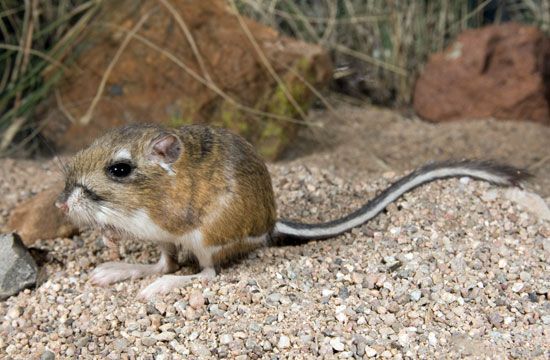
The kangaroo mouse (genus Microdipodops) is a small, bipedal rodent native to the deserts of the western United States. Physically, these animals are characterized by their large heads, large ears, and fur-lined external cheek pouches used for transporting food.1
Key physical features include:
- Limbs: They possess short forelimbs and long, powerful hind limbs and feet adapted for leaping. The soles of their feet are densely furred and fringed with stiff hairs.1
- Coat: They have a long, soft, and silky coat. The dark kangaroo mouse features brownish upperparts tinted with black, while the pale kangaroo mouse is creamy buff.1
- Tail: The tail is used for balance during movement. A unique characteristic is a slight bulge in the middle of the tail, which serves as a fat storage deposit used for energy during hibernation.1
- Size: They weigh between 10 and 17 grams, with a body length of 7 to 8 cm and a tail length of 6 to 10 cm.1
Unlike the larger kangaroo rat, the kangaroo mouse’s tail is neither crested nor tufted.1
Where are kangaroo mice typically found in the wild?
Kangaroo mice (genus Microdipodops) are found exclusively in the deserts of the western United States, specifically within the Great Basin region.1
Within this environment, they typically inhabit valley bottoms and alluvial fans characterized by sandy soils and stabilized dunes of fine, wind-blown sand. While their ranges overlap in Nevada, the two species show distinct habitat preferences: the dark kangaroo mouse (Microdipodops megacephalus) favors fine gravelly soil, whereas the pale kangaroo mouse (M. pallidus) is associated with sandy areas. These rodents construct simple burrows, usually positioning the entrance near a shrub for protection while foraging.1
What is the diet of a kangaroo mouse and how does it obtain its food?
The kangaroo mouse subsists primarily on a diet of seeds, supplemented by the occasional insect. These rodents do not need to drink liquid water; instead, they derive all necessary moisture from their food sources.1
Regarding their foraging behavior, kangaroo mice are nocturnal, remaining active only during the cool desert nights to avoid the heat. When foraging on open ground, they utilize their fur-lined external cheek pouches to collect and transport food items back to their burrows for storage. This behavior allows them to minimize time spent exposed on the surface and ensures a reliable supply of nutrients, particularly as they prepare for their winter hibernation period.1
How long do kangaroo mice typically live in the wild?
Sorry, the Britannica knowledge base does not contain this information.
Sources
- kangaroo mouse — Encyclopædia Britannica
- kangaroo mouse — Merriam-Webster
- kangaroo rat — Encyclopædia Britannica
Published on · 2 min read