Narwhal
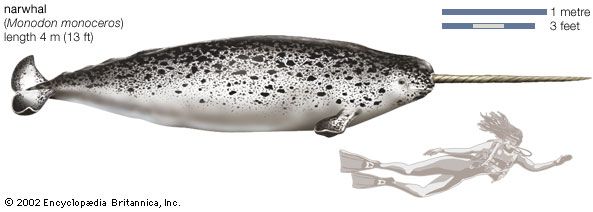
The narwhal (Monodon monoceros) is a toothed whale that feeds primarily on fish, squid, and shrimp shrimp. Because they lack teeth inside their mouths, they…
What is the diet of narwhals and how do they hunt for food?
The narwhal (Monodon monoceros) is a toothed whale that feeds primarily on fish, squid, and shrimp shrimp. Because they lack teeth inside their mouths, they swallow their prey whole.1
Regarding their hunting methods, recent observations suggest that males use their long, spiral tusk—which is actually an overgrown tooth—to assist in capturing food. Rather than spearing their prey, narwhals use the tusk to deliver a quick, firm tap that momentarily stuns the target, allowing the whale to slurp up the creature.21
Additionally, the tusk is highly sensitive, containing up to 10 million nerve endings. This sensory capability allows the narwhal to detect salt levels in the water, which helps them navigate by identifying colder, more saline areas where sea ice may be forming. While earlier theories suggested the tusk was primarily used for aggression between males, current research emphasizes its importance in sensory perception and hunting.12
How do narwhals use their distinctive tusk, and what is its purpose?
It is a common misconception to refer to the narwhal’s protrusion as a “horn.” In reality, it is a tusk, which is an overgrown tooth rather than a horn, which typically grows in pairs on the heads of hoofed mammals.2
The tusk serves several critical functions:
- Hunting: Narwhals use their tusks to hunt fish, shrimp, and squid. Rather than spearing prey, they deliver a quick, firm tap to stun the target before consuming it whole.2
- Sensory Perception: The tusk is highly sensitive, containing up to 10 million nerve endings. This allows the narwhal to detect salt levels in the water. Because higher salinity often indicates colder water where ice is forming, this sensory input helps the whales navigate away from frigid, freezing areas.2
- Social Interaction: While earlier theories, supported by figures like Charles Darwin, suggested the tusk was primarily used for aggression to compete for mates, this is now considered less significant. It may, however, still play a role in social displays or establishing hierarchy.21
What role do narwhals play in the Arctic ecosystem?
In the Arctic ecosystem, the narwhal functions as both a predator and a source of sustenance. As a toothed whale, it occupies a specific niche by feeding on fish, squid, and shrimp, helping to regulate these populations within the marine food web.12
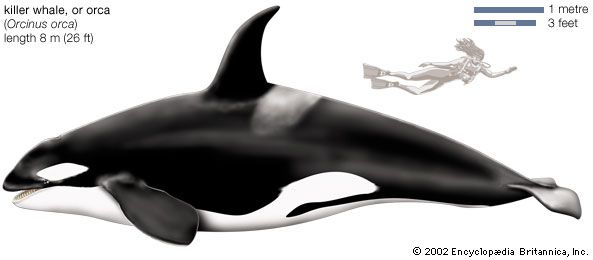
Conversely, narwhals are integrated into the broader Arctic food chain as prey for larger predators, including killer whales, polar bears, and walruses. Furthermore, they hold cultural and nutritional significance for the Inuit, who have historically hunted them for their ivory tusks and their skin, which serves as a vital source of vitamin C in the Arctic diet.1
Their presence also highlights the challenges of the changing Arctic environment; they are occasionally trapped by shifting pack ice, a phenomenon that underscores their reliance on specific ice conditions for survival.1
How do narwhals communicate and socialize with each other?
While specific details regarding the vocalizations or complex communication methods of narwhals are not extensively detailed in the provided search results, we do know that these toothed whales are highly social animals. They are typically found in groups of 15 to 20 individuals, though they have been observed in large herds numbering in the thousands.2
Regarding their social interactions, the tusk is believed to play a role beyond its sensory and hunting functions. While once thought to be primarily a weapon for aggression between males, researchers now suggest the tusk may serve as a display feature. This could help narwhals attract mates or assist in establishing a social hierarchy within their groups.1
Beyond these observations, the provided information does not contain further specifics on their communication behaviors.
Sources
- narwhal — Encyclopædia Britannica
- What does a narwhal use its horn for? — Encyclopædia Britannica
Published on · 3 min read