Kangaroo Rat
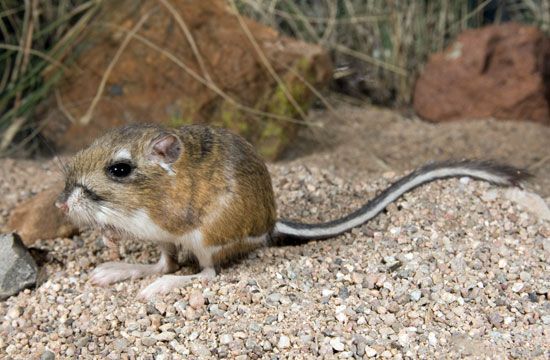
Kangaroo rats (Dipodomys) are North American desert rodents that have adapted to arid environments by rarely needing to drink water. Instead, they obtain the…
What is the diet of kangaroo rats and how do they obtain their food?
Kangaroo rats (Dipodomys) are North American desert rodents that have adapted to arid environments by rarely needing to drink water. Instead, they obtain the moisture they require from their diet, which consists of seeds, stems, buds, fruit, and insects.1
These animals are nocturnal foragers. To gather and transport their food, they utilize fur-lined external cheek pouches that open alongside their mouths. Once they have collected their food, they transport it to store in their burrows or in shallow pits nearby, creating caches that they rely on during the winter months.1
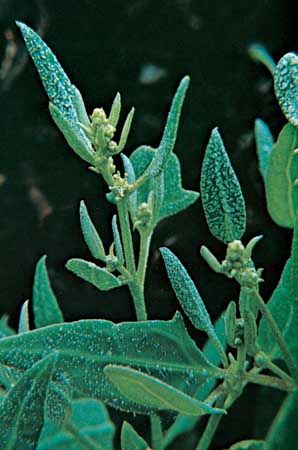
Some species, such as the chisel-toothed kangaroo rat, have developed specialized feeding behaviors. They consume the leaves of the saltbush by using their lower front teeth to peel away the skin, allowing them to access the water- and nutrient-rich layers underneath.1
How do kangaroo rats compare to other rodent species in terms of behavior and habitat?
Kangaroo rats (Dipodomys) are distinct from “true” mice (family Muridae) and are instead classified within the family Heteromyidae, which includes their closest relatives, kangaroo mice and pocket mice. It is important to note that despite the name, kangaroo rats are placental rodents and should not be confused with “rat kangaroos,” which are Australian marsupials.132
Behavioral Comparisons
- Locomotion: Like kangaroo mice, kangaroo rats are bipedal, using their long hind legs to hop or leap across the ground. While kangaroo rats use their forelegs only for short distances, the musky rat kangaroo (a marsupial) notably scurries on all fours.132
- Water Conservation: Both kangaroo rats and kangaroo mice are highly adapted to arid environments and rarely drink water, obtaining moisture from their diet. They further conserve water by producing concentrated urine and dry feces.13
- Storage and Hibernation: Kangaroo rats do not hibernate; they rely on food caches stored in burrows or shallow pits to survive the winter. In contrast, kangaroo mice hibernate from approximately November to March, utilizing fat stored in their tails as an energy source.13
Habitat Preferences
Kangaroo rats inhabit open, sparsely vegetated, hot and dry environments such as chaparral, sagebrush, and desert grasslands, preferring well-drained sandy or gravelly soils. Kangaroo mice are more specialized, typically found in valley bottoms and alluvial fans where fine, wind-blown sand is prevalent.13
How are kangaroo rats adapted to survive in desert environments?
Kangaroo rats (Dipodomys) have evolved several specialized physiological and behavioral adaptations to thrive in the arid, hot environments of North America.1
Water Conservation and Physiology
Kangaroo rats are highly efficient at managing moisture, rarely needing to drink liquid water. They obtain necessary hydration directly from their diet of seeds, stems, buds, fruit, and insects. To minimize water loss, they possess highly specialized kidneys featuring long loops of Henle, which allow them to resorb water effectively and excrete highly concentrated urine.13
Behavioral Adaptations
- Nocturnal Foraging: By remaining active only during the cool desert nights, they avoid the dehydrating heat of the day.1
- Food Storage: They use fur-lined external cheek pouches to transport food, which they cache in burrows or shallow pits to ensure a consistent food supply throughout the winter.1
- Burrowing: They excavate burrows or construct mounds, providing a stable microclimate that protects them from extreme surface temperatures.1
- Hygiene: They maintain their fur by bathing in fine sand, which prevents the development of sores and keeps their coat in good condition.1
How have kangaroo rats been studied by scientists, and what have we learned from this research?
Scientific research into the kangaroo rat (Dipodomys) has provided significant insights into their unique physiology, evolutionary history, and ecological adaptations.
Key Areas of Scientific Study
- Evolutionary Biology: Scientists have traced the evolutionary history of kangaroo rats back to the Late Miocene Epoch, approximately 11.2 million to 5.3 million years ago, in North America. Research confirms they belong to the family Heteromyidae, distinct from “true” mice (Muridae), and are closely related to kangaroo mice and pocket mice.1
- Physiological Adaptations: Studies have highlighted their remarkable ability to survive in arid environments without drinking liquid water. Researchers have identified specialized kidneys with long loops of Henle as the mechanism that allows them to produce highly concentrated urine and conserve moisture.1
- Dietary Specialization: Scientific observation of the chisel-toothed kangaroo rat (Dipodomys microps) revealed a unique feeding behavior: they use their lower front teeth to peel the salty skin off saltbush leaves to access the water-rich layers beneath, a rare adaptation among mammals.1
- Conservation Status: Ongoing monitoring has shown that the transformation of desert habitats due to residential and agricultural development has imperiled several species, such as the Texas kangaroo rat (D. elator), which scientists have observed adapting to disturbed areas like fencerows and barns.1
Sources
- kangaroo rat — Encyclopædia Britannica
- rat kangaroo — Encyclopædia Britannica
- kangaroo mouse — Encyclopædia Britannica
- mammal - Excretory system — Encyclopædia Britannica
- kangaroo rat — Merriam-Webster
Published on · 4 min read