Kárpathos
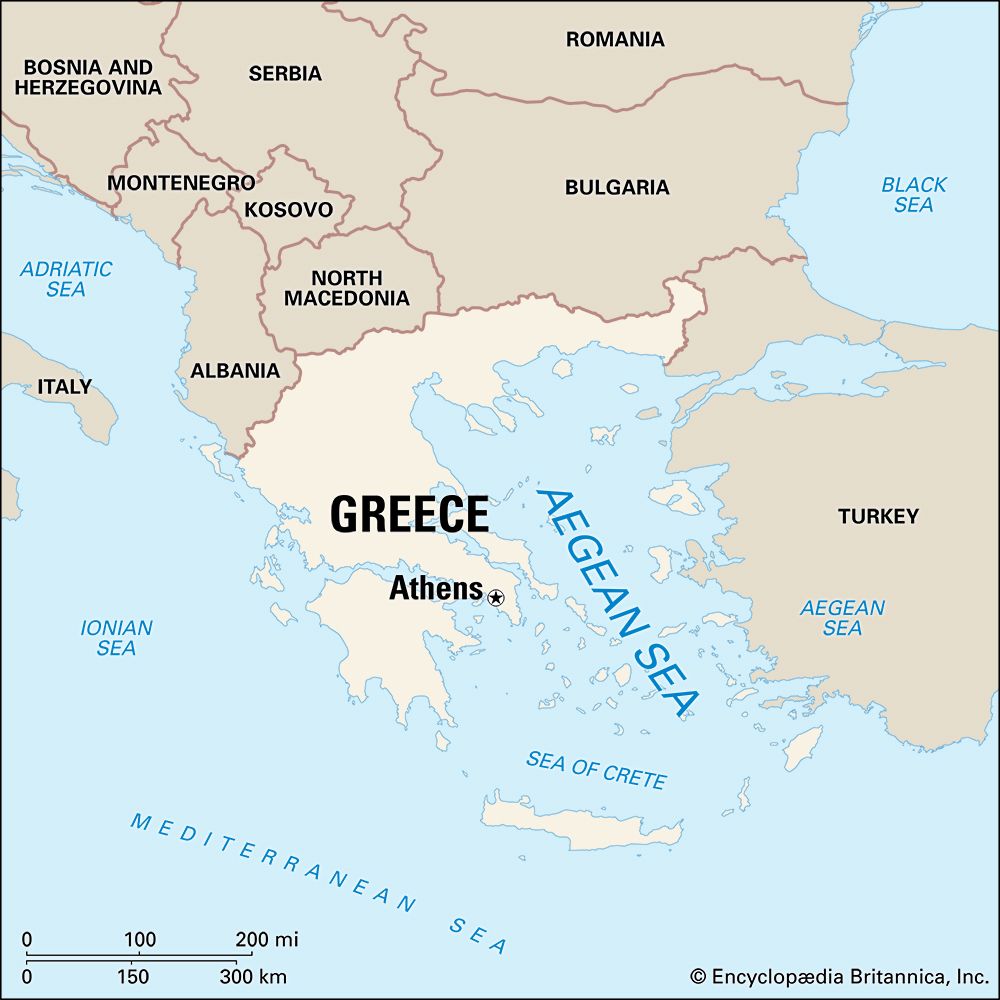
Kárpathos is an island belonging to the Dodecanese group in the Aegean Sea, located in southeastern Greece. Covering approximately 116 to 118 square miles…
What is Kárpathos?
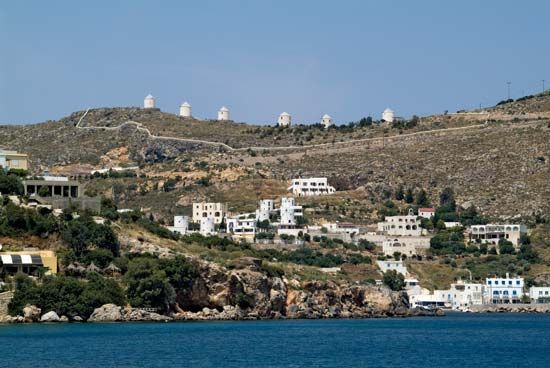
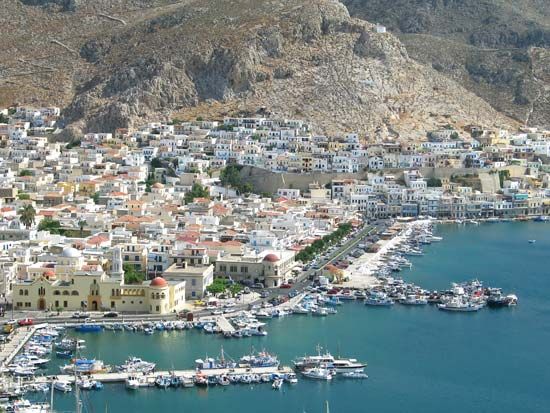
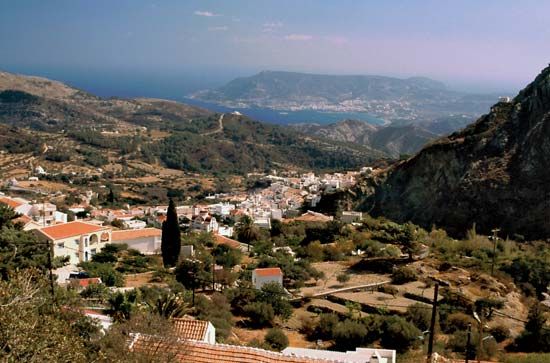
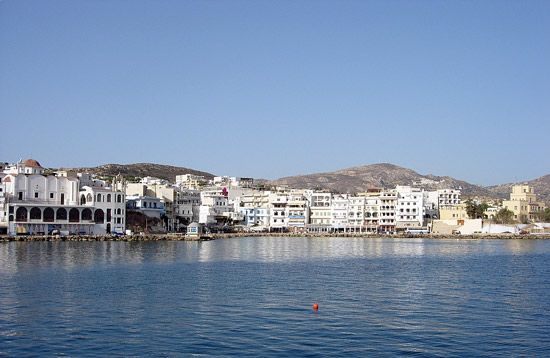
Kárpathos is an island belonging to the Dodecanese group in the Aegean Sea, located in southeastern Greece. Covering approximately 116 to 118 square miles, the island is characterized by its rocky, largely treeless terrain, with the exception of its southern region. Its principal town is Pigádhia, situated in the south along Pigádhia Bay.12
Historically, the island maintained close ties to Rhodes throughout antiquity and the Middle Ages. It was under Venetian rule from 1306 until approximately 1540, when it fell to the Turks. Following a period of Italian control starting in 1912, the island was awarded to Greece after World War II.1
Today, the local economy relies primarily on farming, horticulture, and grazing, with some fishing activity. The inhabitants speak a unique Greek dialect that incorporates elements of ancient Doric and modern Italian.1
What are the Dodecanese islands?
The Dodecanese is a group of islands located in the Aegean Sea off the southwestern coast of Turkey and belonging to Greece. Although the name means “12 islands,” the group has historically included a varying number of islands.4
The main islands of the Dodecanese include:
- Kárpathos
- Pátmos
- Kásos
- Astipálaia
- Lipsoí
- Léros
- Kálimnos
- Nísuros
- Tílos
- Chálki
- Sými
- Rhodes
- Cos
- Kastellórizo (outlying)45
Historically, the islands were part of the ancient Greek world but did not function as a single political unit until later periods. During Turkish administration starting in the 16th century, the group became fixed at 12 islands. Following a period of Italian rule that began in 1912, the islands were formally ceded to Greece in 1947 after World War II after World War II. Today, the region has seen significant economic growth through the development of tourism, particularly on islands like Rhodes and Cos.4
How did Venetian rule influence Greek islands?
Venetian rule significantly shaped the Greek islands, particularly following the Fourth Crusade in 1204, when Venice acquired a vast commercial empire in the eastern Mediterranean. This influence manifested in several key ways:6
- Commercial Expansion: Venice established a network of trading stations and fortified lookout posts across the Aegean islands and the Greek mainland, securing a dominant position in regional trade.6
- Cultural Renaissance: The period of Venetian and western European rule (c. 1204–1669) fostered a “minor renaissance” of Greek art and culture. This era produced notable architectural works, such as the Venetian Loggia in Iráklion, as well as significant contributions to literature and drama, including the romantic-epic poem Erotocritos by Vitséntzos Kornáros.7
- Artistic Development: The influence of this period is evident in the development of frescoes, icons, and paintings, such as those by Michael Damaskinos, which blended local traditions with Western artistic trends.7
- Geopolitical Shifts: Venetian control was often marked by intense competition with other powers, such as Genoa and the Ottoman Empire, leading to centuries of shifting borders and military conflict.86
What is the significance of the Doric dialect?
The Doric dialect was one of the major linguistic divisions of the ancient Greek language, spoken primarily in the Peloponnese, Crete, and various colonies across Sicily and southern Italy.101112
Its significance lies in several key areas:
- Literary Influence: While the Ionic-Attic dialect of Athens eventually dominated Greek culture, Doric remained essential to specific literary forms. It was the primary language of choral lyric poetry, and its elements were famously incorporated into the lyric passages of Attic tragedies.101213
- Regional Standards: During the Hellenistic period, several supraregional “Doric Koine” standards emerged, such as those used by the Achaean League and the Aetolian League, demonstrating the dialect’s enduring political and administrative utility.12
- Scientific and Philosophical Prose: The Syracusan variety of Doric was used in the scientific writings of Archimedes and the philosophical works of Pythagoreans like Archytas of Tarentum.12
Because the Athenian dialect became the standard for Greek prose and culture from the 5th century BCE onward, relatively few pure Doric texts survive, making the existing corpus a vital window into the diversity of the ancient Greek world.10
Sources
- Kárpathos — Encyclopædia Britannica
- Kárpathos — Merriam-Webster
- list of islands - Greece — Encyclopædia Britannica
- Dodecanese — Encyclopædia Britannica
- Aegean Islands — Encyclopædia Britannica
- Venice - Europeans and Turks against Venice — Encyclopædia Britannica
- Venice - Trade conflicts — Encyclopædia Britannica
- Greece - Cultural milieu — Encyclopædia Britannica
- Venice - Relations with the Byzantine Empire — Encyclopædia Britannica
- Dorian — Encyclopædia Britannica
- Doric — Merriam-Webster
- Doric dialect — Encyclopædia Britannica
- Attic dialect — Encyclopædia Britannica
Published on · 3 min read