Léros
Léros is an island and municipality located in the South Aegean region of southeastern Greece. It is part of the Dodecanese island group, situated in the…
Where is Léros located within Greece, and what are its main geographical features?
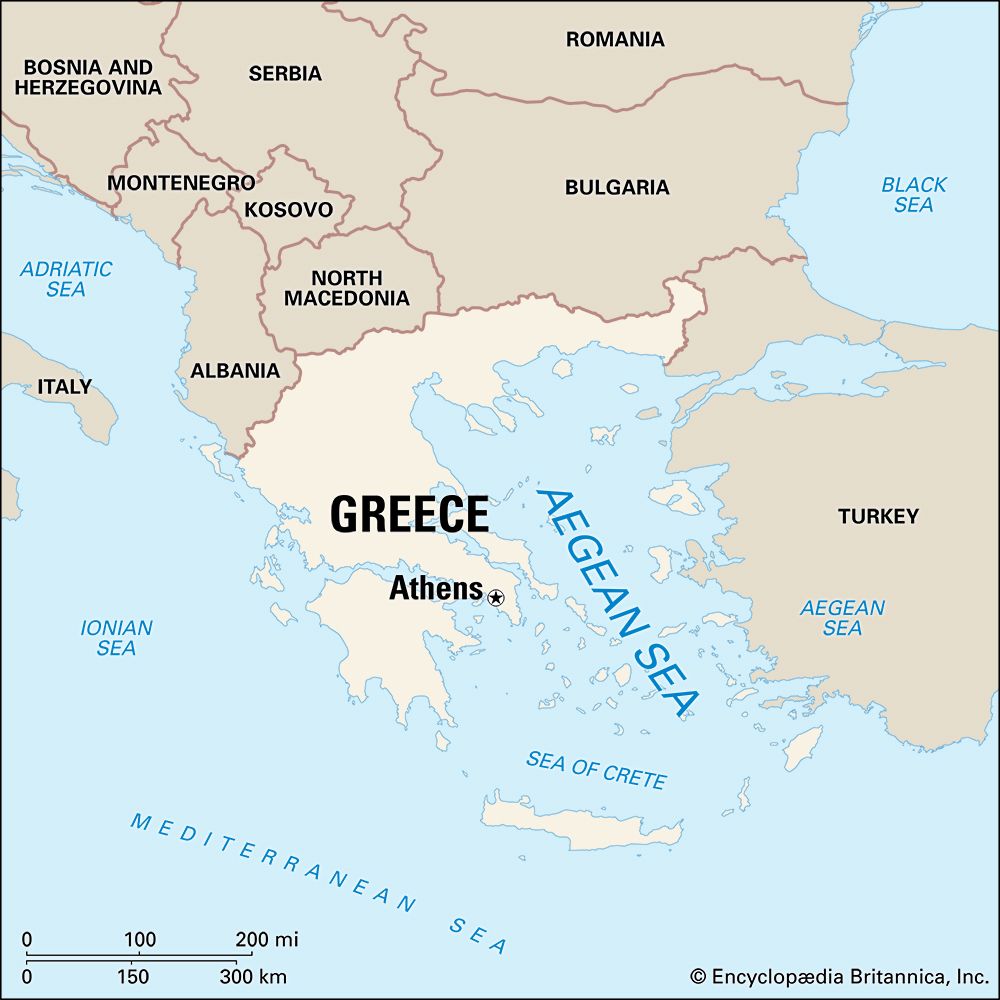
Léros is an island and municipality located in the South Aegean region of southeastern Greece. It is part of the Dodecanese island group, situated in the Aegean Sea east of the Cyclades and off the southwestern coast of Turkey.1
The island’s geography is characterized by the following features:
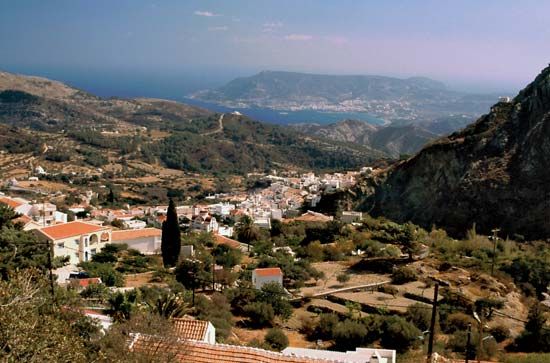
- Topography: Léros is mountainous, with its highest point reaching 1,073 feet (327 meters).1
- Structure: It consists of three peninsulas connected by two isthmuses, covering a total area of 20 square miles (53 square km).1
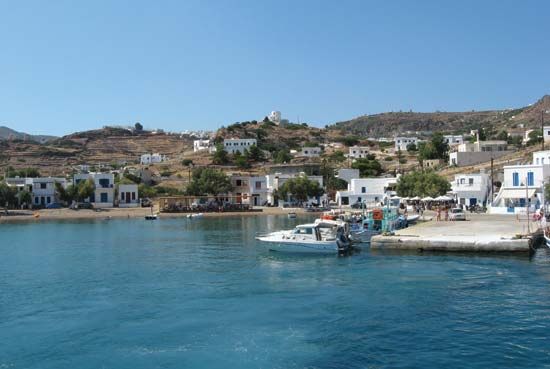
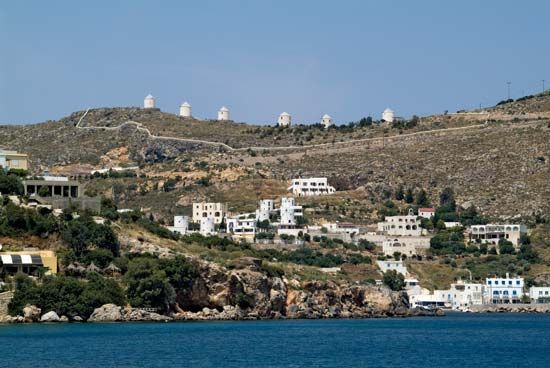
- Coastline: The island is noted for being full of creeks and features numerous promontories and deep bays, with bathing beaches located on both its east and west coasts.1
- Environment: It is surrounded by many smaller islets and contains fertile central valleys that support agricultural activities, including the production of olives, figs, and grapes.1
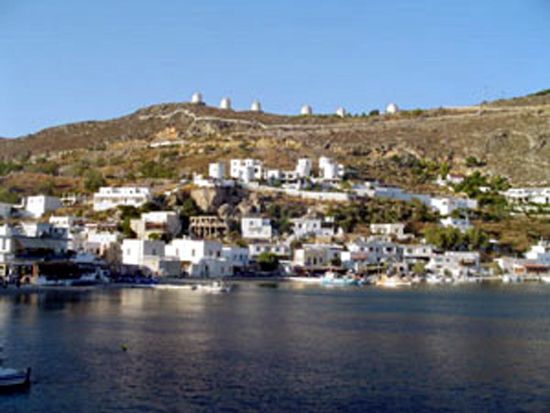
What traditional customs or festivals are unique to Léros?
Léros maintains unique cultural traditions that reflect its long history and social structure. One notable custom is the island’s long-standing practice regarding property inheritance, where estates are traditionally handed down to daughters rather than sons.1
Additionally, the island hosts a distinctive annual festival rooted in ancient Dionysian competitions. This celebration takes place in homes where a marriage occurred during the preceding year. During the festivities, adults compose and perform satirical verses, while children dressed as monks recite them.1
How has Léros’s strategic location influenced its role in Greek history?
Léros’s strategic location in the Aegean Sea has made it a focal point for various powers throughout history. Its position off the southwestern coast of Turkey and within the Dodecanese island group led to a succession of inhabitants, including Carians, Cretans, Ionians, Byzantines, and Rhodians.2
The island’s history of shifting control highlights its importance as a regional asset. For instance, the Byzantines and Rhodians famously quarreled over the island until Rhodes took possession of it in 1319. Furthermore, the broader Dodecanese group, which includes Léros, experienced significant geopolitical tension during the 20th century. Following the Italo-Turkish War in 1912, the islands were seized by Italy, leading to a prolonged dispute between Italy and Greece over sovereignty. It was not until after World War II that the islands were formally ceded to Greece in 1947.21
What unique flora and fauna can be found on Léros, and how does its ecosystem differ from other Greek islands?
Sorry, the Britannica knowledge base does not contain information regarding unique flora and fauna specific to Léros, nor does it provide a comparative analysis of its ecosystem against other Greek islands.
Sources
- Léros — Encyclopædia Britannica
- Lésbos — Encyclopædia Britannica
- Dodecanese — Encyclopædia Britannica
- Greece - Plant and animal life — Encyclopædia Britannica
Published on · 2 min read