Cashmere Goat
The Cashmere goat is a breed of domestic goat primarily valued for its luxurious, soft undercoat, which is used to manufacture cashmere fiber. While all…
What is Cashmere goat?
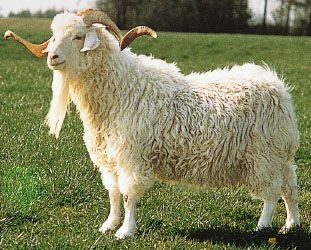
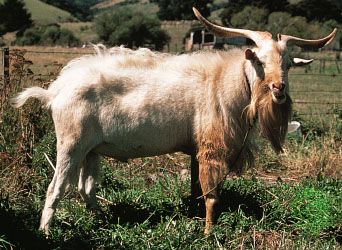
The Cashmere goat is a breed of domestic goat primarily valued for its luxurious, soft undercoat, which is used to manufacture cashmere fiber. While all goats possess a downy underfur, the Cashmere breed is specifically prized for the quality and quantity of this undercoat, known as pashm or pashmina.123
Physically, these goats vary in color and build, but they are often characterized by large ears, slender limbs, and curved, spreading horns. They possess a protective outer coat of coarse hair, beneath which grows the fine, soft downy fiber.123
Because each goat produces only a small amount of this fiber annually—ranging from a few grams to about 0.5 kilograms—and because the labor-intensive process of separating the fine down from the coarse outer hair is costly, cashmere is considered a luxury product. The major producers of this fiber include China, Mongolia, and Iran.43
How does the molting season affect the collection of cashmere?
The molting season is the critical period for harvesting cashmere, as it is when the Kashmir goat naturally sheds its soft, downy undercoat. Because this fiber is not shorn like traditional wool, producers must rely on the animal’s natural molting cycle to collect the material.2
During this season, the fibers are gathered through meticulous hand-combing or plucking. This process is highly labor-intensive, as workers must carefully separate the fine, insulating undercoat from the goat’s coarser outer hair. The precision required during this collection phase is essential; if too much of the coarse outer coat is included, the quality and market value of the resulting fiber decrease significantly.2
Following collection, the raw material undergoes further cleaning to remove impurities and additional separation, which can reduce the final yield by approximately 50 percent. This combination of a limited annual harvest per animal and the demanding nature of the collection process is a primary reason for the high cost of finished cashmere products.2
What are the main differences between cashmere and other natural fibers like mohair or wool?
It is a common misconception that all soft animal fibers are interchangeable; however, true cashmere is specifically the downy undercoat of the Kashmir goat, whereas wool and mohair come from different sources and possess distinct physical properties.23
Key Differences
- Source: Cashmere is a specialty hair fiber from the Kashmir goat’s undercoat. Wool typically refers to the fleece of sheep, while mohair is derived from the Angora goat.35
- Fiber Fineness: Cashmere fibers are finer than those of the best wools, providing a superior soft texture and drape.23
- Strength and Durability: Cashmere is generally weaker than fine wool and significantly weaker than mohair. While cashmere is prized for its luxurious feel, it is more susceptible to abrasion and pilling in knitwear.3
- Structure: Unlike wool, which has distinct scales, cashmere scales are less defined. Additionally, most specialty fibers like cashmere and mohair lack the high degree of crimp (waviness) and felting properties characteristic of traditional sheep’s wool.35
Why is cashmere considered a luxury material compared to other textiles?
Cashmere is considered a luxury material primarily due to its scarcity, the labor-intensive nature of its production, and its superior physical qualities.
Factors Contributing to Luxury Status
- Limited Supply: Cashmere is derived from the soft undercoat of the Kashmir goat. Each animal yields only a small amount of fiber annually—ranging from a few grams to about 0.5 kilograms—meaning the fleece of 4 to 6 goats is required for a single sweater, and up to 40 goats for an overcoat.23
- Labor-Intensive Harvesting: The fibers are typically collected by hand-combing or plucking during the molting season. This meticulous process is necessary to separate the fine, soft down from the goat’s coarser outer hair.23
- Processing Costs: After collection, the raw material must be cleaned and subjected to mechanical dehairing to remove impurities and coarse fibers. This processing reduces the final yield by approximately 50 percent, significantly increasing the cost of the finished fiber.23
- Superior Qualities: Cashmere is highly valued for its exceptional softness, warmth, and elegant drape. Its fibers are finer than those of the best wool, providing a unique texture that remains a hallmark of high-quality textile goods.23
Sources
- Cashmere goat — Encyclopædia Britannica
- Why is cashmere expensive? — Encyclopædia Britannica
- cashmere — Encyclopædia Britannica
- Goat breeds — Encyclopædia Britannica
- specialty hair fibre — Encyclopædia Britannica
Published on · 3 min read