Kermes
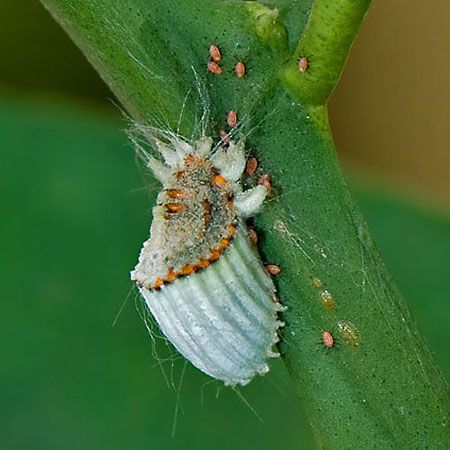
Kermes refers to both a species of scale insect (Kermes ilicis) and the red dye derived from the dried bodies of the females of these insects. Found on the…
What is kermes?
Kermes refers to both a species of scale insect (Kermes ilicis) and the red dye derived from the dried bodies of the females of these insects. Found on the Mediterranean oak (Quercus coccifera), these insects have been used as a source of colorant since antiquity, with evidence of their use by early Egyptians.123
Historically, the dye held significant economic value; it was often paid as tribute to Roman armies and accepted by landlords during the Middle Ages as payment for rent. While kermes is considered the oldest known red dyestuff, it is generally regarded as inferior in color quality to cochineal, a related dye obtained from insects that live on prickly pear cacti. The primary coloring component in kermes is kermesic acid, which is chemically similar to the carminic acid found in cochineal.134
How does the production of cochineal dye differ from kermes?
The production of cochineal and kermes dyes differs primarily in their biological sources and cultivation methods.
Biological Sources and Habitat
- Cochineal: Produced from the dried, pulverized bodies of the female Dactylopius coccus insect. These insects are native to tropical and subtropical America and feed exclusively on prickly pear cacti (Opuntia).4
- Kermes: Derived from the dried bodies of the female Kermes ilicis insect, which lives on the Mediterranean oak (Quercus coccifera).1
Cultivation and Harvesting
- Cochineal: Production involves the deliberate inoculation of prickly pear plantations with immature crawlers. Once mature, the sedentary females are carefully brushed from the cactus pads into bags. They are then killed through immersion in hot water, exposure to sunlight, steam, or oven heat. The specific method of treatment significantly influences the final appearance of the commercial product.4
- Kermes: While historical records note its use since antiquity and its role as a form of tribute or currency in the Middle Ages, specific modern industrial cultivation details are less documented than those of cochineal.1
What other historical dyes were derived from insects?
Beyond kermes and cochineal, another significant red dye derived from insects is lac.34
- Lac: This dye is obtained from the resinous secretion of the lac insect (Laccifer lacca), a type of scale insect native to India, Thailand, Myanmar, and other parts of Southeast Asia. The insects deposit this resin on the twigs and branches of specific trees, such as the sacred fig (Ficus religiosa).4
- Production: Lac is harvested by gathering the twigs—known as stick lac—which contain the insects and their secretions. The red dye is then extracted from the ground stick lac using hot water or a hot sodium carbonate solution. While the resin is primarily used to produce shellac, the associated lac dye has been widely utilized in Asian countries for centuries.4
It is worth noting that while these insect-derived dyes provided vibrant colors, they were eventually largely superseded by the development of synthetic dyes by the early 20th century.35
Why was Tyrian purple considered a symbol of royalty?
Tyrian purple was considered a symbol of royalty and imperial rank primarily due to its extreme cost and the labor-intensive process required to produce it.
The dye was derived from the small, puslike secretions of specific mollusks, such as Bolinus brandaris and Stramonita haemastoma. Because each mollusk yielded only a tiny amount of the substance, thousands of animals were required to produce enough dye for a single garment. This scarcity made the color exceptionally expensive, effectively reserving its use for the wealthiest and most powerful individuals in society.67
The association with status was so profound that it gave rise to the phrase “born in the purple,” referring to those of royal or imperial birth. In the Roman Empire, the wearing of Tyrian purple was strictly regulated as a mark of social class and authority. This tradition persisted long after the classical era; for instance, in the Roman Catholic Church, the term “promotion to the purple” signifies the elevation of a member to the rank of cardinal.6
Sources
- kermes — Encyclopædia Britannica
- kermes — Merriam-Webster
- dye - Natural dyes — Encyclopædia Britannica
- cochineal — Encyclopædia Britannica
- lac — Encyclopædia Britannica
- Tyrian purple — Encyclopædia Britannica
- purple — Encyclopædia Britannica
- Dress - Ancient Rome — Encyclopædia Britannica
- indigo — Encyclopædia Britannica
- Tyrian purple — Merriam-Webster
Published on · 3 min read