Why Do Some Cicadas Appear Only Every 17 Years?
Periodical cicadas of the genus Magicicada have evolved 13- and 17-year life cycles as an evolutionary strategy to survive. By emerging in such massive…
Why Do Some Cicadas Appear Only Every 17 Years?
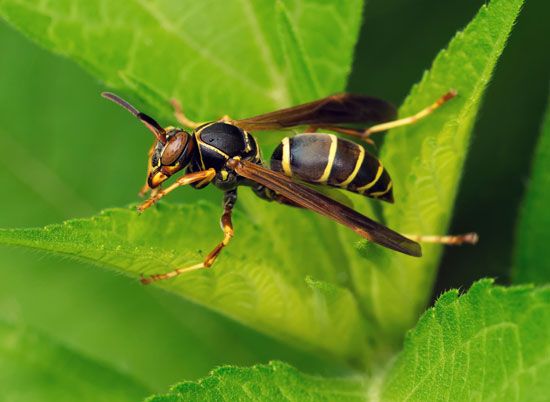
Periodical cicadas of the genus Magicicada have evolved 13- and 17-year life cycles as an evolutionary strategy to survive. By emerging in such massive, synchronized numbers, they effectively satiate their predators—a phenomenon similar to mast seeding in plants—ensuring that enough individuals survive to mate and lay eggs. Additionally, these long, infrequent life cycles help the insects avoid specialized predators, such as certain parasitic wasps, which cannot easily adapt to such irregular appearances.1
While the exact mechanism remains unproven, scientists speculate that nymphs track the passage of time by monitoring seasonal changes in the composition of xylem sap they consume from tree roots. When the soil temperature reaches approximately 64 °F (18 °C), the nymphs emerge en masse to complete their final molt.21
It is a common misconception that these insects hibernate; they are actually active underground, feeding and excavating tunnels throughout their long nymphal stage.2
How do 13-year cicadas differ from 17-year cicadas?
The primary difference between 13-year and 17-year periodical cicadas lies in the length of their subterranean nymphal development, which dictates the frequency of their emergence aboveground.43
Beyond this temporal distinction, these insects are categorized by their specific species and brood groupings:
- Species Composition: There are seven recognized species of periodical cicadas within the genus Magicicada. Three species (M. septendecim, M. cassini, and M. septendecula) follow a 17-year cycle, while four species (M. tredecim, M. neotredecim, M. tredecassini, and M. tredecula) follow a 13-year cycle.3
- Brood Organization: Periodical cicadas are organized into “broods” based on their emergence year. There are 12 distinct broods of 17-year cicadas and 3 broods of 13-year cicadas.3
- Geographic Distribution: While both types are native to the United States, they occur in chronologically and geographically isolated broods. Although their ranges can overlap—such as in parts of central Illinois—they generally emerge in different years.23
Despite these differences, both groups share the same fundamental biology: they spend the vast majority of their lives underground feeding on xylem sap from tree roots before emerging en masse to mate and die within a few weeks.43
What is the difference between annual and periodical cicadas?
The primary difference between annual and periodical cicadas lies in the length and predictability of their life cycles.
Periodical Cicadas
- Life Cycle: These insects (genus Magicicada) have highly synchronized, long-term life cycles of 13 or 17 years.63
- Emergence: They emerge aboveground en masse only at these specific intervals, creating a “predator satiation” effect where their sheer numbers overwhelm potential predators, ensuring survival.3
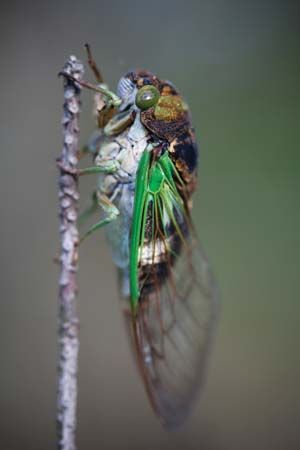
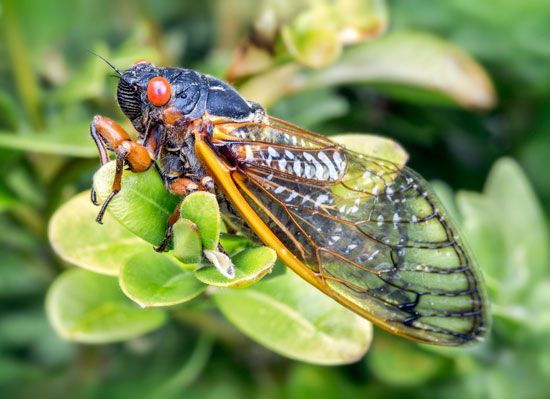
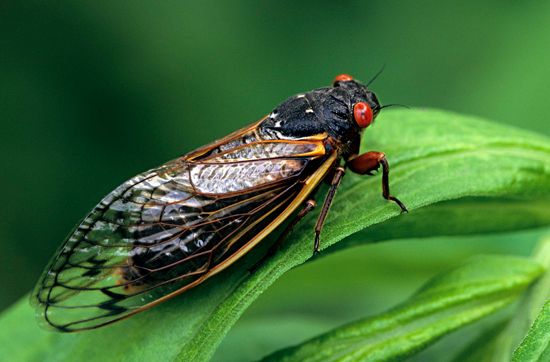
- Appearance: They are generally smaller than annual species and are characterized by their distinct red eyes and black thoraxes.3
Annual Cicadas
- Life Cycle: Despite their name, annual cicadas do not live for only one year; their life cycles typically span 2–5 years.2
- Emergence: Because their generations overlap, some individuals reach adulthood and emerge every summer, making them a consistent presence in the environment.2
- Appearance: These species, such as the dog-day cicadas (Neotibicen), are typically larger than periodical cicadas and are often green in color.23
While both groups spend their nymphal stages underground feeding on xylem sap from tree roots, their differing strategies—synchronized mass emergence versus staggered annual appearance—represent distinct evolutionary paths.23
How do cicadas use their songs to communicate?
Male cicadas use specialized songs to communicate for several purposes, primarily to attract mates and establish territory. These sounds are produced exclusively by males using a unique structure called the tymbal organ, located on the first abdominal segment. By rapidly contracting and relaxing muscles attached to these ridged membranes, males create clicking sounds that, when repeated 120 to 480 times per second, are perceived by the human ear as a continuous buzz.78
The songs serve distinct social functions:
- Congregational Songs: Males synchronize their calls in choruses to establish territory and attract females.7
- Courtship Calls: Specific signals are produced after pair formation to facilitate mating.78
- Distress Calls: Known as “dying yells,” these are produced when a cicada is trapped or under attack.8
Each of the approximately 3,000 species possesses a distinct, characteristic song, which helps in species identification and mate recognition. Large air sacs within the insect’s body act as resonators, amplifying the sound to the high-pitched volumes often heard during summer.78
Sources
- Why Do Some Cicadas Appear Only Every 17 Years? — Encyclopædia Britannica
- periodical cicada — Encyclopædia Britannica
- cicada — Encyclopædia Britannica
- homopteran - Periodical cicada — Encyclopædia Britannica
- Did you know? — Merriam-Webster
- cicada: Top Questions — Encyclopædia Britannica
- Why are cicadas so noisy? — Encyclopædia Britannica
- homopteran - Sound production — Encyclopædia Britannica
Published on · 3 min read