Do Honeybees Sleep?
Yes, honeybees do sleep, typically resting for five to eight hours each day. A bee is considered to be in a state of sleep when its antennae become still…
Do honeybees sleep?
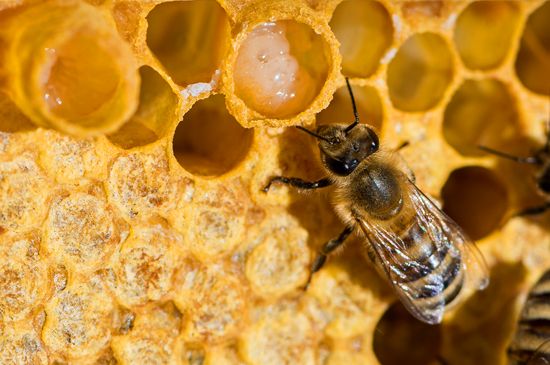
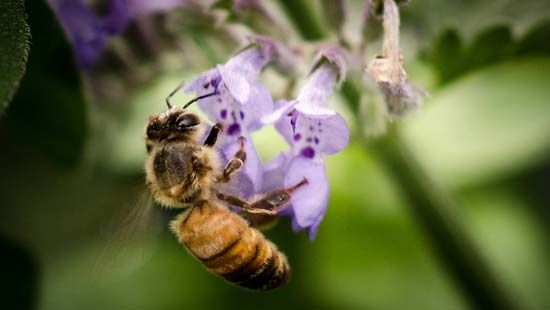
Yes, honeybees do sleep, typically resting for five to eight hours each day. A bee is considered to be in a state of sleep when its antennae become still, its head is tucked toward its body, and its breathing becomes irregular. During these periods, bees exhibit a reduced sensitivity to external stimuli.1
Sleep patterns among honeybees vary based on their age and specific roles within the colony:
- Younger worker bees: These bees perform tasks within the hive and do not follow a regular sleep schedule, instead resting periodically.1
- Older foraging bees: These bees generally sleep at night, adhering to a circadian rhythm.1
Rest is vital for maintaining the cognitive functions required for complex tasks, such as the “waggle dance,” which foragers use to communicate the location and quality of food sources. Adequate sleep ensures that bees can navigate and communicate effectively, which is essential for the survival and efficiency of the entire colony.1
What is the purpose of the honeybee waggle dance?
The honeybee waggle dance is a sophisticated communication behavior performed by foraging bees within the hive to share vital information with their nest mates.2
By executing a series of figure-eight movements—which include a straight “walk” between loops and sporadic wing fluttering—a forager communicates specific details regarding a distant food source. This dance informs other bees about the:1
- Location: The direction of the resource relative to the sun.2
- Distance: How far the bees must travel to reach the site.12
- Quality and Size: The abundance and value of the nectar or pollen discovered.12
This complex signaling is essential for the efficiency and survival of the colony, as it allows the group to coordinate their foraging efforts effectively. The ability to perform and interpret this dance relies on the cognitive health of the bees, which is maintained through adequate sleep.2
How do circadian rhythms affect other insects?
Circadian rhythms are biological rhythms that function as internal mechanisms, allowing insects to synchronize their physiological and behavioral activities with the 24-hour cycle of day and night. These rhythms are governed by an internal biological clock that persists even in the absence of external environmental cues.4
In insects, these rhythms are critical for several reasons:
- Behavioral Regulation: Circadian rhythms help regulate daily cycles of rest and activity. For example, older foraging honeybees follow a circadian rhythm to manage their sleep patterns, which is essential for maintaining the cognitive functions required for navigation and communication.5
- Environmental Synchronization: The alternation of light and dark serves as a primary zeitgeber (“time giver”), helping insects align their internal cycles with the environment. Light acts as a profound modifier of physiological processes, influencing endocrine functions and developmental stages.67
- Developmental Control: While circadian rhythms manage daily activities, related environmental cues—specifically changes in day length (photoperiod)—influence long-term life cycle events. For instance, a decrease in day length can trigger diapause, a state of arrested development, by altering the secretion of growth and molting hormones.81
What are the different roles of bees within a colony?
A honeybee colony is a highly organized eusocial society where individuals are divided into three distinct castes, each with specialized roles essential for the colony’s survival.1011
The Three Castes
- Queen: The only sexually mature female, she is responsible for laying thousands of eggs daily to sustain the colony’s population. She rarely leaves the hive except to swarm or during her initial mating flights.101112
- Drones: These are the male bees. Their sole purpose is to mate with a queen; they do not perform hive labor and are typically driven from the colony during periods of resource scarcity.1013
- Workers: These are sexually undeveloped females that perform all labor within the colony. Their roles are determined by age through a process known as the division of labor.101114
The Worker’s Life Cycle
As a worker bee ages, her physiological capabilities change, allowing her to transition through various tasks:14
- Days 1–4: Cleaning cells and removing waste.14
- Days 4–16: Nursing the brood by feeding larvae royal jelly, honey, and pollen.1014
- Day 16+: Secreting beeswax to build and repair the honeycomb.1014
- Day 20+: Serving as an entrance guard and eventually transitioning to a forager, collecting nectar, pollen, and water until death.1014
Sources
- Do honeybees sleep? — Encyclopædia Britannica
- waggle dance — Merriam-Webster
- Hymenoptera - Chemical — Encyclopædia Britannica
- Biological rhythm — Encyclopædia Britannica
- insect - Role of hormones — Encyclopædia Britannica
- Dormancy - Diapause in insects — Encyclopædia Britannica
- radiation - Effects on development and biologic rhythms — Encyclopædia Britannica
- human nervous system - Circadian rhythms — Encyclopædia Britannica
- Reproductive behaviour - Environmental influences — Encyclopædia Britannica
- western honeybee - Colony and life cycle — Encyclopædia Britannica
- Beekeeping - Drones — Encyclopædia Britannica
- western honeybee - Physical description — Encyclopædia Britannica
- Beekeeping - Queen bee — Encyclopædia Britannica
- Hymenoptera - Division of labor — Encyclopædia Britannica
Published on · 3 min read