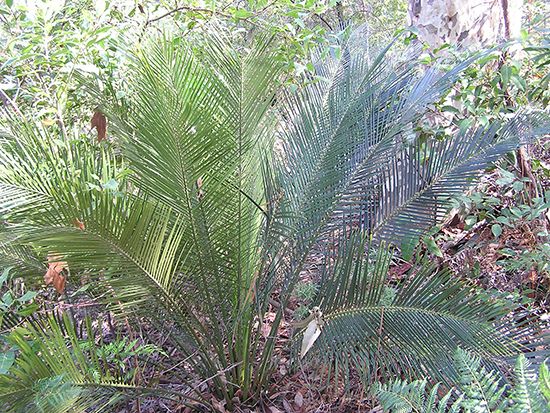
Keteleeria
Keteleeria is a genus of coniferous evergreen trees belonging to the Pinaceae family, native to Southeast Asia. The genus consists of three to seven species.
What is Keteleeria?
Keteleeria is a genus of coniferous evergreen trees belonging to the Pinaceae family, native to Southeast Asia. The genus consists of three to seven species.1
While these trees bear a resemblance to true firs (Abies), they are distinguished by several unique characteristics:
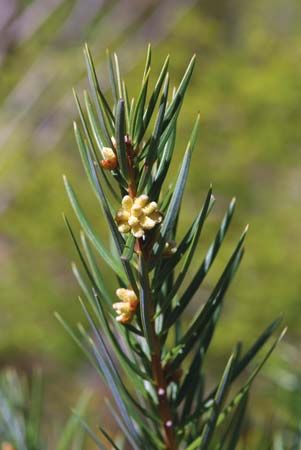
- Reproductive structures: They produce clusters of 5 to 10 male reproductive structures on short, scaly stalks.1
- Foliage: Young plants feature spine-tipped leaves, and the upper surfaces of the leaves are keeled.12
- Buds: The buds are covered in many overlapping scales that form a sheath around the base of the shoot.1
- Cones: Unlike true firs, the scales of Keteleeria cones do not fall off when the cone reaches maturity.12
The genus was named in honor of the 19th-century Belgian gardener J.B. Keteleer.2
How do Keteleeria trees differ from true firs?
While Keteleeria trees are often compared to true firs (Abies), they possess distinct botanical features that set them apart:
- Cone Behavior: A primary difference is that the scales of Keteleeria cones remain intact and do not fall off when the cone reaches maturity, whereas true fir cones typically disintegrate at maturity.12
- Reproductive Structures: Keteleeria produces clusters of 5 to 10 male reproductive structures situated on short, scaly stalks.1
- Leaf Characteristics: Young Keteleeria trees feature spine-tipped leaves, and their leaves are characterized by a keeled upper surface.12
- Bud Structure: The buds of Keteleeria are covered in numerous overlapping scales that create a sheath around the base of the shoot.1
What are the defining characteristics of the Pinaceae family?
The Pinaceae family, commonly known as the pine family, is a group of conifers comprising 11 genera and approximately 220 species of trees, which are primarily native to northern temperate regions.3
Key defining characteristics of the family include:
- Reproductive Biology: All members are monoecious, meaning they bear both male and female reproductive structures on the same plant.3
- Foliage: The leaves are needlelike and may be arranged solitarily, in bundles, or on specialized short branches.3
- Male Cones: These pollen-bearing structures are either solitary or clustered. They consist of many spirally arranged scales, with each scale bearing two pollen sacs.3
- Seed-Bearing Cones: These compound structures also feature many spirally arranged scales. Each scale is free from the bract beneath it and carries two inverted ovules on its upper surface. In the genus Pinus, however, the bract often fuses to the scale and disappears as the cone matures.3
Members of this family, such as fir, spruce, and larch, are vital sources of timber, resins, and paper pulp.3
Why do some conifer cones fall apart while others remain intact?
The behavior of conifer cones at maturity—whether they remain intact or fall apart—is a key characteristic of their reproductive strategy and classification.
Why Cones Fall Apart
In many conifers, such as true firs (Abies), the seed cones are designed to disintegrate upon reaching maturity. As the cone matures, the scales separate from the central axis and fall away, effectively releasing the seeds to be dispersed by wind. This process leaves behind only the central, woody stalk of the cone on the branch.567
Why Cones Remain Intact
Conversely, many other conifers, including most pines (Pinus), produce woody cones that remain intact at maturity. In these species, the scales do not fall off; instead, they open to release the seeds. The timing and method of this opening vary significantly:
- Standard Release: In many species, the scales simply open at maturity to scatter seeds.1
- Environmental Triggers: Some species, particularly those in fire-dependent ecosystems, keep their cones closed for several years. These cones may only open in response to specific environmental stimuli, such as the heat from a wildfire, the actions of food-seeking animals, or the natural process of rotting.1
Sources
- Keteleeria — Encyclopædia Britannica
- Keteleeria — Merriam-Webster
- Pinaceae — Encyclopædia Britannica
- pine — Encyclopædia Britannica
- conifer - Strobili — Encyclopædia Britannica
- pine - Physical description and natural history — Encyclopædia Britannica
- gymnosperm - Pinophyta — Encyclopædia Britannica
- conifer - Annotated classification — Encyclopædia Britannica
Published on · 3 min read