Khobar
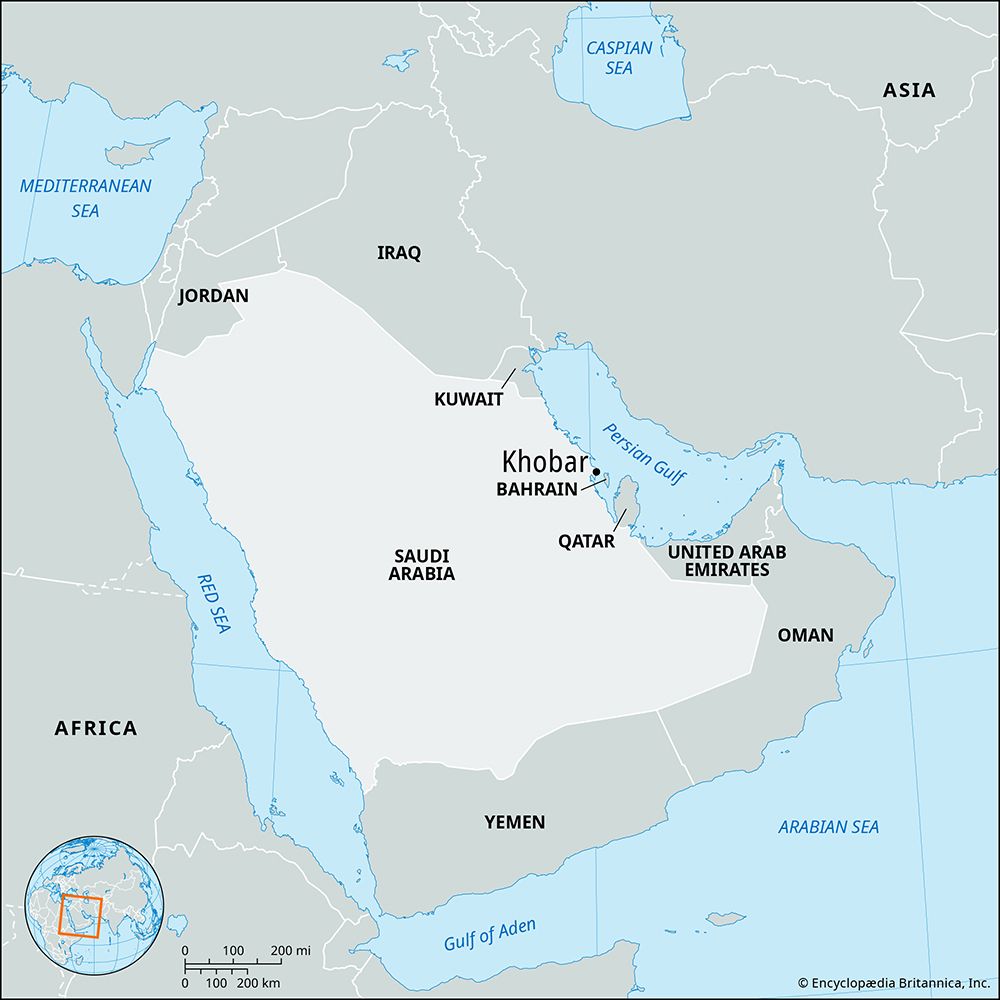
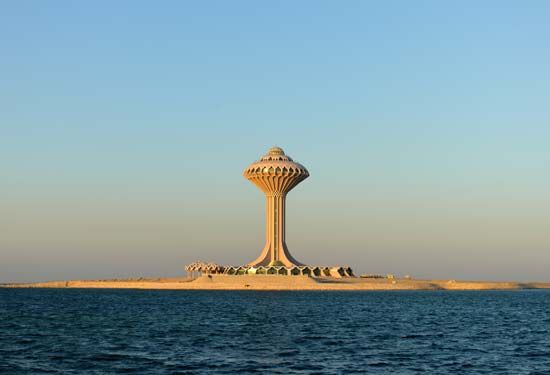
Khobar is an oasis and port city located in the Al-Sharqiyyah province of eastern Saudi Arabia. Situated on the Persian Gulf south of Dammam, it serves as a…
What is Khobar?
Khobar is an oasis and port city located in the Al-Sharqiyyah province of eastern Saudi Arabia. Situated on the Persian Gulf south of Dammam, it serves as a significant commercial and industrial center. The city is part of a larger metropolitan and industrial complex that includes Dammam, Qatif, and Dhahran.12
Historically, the city is also associated with the Khobar Towers bombing of 1996, a terrorist attack on a U.S. Air Force housing complex. This tragic event resulted in the deaths of 19 U.S. service members and injured approximately 500 people. The attack was a heinous act of violence that stands in direct opposition to the fundamental principles of human life and international peace.3
What role does the oil industry play in the development of Saudi Arabian cities?
The oil industry has been the primary catalyst for the transformation of Saudi Arabia from a largely agrarian, sparsely populated society into a modern, urbanized state. Since the discovery of commercially viable oil in 1938, petroleum revenues have fueled massive investments in infrastructure, transportation, and communication networks that underpin the country’s major cities.5678
Urban Transformation
- Boomtown Development: The discovery of oil reserves turned small coastal settlements into major industrial and commercial hubs. For example, Dammam evolved from a small village into a modern metropolis and a critical seaport, forming a large metropolitan complex alongside Khobar, Qatif, and Dhahran.83
- Modernization: Traditional centers like Jeddah expanded significantly, while the capital, Riyadh, grew from an oasis town into a modern metropolis.5
- Infrastructure: Oil wealth enabled the construction of extensive highways, international airports, and utilities, including the world’s largest desalination program to address perennial water scarcity.759
Economic Impact
The influx of oil revenue allowed the government to implement five-year plans that modernized the nation and expanded the service sector, which now employs nearly three-fifths of the workforce. Today, Saudi Aramco remains central to this development, as its profits fund the Public Investment Fund, which is actively investing in tourism, mining, and artificial intelligence to diversify the economy beyond oil.746
How did the Persian Gulf War influence U.S. military presence in the region?
The Persian Gulf War (1990–91) fundamentally altered the U.S. military presence in the Middle East, shifting it from a temporary deployment to a long-term strategic commitment.
Initial Deployment and Deterrence
Following Iraq’s invasion of Kuwait, King Fahd of Saudi Arabia took the unprecedented step of inviting Western forces into the kingdom to deter further Iraqi aggression. This led to Operation Desert Shield, the largest U.S. overseas military deployment since World War II, involving hundreds of thousands of troops.12
Post-War Presence and Challenges
After the war, the U.S. maintained a significant military footprint in Saudi Arabia to patrol no-fly zones over southern Iraq. This presence became a flashpoint for regional tensions and domestic opposition within the kingdom. The Khobar Towers bombing of 1996, which killed 19 U.S. service members, highlighted the dangers faced by these forces and the growing resentment toward the U.S. military presence.13
Withdrawal
Over time, the political climate shifted. By 2003, following the Iraq War, the Saudi government refused to support the U.S.-led coalition, and both nations formally agreed to withdraw all U.S. military forces from Saudi soil.14
What is the significance of desalination plants in desert climates?
Desalination plants are vital to desert climates, serving as the primary source of municipal water in many arid and densely populated regions, particularly across the Middle East and North Africa. By removing dissolved salts from seawater or brackish water, these facilities render otherwise unusable water fit for human consumption, irrigation, and industrial applications.1617
Significance and Challenges
- Economic Viability: While desalination is energy-intensive and costly, it is often more economical than transporting large quantities of fresh water over long distances. Costs are further mitigated through cogeneration, where plants produce both electricity and desalted water by recycling steam, a common practice in the Middle East.161718
- Environmental Impact: The process presents significant challenges, including high greenhouse gas emissions from fossil fuel consumption and the production of brine wastewater.16
- Technology: Facilities typically utilize thermal processes or membrane processes, such as reverse osmosis, to separate water from salt.1617
Sources
- Khobar — Encyclopædia Britannica
- Khobar Towers bombing of 1996 — Encyclopædia Britannica
- Dammam — Encyclopædia Britannica
- Dhahran — Encyclopædia Britannica
- Saudi Arabia - Economy of Saudi Arabia — Encyclopædia Britannica
- Saudi Arabia - Petroleum — Encyclopædia Britannica
- Saudi Arabia — Encyclopædia Britannica
- Saudi Arabia: Top Questions — Encyclopædia Britannica
- Saudi Arabia - Other resources — Encyclopædia Britannica
- Saudi Aramco — Encyclopædia Britannica
- Saudi Arabia - Services — Encyclopædia Britannica
- Persian Gulf War — Encyclopædia Britannica
- Persian Gulf War - Operation Desert Shield — Encyclopædia Britannica
- Saudi Arabia - Foreign policy since the end of the Persian Gulf War — Encyclopædia Britannica
- South Yemen: Top Questions — Encyclopædia Britannica
- desalination — Encyclopædia Britannica
- water supply system - Desalination — Encyclopædia Britannica
- water supply system - Cogeneration and hybrid processes — Encyclopædia Britannica
Published on · 3 min read