Killiecrankie
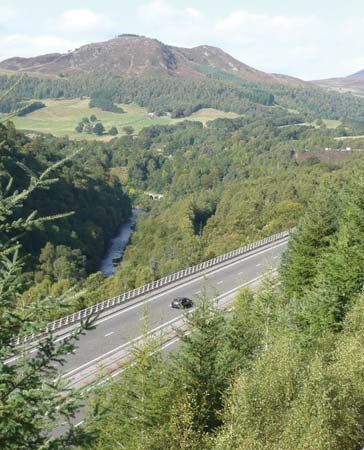
Killiecrankie is a Grampian mountain pass located in the Perth and Kinross council area of Scotland, situated approximately 4 miles (6 km) north of Pitlochry.
What is Killiecrankie?
Killiecrankie is a Grampian mountain pass located in the Perth and Kinross council area of Scotland, situated approximately 4 miles (6 km) north of Pitlochry.1
The site is historically significant as the location of the 1689 Battle of Killiecrankie, where insurgent Jacobite Highlanders defeated a royal force. Today, the narrow, wooded glen is utilized by a modern road and railway.1
Who were the Jacobites?
The Jacobites were supporters of the exiled House of Stuart king, James II, and his descendants following the Glorious Revolution of 1688. The movement, named after the Latin form of James (Jacobus), remained a significant political force in Britain until the mid-18th century.2
Support for the Jacobites was rooted in different motivations across the British Isles:
- Scotland and Wales: Support was primarily dynastic, centered on the legitimacy of the Stuart line.2
- Ireland: Support was largely religious, as Roman Catholics hoped for better treatment under Catholic Stuart monarchs.2
- England: Many Tories turned to Jacobitism due to their opposition to the Whigs and doubts regarding the legality of the 1688–89 succession.2
The movement launched five major attempts to restore the Stuarts to the throne, including the Fifteen Rebellion and the final, heavily romanticized Forty-five Rebellion led by Charles Edward, the Young Pretender. The movement was effectively crushed following the Battle of Culloden in 1746.2
What caused the conflict in 1689?
The conflict in 1689, which culminated in the Glorious Revolution, was driven by deep-seated religious and political tensions surrounding the reign of King James II.
Key factors contributing to the crisis included:
- Religious Friction: As a Roman Catholic, James II alienated much of the Protestant population through policies such as the Declaration of Indulgence, which suspended penal laws against Catholics and Nonconformists.32
- The Succession Crisis: While many tolerated James’s rule under the assumption that his Protestant daughter, Mary II, would eventually succeed him, the birth of a son in June 1688 created the prospect of a permanent Catholic dynasty.34
- Political Defiance: Tensions peaked when James imprisoned seven bishops for refusing to read his declaration from their pulpits. Their subsequent acquittal by a London jury emboldened political leaders to take action.42
- Foreign Intervention: Fearing the king’s policies, prominent English figures invited William of Orange to invade. His arrival in November 1688 led to the collapse of James’s support, his flight to France, and the eventual establishment of Parliament as the supreme ruling power.342
What is the geography of the Scottish Highlands?
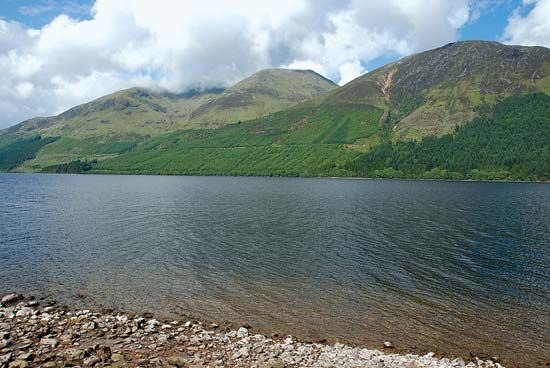
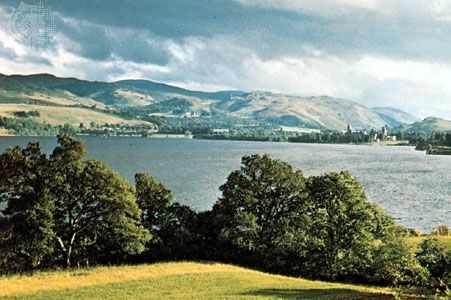
The Scottish Highlands are characterized by a rugged, mountainous landscape formed by ancient geological processes and severe glaciation. The region is topographically bisected by the Glen Mor fault line, which contains a series of lochs, including Loch Ness.89
Key geographical features include:
- North of Glen Mor: This area consists of an ancient plateau eroded into peaks of uniform height, separated by glacial glens. The northwestern fringe is particularly barren, featuring a hummocky landscape of thin, acidic soil, small lochs, and Torridonian sandstone mountains.8
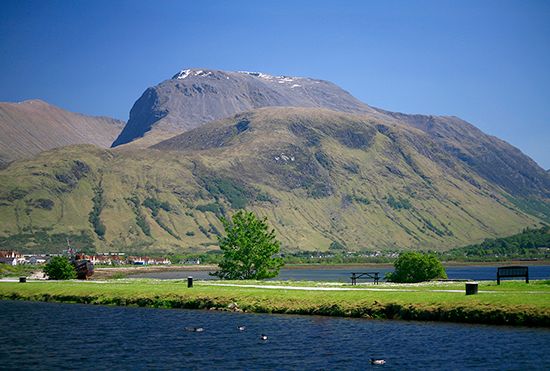
- Southeast of Glen Mor: This region is dominated by the Grampian Mountains, which are generally more rounded and grassy than the northwest. It includes the Cairngorm Mountains and Britain’s highest peak, Ben Nevis, which reaches 4,406 feet (1,343 metres).89
- Climate: The region is one of the wettest in the United Kingdom, with high precipitation levels, particularly in the west. The surrounding seas provide a moderating influence, resulting in mild winters and cool summers.9
Sources
- Killiecrankie — Encyclopædia Britannica
- Jacobite — Encyclopædia Britannica
- Glorious Revolution: Top Questions — Encyclopædia Britannica
- United Kingdom - The Revolution of 1688 — Encyclopædia Britannica
- Glorious Revolution — Encyclopædia Britannica
- Scotland - The early Stewart kings — Encyclopædia Britannica
- James II: Top Questions — Encyclopædia Britannica
- Scotland - Relief of Scotland — Encyclopædia Britannica
- Highland — Encyclopædia Britannica
- Scotland - Jacobitism in the Highlands — Encyclopædia Britannica
Published on · 3 min read