Kolkhida
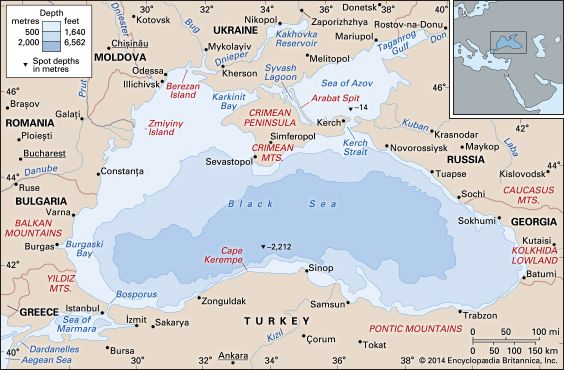
Kolkhida (also known as Colchis) refers to a coastal lowland plain located in western Georgia along the eastern Black Sea.
What is Kolkhida?
Kolkhida (also known as Colchis) refers to a coastal lowland plain located in western Georgia along the eastern Black Sea1.1
Historically, the region was an ancient kingdom situated in the valley of the Rioni River. In Greek mythology, it is famously depicted as the land of sorcery and the destination of the Argonauts, who traveled there to retrieve the Golden Fleece. Over the centuries, the area was influenced by various powers, including Milesian Greek colonists, Achaemenian Persia, the Roman Empire, and later the Byzantine and Sāsānian empires.12
Geographically, the modern plain is defined by the alluvial deposits of rivers flowing from the Greater Caucasus and Lesser Caucasus ranges. Its subtropical climate has supported agriculture, such as tea and citrus cultivation, since ancient times.3
Who was Medea and what role did she play in the myth of the Argonauts?
In Greek mythology, Medea was a powerful enchantress, a princess of Colchis, and a woman of divine descent with the gift of prophecy. She is best known for her pivotal role in assisting Jason, the leader of the Argonauts, in his quest to retrieve the Golden Fleece5.5
Medea used her magic and counsel to help Jason succeed in this seemingly impossible task, which had been set by King Pelias. During their flight from Colchis, she further aided Jason by conspiring to kill her brother, Apsyrtus, scattering his remains to delay their pursuers. After marrying Jason, she continued to use her powers to protect him, including orchestrating the murder of Pelias to secure Jason’s inheritance.65
However, their relationship eventually collapsed when Jason deserted her for the daughter of King Creon of Corinth. This betrayal led to one of literature’s most famous acts of vengeance, famously depicted in Euripides’ play Medea, in which she murdered her own children, Creon, and his daughter.675
What were the Symplegades and how did the Argonauts pass them?
The Symplegades, also known as the Cyanean rocks, were two legendary cliffs located at the entrance to the Euxine (Black) Sea. These treacherous rocks were said to move on their bases, crushing any ship that attempted to sail between them.3
To navigate this danger, the Argonauts sought the advice of the blind king Phineus. Following his guidance, Jason released a dove to fly between the cliffs ahead of the ship. The rocks slammed together, catching the bird’s tail feathers, but as the cliffs began to rebound, the Argo rowed through with the assistance of the goddess Athena. Once the ship successfully passed through, the rocks became fixed in place and never closed again.3
How did the geography of the Caucasus mountains influence the history of the region?
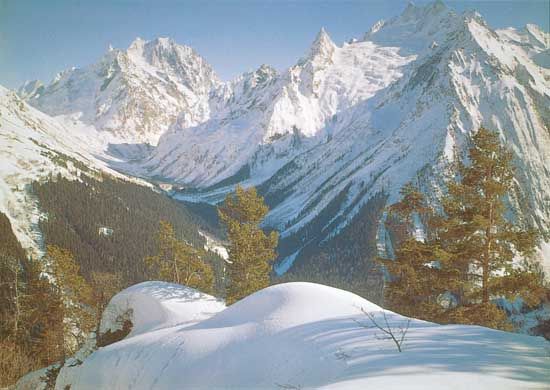
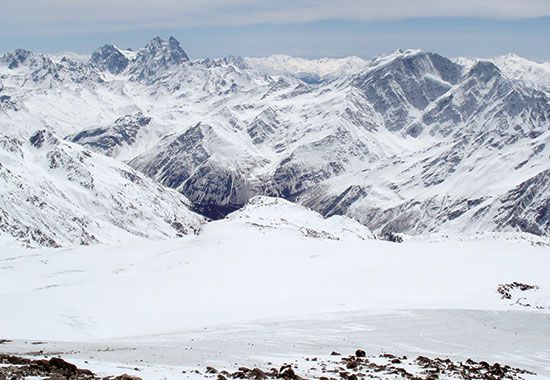
The geography of the Caucasus mountains has profoundly shaped the region’s history by acting as both a strategic gateway and a protective barrier.89
A Gateway for Migration and Culture
The Caucasus isthmus, particularly the route along the Caspian Sea, has served as a major corridor for nomadic peoples migrating between Central and Southwest Asia. The mountains facilitated the northward spread of Fertile Crescent civilizations, influencing the development of indigenous cultures, such as the ancient centers of bronze working.9810
Isolation and Diversity
The region’s rugged, inhospitable terrain provided natural refuge for diverse ethnic groups. By retreating into remote mountain ravines, these peoples were able to preserve their unique languages and customs, leading to an extraordinary level of cultural and linguistic diversity—often described as an “ethnic museum.”11910
A Geopolitical Buffer Zone
Throughout history, the Caucasus has functioned as a buffer zone between rival empires, including the Roman and Parthian, Byzantine and Arab, and Persian and Russian. Its position at the convergence of Europe and Asia made it a frequent site of conflict, conquest, and shifting political boundaries.9811
Sources
- Kolkhida — Encyclopædia Britannica
- Colchis — Encyclopædia Britannica
- Argonaut — Encyclopædia Britannica
- Colchis — Merriam-Webster
- Jason — Encyclopædia Britannica
- Medea — Encyclopædia Britannica
- Medea — Encyclopædia Britannica
- Caucasus - Geology of Caucasus — Encyclopædia Britannica
- Caucasus — Encyclopædia Britannica
- history of Transcaucasia - Early history — Encyclopædia Britannica
- Caucasus - People of Caucasus — Encyclopædia Britannica
- Caucasian peoples — Encyclopædia Britannica
- Transcaucasia — Encyclopædia Britannica
Published on · 3 min read