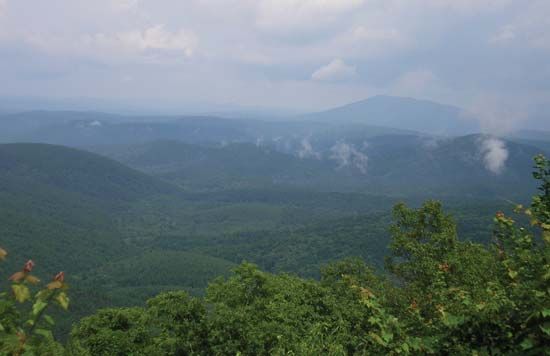
Kiamichi River
The provided information does not list specific species of fish found in the Kiamichi River. While the river is known to support the endangered freshwater…
What species of fish can be found in the Kiamichi River, and are any of them endangered?
The provided information does not list specific species of fish found in the Kiamichi River. While the river is known to support the endangered freshwater scaleshell mussel (Leptodea leptodon), the available data does not identify any fish species, nor does it specify if any fish in the river are currently classified as endangered.1
What are some of the unique geological features along the Kiamichi River’s course?
The Kiamichi River flows through the Ouachita Mountains, a region defined by significant geological history. The landscape surrounding the river is a direct result of the Ouachita orogeny, a major mountain-building event that occurred during the late Paleozoic Era, approximately 318 to 271 million years ago.12
This orogeny caused intense folding and faulting of the region’s strata. The process involved massive northward and westward compression, which pushed geosynclinal strata onto the adjacent platform rocks, creating the rugged, uplifted terrain through which the river now winds. Because of the scenic and natural value of this landscape, much of the upper river was designated part of the U.S. Scenic Rivers system in 1982, and thousands of acres within the surrounding Ouachita National Forest are protected as federal wilderness.21
How does the Kiamichi River contribute to the local ecosystem and biodiversity?
The Kiamichi River serves as a vital component of the regional ecosystem by providing a protected habitat for diverse wildlife within the Ouachita Mountains. Its ecological significance is highlighted by the presence of the endangered freshwater scaleshell mussel (Leptodea leptodon), a species that has seen its historical range across the midwestern United States significantly reduced.1
The river’s role in supporting biodiversity is further bolstered by federal conservation efforts. In 1982, much of the upper river was designated as part of the U.S. Scenic Rivers system, and thousands of acres surrounding the river within the Ouachita National Forest are protected as federal wilderness. These designations help preserve the river’s natural state, ensuring that it remains a sanctuary for various species, including the woodpecker populations that are said to have inspired the river’s name.1
What is the historical significance of the Kiamichi River for Native American tribes in the region?
The Kiamichi River holds historical significance rooted in the presence of indigenous communities in the region. The name “Kiamichi” is derived from a nearby Caddo Indian village. It is widely believed that the name translates to “noisy bird,” a term likely inspired by the river’s abundant population of woodpeckers.1
Furthermore, the river’s geography is deeply tied to the history of the Choctaw people, as the river flows through what is now Choctaw County before joining the Red River south of Fort Towson, a site historically significant to the Choctaw Nation in Oklahoma.1
Sources
- Kiamichi River — Encyclopædia Britannica
- Ouachita orogeny — Encyclopædia Britannica
Published on · 2 min read