Climbing Perch
The climbing perch (Anabas testudineus) is a small Asian freshwater fish belonging to the family Anabantidae. It is a type of labyrinth fish, characterized…
What is climbing perch?
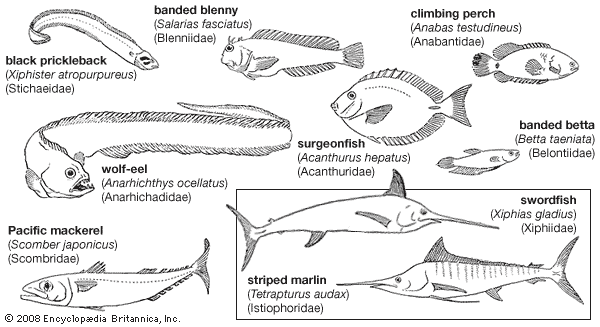
The climbing perch (Anabas testudineus) is a small Asian freshwater fish belonging to the family Anabantidae. It is a type of labyrinth fish, characterized by a specialized gill apparatus that allows it to breathe air.12
Typically growing to about 25 cm (10 inches), this brownish or green fish is notable for its ability to survive and move on land for short periods. It travels overland using a jerky, walking motion, which is facilitated by its tail and the spiny rays on its fins and gill covers. While it is often found in ponds and ditches, its common name stems from the observation that it can emerge from the water and is sometimes said to climb trees.12
What is a labyrinth organ and how does it help fish breathe?
The labyrinth organ is a specialized, supplemental breathing structure found in labyrinth fish, a group of tropical fish belonging to the suborder Anabantoidei. Located in a chamber situated above the gills, this apparatus is densely supplied with blood vessels, allowing it to function similarly to a rudimentary lung.56
This organ enables these fish to extract oxygen directly from atmospheric air, which they gulp in through their mouths at the water’s surface. By utilizing this adaptation, labyrinth fish can survive in environments where the water is oxygen-poor or even out of the water for short periods. While these fish still possess gills for standard underwater respiration, the labyrinth organ provides a critical evolutionary advantage, allowing them to thrive in a diverse range of freshwater habitats where other species might struggle to survive.56
What other types of fish are capable of surviving on land?
Several fish species have evolved remarkable adaptations that allow them to survive and move on land for varying periods. Beyond the climbing perch, other notable examples include:
- Mudskippers: These tropical gobies are highly adapted for terrestrial life. They breathe air trapped in their gill chambers and absorb oxygen through their skin. Their strong pectoral fins allow them to walk, climb, and skip across mud flats.96
- Walking catfish: Native to Southeast Asia, this fish uses its pectoral fin spines as anchors to move across land with snakelike motions. It possesses specialized gills that enable it to breathe both air and water.910
- Mangrove killifish: This species can spend months out of water, living inside rotting branches or tree trunks. When their pools dry up, they alter their gills to retain nutrients and water, and they excrete nitrogenous waste through their skin.9
- Eels: These fish use their skin as a significant respiratory surface, which becomes even more critical when they are out of water during overland migrations.11
These adaptations demonstrate the diverse evolutionary strategies fish use to thrive in environments where water may be scarce or oxygen-poor.111
How do aquatic animals adapt to environments with low oxygen levels?
Aquatic animals have evolved a variety of physiological and behavioral adaptations to survive in environments with low oxygen levels, a condition known as hypoxia.
Respiratory Adaptations
Many aquatic animals maximize the efficiency of their gills through structural specializations. For example, crustaceans often possess protective gill chambers and use appendages to actively move water over their respiratory surfaces. In fish, the countercurrent exchange mechanism ensures that blood flows in the opposite direction of water, maintaining a constant diffusion gradient that allows for efficient oxygen uptake even when water oxygen levels are low.1411
Aerial Respiration
When water oxygen is insufficient, many fish supplement their intake through aerial respiration:
- Surface Gulping: Some species rise to the surface to gulp air, charging specialized structures like the pharynx or stomach with oxygen.11
- Specialized Organs: Labyrinth fish utilize a labyrinth organ that functions like a rudimentary lung, while lungfish use lungs derived from the swim bladder to breathe air.116
- Skin Respiration: Some animals, such as eels, can absorb significant amounts of oxygen directly through their skin.11
Biochemical and Metabolic Responses
At a molecular level, animals respond to hypoxia by increasing levels of hypoxia-inducible factor (HIF), which helps cells survive and proliferate despite limited oxygen. Additionally, many aquatic organisms utilize respiratory pigments like hemoglobin or hemocyanin to increase the oxygen-carrying capacity of their blood. These pigments can also store oxygen for use during periods of respiratory suspension. In extreme cases, some species, such as the lungfish, enter estivation, a state of significantly reduced metabolism that allows them to survive for months without food or water.151611
Sources
- climbing perch — Encyclopædia Britannica
- climbing perch — Merriam-Webster
- Locomotion - Arboreal amphibians and reptiles — Encyclopædia Britannica
- Locomotion - Climbing birds and mammals — Encyclopædia Britannica
- labyrinth fish — Encyclopædia Britannica
- How do fish breathe? — Encyclopædia Britannica
- lungfish - Adaptations for breathing — Encyclopædia Britannica
- labyrinth fish — Merriam-Webster
- 14 Questions About Aquatic Animals Answered - Are there certain fish that can live without water? — Encyclopædia Britannica
- ostariophysan - Walking and flying — Encyclopædia Britannica
- Respiratory system - Fishes — Encyclopædia Britannica
- mudskipper — Encyclopædia Britannica
- amphibian — Encyclopædia Britannica
- How do gills work? — Encyclopædia Britannica
- hypoxic — Merriam-Webster
- Circulatory system - Blood — Encyclopædia Britannica
- hypoxia — Encyclopædia Britannica
- human respiratory system - Transport of oxygen — Encyclopædia Britannica
Published on · 3 min read