Buccaneer Archipelago
The Buccaneer Archipelago is a collection of 800 to 1,000 islands and islets located off the coast of northern Western Australia. Situated in Yampi Sound, an…
What is Buccaneer Archipelago?
The Buccaneer Archipelago is a collection of 800 to 1,000 islands and islets located off the coast of northern Western Australia. Situated in Yampi Sound, an embayment of the Indian Ocean, the archipelago sits at the entrance to King Sound1.1
The islands are organized into four clusters. While Macleay is the largest island, the most significant are Cockatoo and Koolan, both of which were sites of major iron-ore mining operations during the latter half of the 20th century. The nearest mainland port is Derby, located approximately 80 miles (130 km) to the south.1
The archipelago was named in honor of the English buccaneer William Dampier, who first sighted the islands in 1688. The term “buccaneer” refers to sea adventurers who were active in the 17th century, often preying on Spanish shipping and settlements.12
Who was William Dampier and why is he famous?
William Dampier (1651–1715) was an English buccaneer and explorer who gained fame for his significant contributions to maritime exploration and natural history.3
He is primarily famous for the following reasons:
- Scientific Exploration: A keen observer of nature, Dampier was a pioneer in scientific exploration. His journals provided detailed accounts of his travels, and one of his ship’s logs contains the earliest known European description of a typhoon.3
- Exploration of Australia: He was one of the first Europeans to explore parts of the Australian coast. In 1688, he reached the north coast, and in 1699, he commanded the Roebuck on an Admiralty-sponsored expedition, exploring Shark Bay and the region now known as the Dampier Archipelago.3
- Literary Success: His popular book, A New Voyage Round the World, published in 1697, brought him widespread recognition for his vivid descriptions of distant lands.3
- Maritime Career: His life spanned roles as a pirate, a privateer, and an official explorer for the British Admiralty, navigating the East Indies, the Pacific, and the Gulf of Mexico.3
What is the difference between a buccaneer and a pirate?
While the terms are often used interchangeably in casual conversation, there are distinct historical and legal differences between a pirate and a buccaneer.4
- Pirate: This is the most general term, referring to anyone who engages in nautical robbery, kidnapping, or murder on the high seas or coastal areas. Piracy is a universal phenomenon that has existed as long as humans have used the sea for commerce and military purposes.4
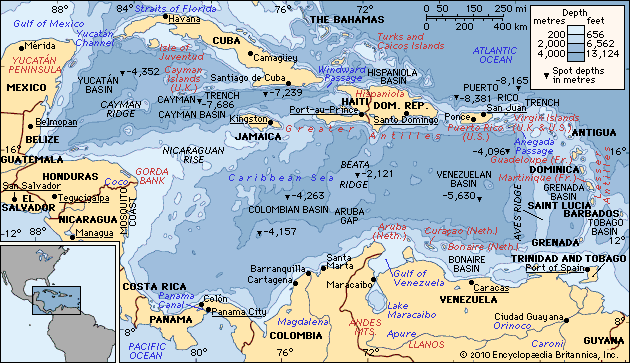
- Buccaneer: This term is specific to a group of sea adventurers who operated primarily in the Caribbean and the Pacific coast of Central America during the second half of the 17th century. Originally, they were hunters in western Hispaniola who used a grill called a boucan to smoke meat. They eventually turned to piracy, focusing their hostility specifically on Spanish shipping and settlements.54
A key distinction lies in their legal status. While both groups often engaged in piratical acts, privateers were distinguished by holding government-issued letters of marque, which authorized them to attack enemy vessels during wartime. Buccaneers often held commissions that were rarely valid, placing them in a gray area between legitimate privateers and outlawed pirates.465
How did iron-ore mining impact the islands of the archipelago?
Rich iron-ore deposits were discovered on Cockatoo and Koolan islands—the most important islands within the Buccaneer Archipelago—around 1880. These deposits were subsequently mined during the second half of the 20th century, marking a significant period of industrial activity for these specific islands.1
While the archipelago itself is named after the explorer William Dampier, it is important to distinguish these island mining operations from the massive iron-ore industry located on the mainland in the Pilbara region. The Pilbara’s large-scale iron industry, which developed significantly in the 1970s, led to the construction of major infrastructure, including the port town of Dampier, specifically designed to handle and export ore mined from the mainland’s Hamersley Range.1910
Sources
- Buccaneer Archipelago — Encyclopædia Britannica
- buccaneer — Encyclopædia Britannica
- William Dampier — Encyclopædia Britannica
- buccaneer — Merriam-Webster
- pirate — Merriam-Webster
- buccaneer — Merriam-Webster
- Pirates, Privateers, Corsairs, Buccaneers: What’s the Difference? — Encyclopædia Britannica
- letter of marque — Encyclopædia Britannica
- Pilbara — Encyclopædia Britannica
- Western Australia - Resources and power — Encyclopædia Britannica
- Dampier — Encyclopædia Britannica
Published on · 3 min read