Jaeger
Jaegers are predatory seabirds belonging to the family Stercorariidae and the genus Stercorarius. Physically, they resemble dark gulls but are distinguished…
What are the physical characteristics of jaegers, and how do they differ from other seabirds?
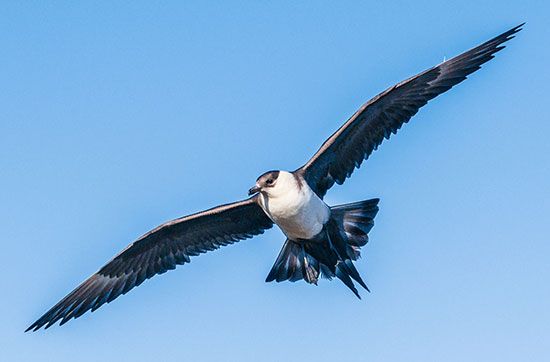
Jaegers are predatory seabirds belonging to the family Stercorariidae and the genus Stercorarius. Physically, they resemble dark gulls but are distinguished by a forward-set black cap and projecting central tail feathers. They typically exhibit two color phases: either all-brown or brown above with a white underside. Depending on the species, their lengths range from 35 cm (14 inches) for the long-tailed jaeger to 50 cm (20 inches) for the pomarine jaeger.12
Jaegers differ from many other seabirds primarily through their rapacious and kleptoparasitic behavior. While they catch fish at sea, they are well-known for forcing terns and kittiwakes to disgorge food, and they frequently prey upon the eggs and young of other birds. Unlike many colonial-nesting seabirds, jaegers are solitary after their breeding season on the Arctic tundra. Their aggressive, predatory nature sets them apart from the more typical foraging behaviors of gulls and terns.13
What are the different species of jaegers, and where are they typically found?
There are three distinct species of jaegers within the genus Stercorarius, all of which are members of the family Stercorariidae. These birds are known as skuas in Britain.1
The three species are categorized by their size:
- Pomarine jaeger (Stercorarius pomarinus): The largest of the three, measuring approximately 50 cm (20 inches) in length.1
- Parasitic jaeger (S. parasiticus): Intermediate in body size.1
- Long-tailed jaeger (S. longicaudus): The smallest species, measuring about 35 cm (14 inches) in length.1
Regarding their distribution, jaegers typically nest in the Arctic tundra. After the breeding season, they migrate to sea, with many traveling as far as Australia and New Zealand.1
How have jaegers adapted to survive in their harsh Arctic and subarctic environments?
Jaegers have evolved several behavioral and ecological strategies to survive the extreme conditions of the Arctic and subarctic environments. Their primary adaptations include:
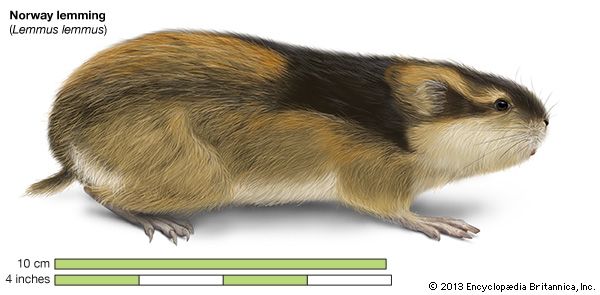
- Dietary Flexibility: During the breeding season on the tundra, jaegers are opportunistic predators. They rely heavily on lemmings as a food source, and their own population numbers often fluctuate in direct response to the cyclical rise and fall of lemming populations. They also supplement their diet by preying on the eggs and nestlings of other birds.165
- Kleptoparasitism: To thrive in environments where food can be scarce, jaegers exhibit kleptoparasitic behavior. They frequently harass other seabirds, such as terns and kittiwakes, forcing them to disgorge their food, which the jaegers then capture.65
- Migratory Lifestyle: Jaegers are highly migratory. While they nest in the harsh conditions of the Arctic tundra and polar barrens, they spend the majority of their lives at sea, often traveling as far as Australia and New Zealand during the non-breeding season. This allows them to escape the most severe winter conditions of the high latitudes.65
What is the origin of the name ‘jaeger’ and what does it mean?
The name “jaeger” is derived from the German word Jäger, which translates to “hunter” or “huntsman.”8
This etymology reflects the predatory nature of the birds in the genus Stercorarius. While the term was first recorded in English in 1781 to describe a hunter or an attendant wearing a hunter’s costume, it is now widely used to identify these seabirds due to their aggressive feeding habits. Jaegers are known for their “hunting” behavior, which includes kleptoparasitism—harassing other birds like terns and kittiwakes until they disgorge their prey—as well as actively hunting rodents and the eggs or young of other birds.81
In Britain, these birds are commonly referred to as skuas, a name that also encompasses the larger species within the family Stercorariidae.81
Sources
- Jaeger — Encyclopædia Britannica
- Skua — Encyclopædia Britannica
- Stercorariidae — Encyclopædia Britannica
- Stercorariidae — Merriam-Webster
- Charadriiform - Gulls (suborder Lari) — Encyclopædia Britannica
- Polar ecosystem - Biota of the Arctic — Encyclopædia Britannica
- Tundra - Arctic mammals — Encyclopædia Britannica
- jaeger — Merriam-Webster
- sea hawk — Merriam-Webster
Published on · 3 min read