Klyuchevskaya Volcano
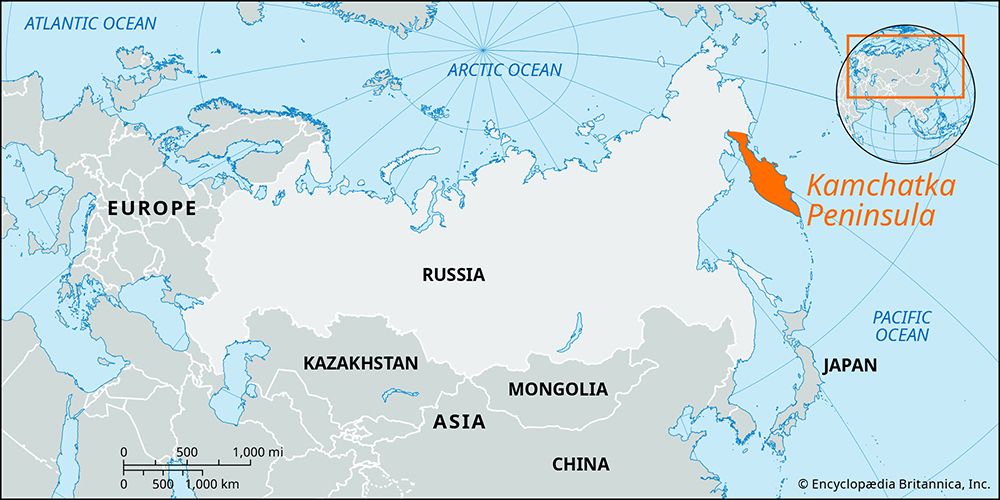
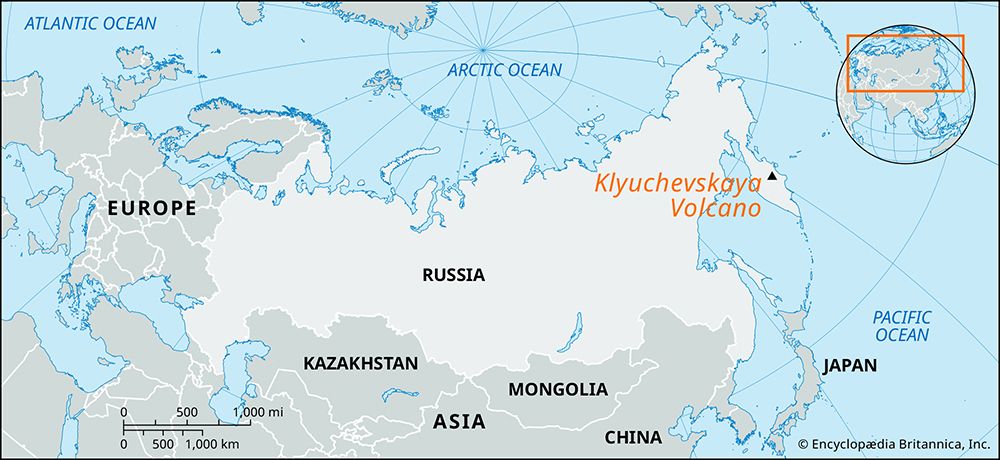
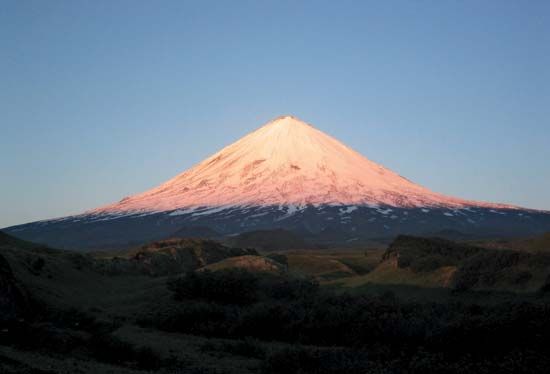
Klyuchevskaya Volcano is an active volcano located on the Kamchatka Peninsula in far eastern Russia. Standing at 15,584 feet (4,750 meters), it is the…
What is Klyuchevskaya Volcano?
Klyuchevskaya Volcano is an active volcano located on the Kamchatka Peninsula in far eastern Russia. Standing at 15,584 feet (4,750 meters), it is the highest point on the peninsula and ranks among the highest active volcanoes in the world.12
The volcano features a truncated cone with a central crater and approximately 70 lateral craters and cones along its lower slopes. It is highly active, having erupted more than 50 times since 1700, and is known for the smoke that continuously billows from its summit. Scientific monitoring is conducted at the Kamchatka Volcanological Station, which was established at the volcano’s base in 1935.1
What is the Ring of Fire and how does it relate to Kamchatka?
The Ring of Fire is a vast, horseshoe-shaped belt that fringes the Pacific Ocean basin, characterized by intense seismic and volcanic activity. It is home to approximately 75 percent of the world’s volcanoes and the majority of its strongest earthquakes. This belt is formed by the convergence of tectonic plates, where oceanic plates subduct beneath continental plates, generating the magma that fuels volcanic eruptions.345
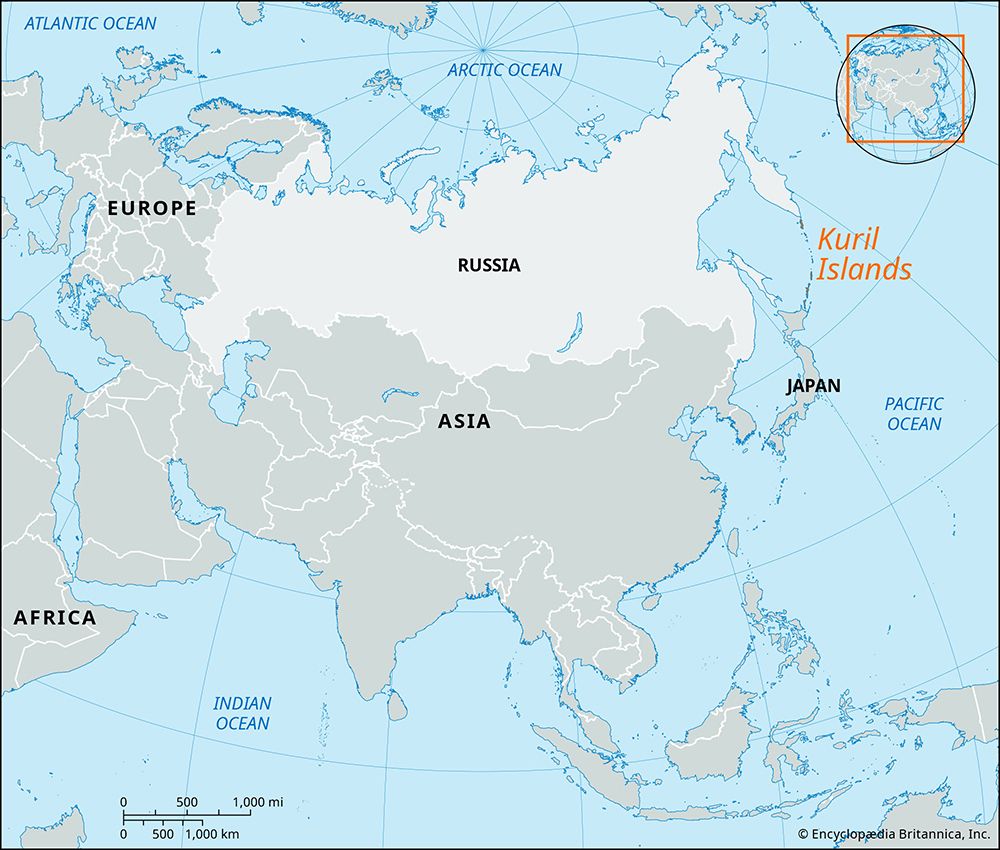
The Kamchatka Peninsula is an integral part of this system. It is geologically defined by the Kuril-Kamchatka mountain-island arc, a structure formed by the same convergent plate processes that define the Ring of Fire. Because of this location, Kamchatka is highly active, featuring 127 volcanoes—22 of which are currently active—along with numerous geysers and hot springs. The region remains a site of significant seismic events, as evidenced by major earthquakes occurring off its coast.26
How do scientists monitor active volcanoes like Klyuchevskaya?
Scientists monitor active volcanoes like Klyuchevskaya by employing a variety of geophysical and geochemical techniques designed to detect signs of impending eruptions. Because the movement of magma from the asthenosphere generates seismic tremors, seismographs are the primary tools used to track earthquake swarms that often precede volcanic activity.89
Beyond seismic monitoring, researchers utilize several other methods to assess volcanic stability:
- Surface Deformation: Instruments like tiltmeters and lasers are used to detect changes in the slope or shape of a volcano, which can occur as rising molten rock fills internal magma chambers.8
- Gas and Chemical Analysis: Monitoring the emission of volatile materials, such as sulfurous gases, provides critical data regarding the late stages of volcanic activity.8
- Field Observations: Permanent observatories, such as the Kamchatka Volcanological Station, provide a base for continuous surveillance and early warning efforts.81
- Geophysical Surveys: Scientists may also use instruments sensitive to variations in magnetic and gravity fields to detect internal changes within the volcano.8
While these tools allow for more informed forecasting, scientists emphasize that predicting eruptions remains a complex challenge characterized by significant uncertainty.10
What are the differences between stratovolcanoes and other types?
Stratovolcanoes, often called composite volcanoes, are distinct from other volcanic landforms primarily due to their structure, composition, and eruptive style.
Key Characteristics of Stratovolcanoes
- Structure: They are steep, cone-shaped mountains that slope gently at the base but become significantly steeper (up to 35°) toward the summit. They are built from alternating, overlapping layers of ash, mud, and solidified lava flows.1112
- Composition: They are typically composed of intermediate rocks like andesite and dacite, which are more viscous than the basaltic rocks found in other types.1213
- Eruptive Style: They are known for moderately explosive eruptions, often beginning with ash explosions and ending with the extrusion of thick, viscous lava.1114
Comparison with Other Types
- Shield Volcanoes: Unlike the steep stratovolcano, shield volcanoes are huge, gently sloping landforms built by the eruption of fluid, less-viscous basaltic lava that flows over great distances.121514
- Calderas: While a stratovolcano may develop a caldera if its magma chamber collapses, a caldera itself is a large, bowl-shaped depression significantly larger than the typical volcanic vent.12
- Pyroclastic Cones: These are generally smaller, simpler structures formed by the accumulation of volcanic debris around a vent, lacking the complex, long-term layering of a stratovolcano.1614
Sources
- Klyuchevskaya Volcano — Encyclopædia Britannica
- Kamchatka Peninsula — Encyclopædia Britannica
- plate tectonics: Top Questions — Encyclopædia Britannica
- Ring of Fire — Merriam-Webster
- Ring of Fire — Encyclopædia Britannica
- volcanism — Encyclopædia Britannica
- East Asia - Geology and relief — Encyclopædia Britannica
- geology - Volcanology — Encyclopædia Britannica
- volcano - Volcano forecasting and warning — Encyclopædia Britannica
- seismograph - Applications of the seismograph — Encyclopædia Britannica
- volcano - Stratovolcanoes — Encyclopædia Britannica
- volcano - Major types — Encyclopædia Britannica
- stratovolcano — Encyclopædia Britannica
- magma — Encyclopædia Britannica
- volcano — Encyclopædia Britannica
- volcano - Determinants of size and shape — Encyclopædia Britannica
Published on · 3 min read