Kuril Islands
The Kuril Islands are critical to Russia's strategic military positioning because they form a natural barrier that separates the Sea of Okhotsk from the…
How do the Kuril Islands factor into Russia’s strategic military positioning in the Pacific?
The Kuril Islands are critical to Russia’s strategic military positioning because they form a natural barrier that separates the Sea of Okhotsk from the Pacific Ocean. By controlling this archipelago, Russia effectively encloses the Sea of Okhotsk, securing it as a protected maritime zone.12
In recent years, Russia has demonstrated the strategic importance of these islands by undertaking a significant military buildup, signaling a firm commitment to maintaining control over the territory. This presence serves to reinforce Russia’s influence in the Far East and complicates the regional security landscape, particularly given the ongoing territorial dispute with Japan over the southernmost islands, which has prevented the two nations from signing a formal peace treaty since World War II.13
What are the main economic activities and natural resources of the Kuril Islands?
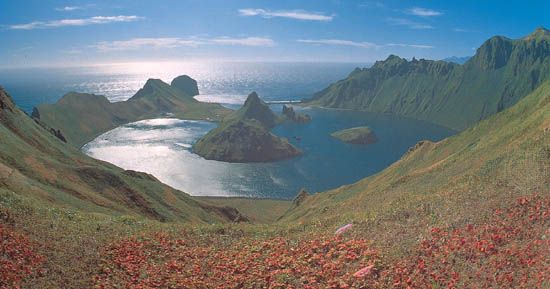
The economy of the Kuril Islands is sparsely developed and heavily centered on a few key activities.
Economic Activities
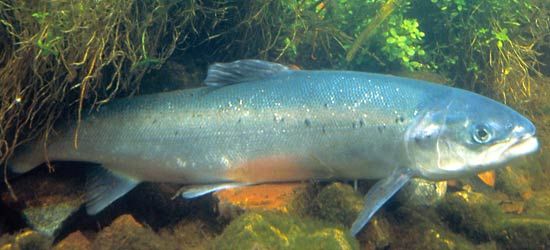
- Fishing: This is the primary and most significant occupation for the islands’ residents. The industry focuses heavily on the harvesting of crab, as well as other marine life such as herring, cod, and salmon such as herring, cod, and salmon.21
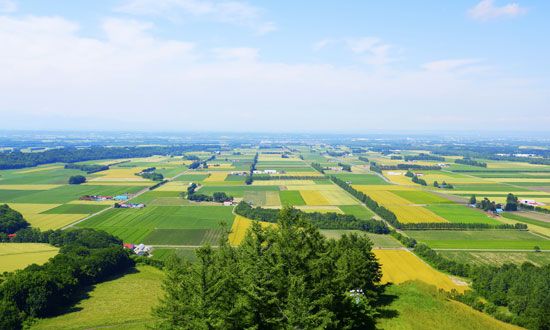
- Agriculture: Economic activity in this sector is very limited due to the severe climate. Some vegetable cultivation occurs on the southern islands, and livestock raising is practiced within the broader Sakhalin oblast to which the islands belong.21
Natural Resources
While the Kuril Islands are part of a region known for broader industrial activities—such as coal mining and the extraction of oil and natural gas on nearby Sakhalin Island—the Kuril archipelago itself is primarily defined by its rich marine resources. The islands are also geologically active, situated within the Ring of Fire, which provides them with numerous hot springs, though these are not currently cited as major commercial resources.412
What is the geographical location and extent of the Kuril Islands?
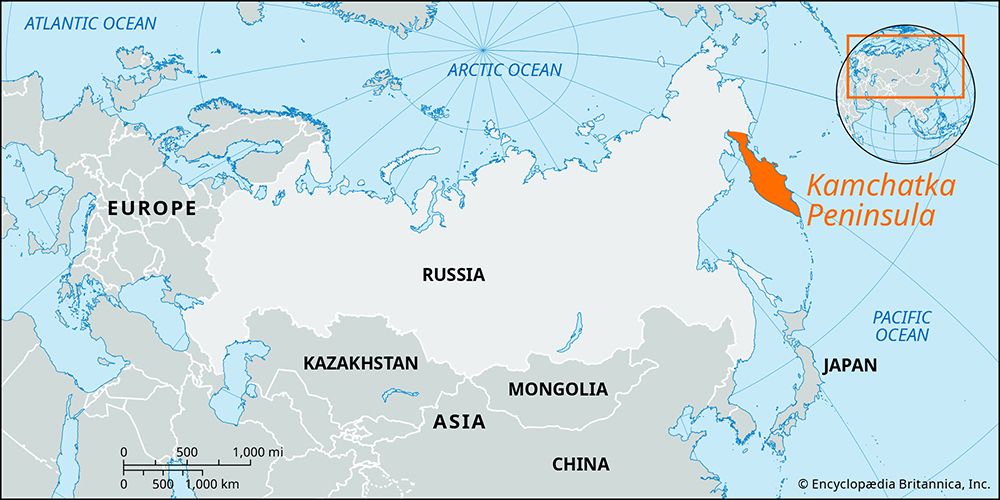
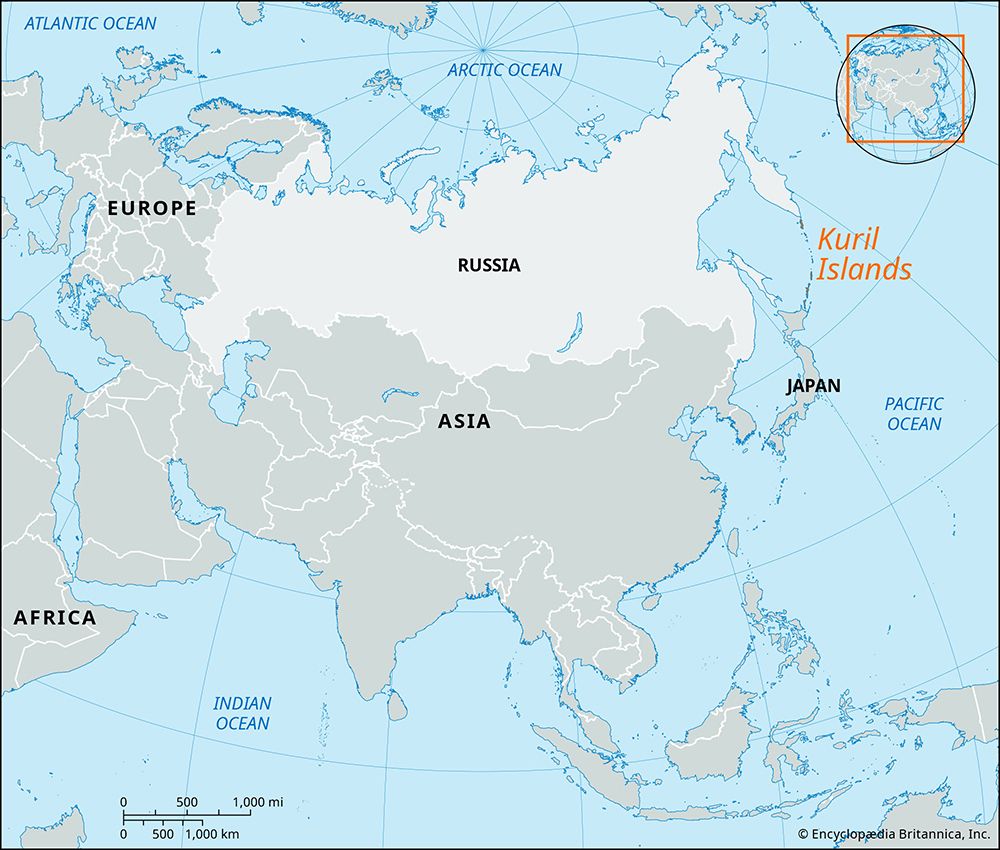
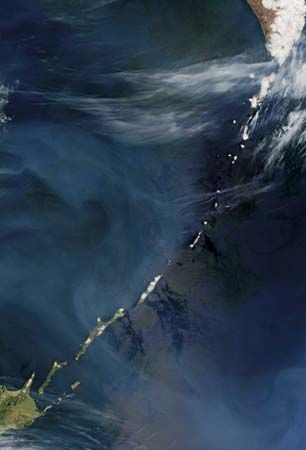
The Kuril Islands are an archipelago located in the Sakhalin oblast of far-eastern Russia. The chain extends for approximately 750 miles (1,200 km) from the southern tip of the Kamchatka Peninsula to the northeastern corner of Hokkaido island in Japanplace/Hokkaido) island in Japan.1102
Geographically, the archipelago serves as a boundary that separates the Sea of Okhotsk from the Pacific Ocean. The chain consists of 56 islands covering a total area of approximately 6,000 square miles (15,600 square km). Situated within the Ring of Fire, the islands are characterized by significant seismic and volcanic activity, featuring at least 100 volcanoes—35 of which are active—and are paralleled by the deep Kuril Trench on the Pacific floor.102
What indigenous peoples have inhabited the Kuril Islands throughout history?
The Ainu are the indigenous people of the Kuril Islands, as well as Hokkaido and Sakhalin Sakhalin.12
Historically, the Ainu were a distinct culture characterized by a hunting and gathering lifestyle, though some groups also practiced shifting agriculture. Their traditional society was rooted in animism, with rituals often centered on the spiritual significance of the bear.2
Following waves of exploration in the 17th and 18th centuries, the islands were subsequently settled by the Russians and Japanese. The demographic composition of the islands changed drastically in 1945, when the Soviet Union took possession of the archipelago. At that time, the existing Japanese population was forcibly relocated and replaced by Soviet settlers.121
Sources
- Kuril Islands: Top Questions — Encyclopædia Britannica
- Kuril Islands — Encyclopædia Britannica
- Sea of Okhotsk — Encyclopædia Britannica
- Maldives - Agriculture, forestry, and fishing — Encyclopædia Britannica
- Nunavut - Fishing and hunting — Encyclopædia Britannica
- economy of Japan - Minerals — Encyclopædia Britannica
- Sakhalin — Encyclopædia Britannica
- Japan - Minerals — Encyclopædia Britannica
- Sakhalin Island — Encyclopædia Britannica
- Kuril Islands — Merriam-Webster
- Russia - The mountains of the south and east — Encyclopædia Britannica
- Ainu — Encyclopædia Britannica
Published on · 3 min read