Lewis Range
The Lewis Range is a segment of the northern Rocky Mountains that stretches approximately 160 miles (260 km) from the border of Alberta, Canada, to the…
What is Lewis Range?
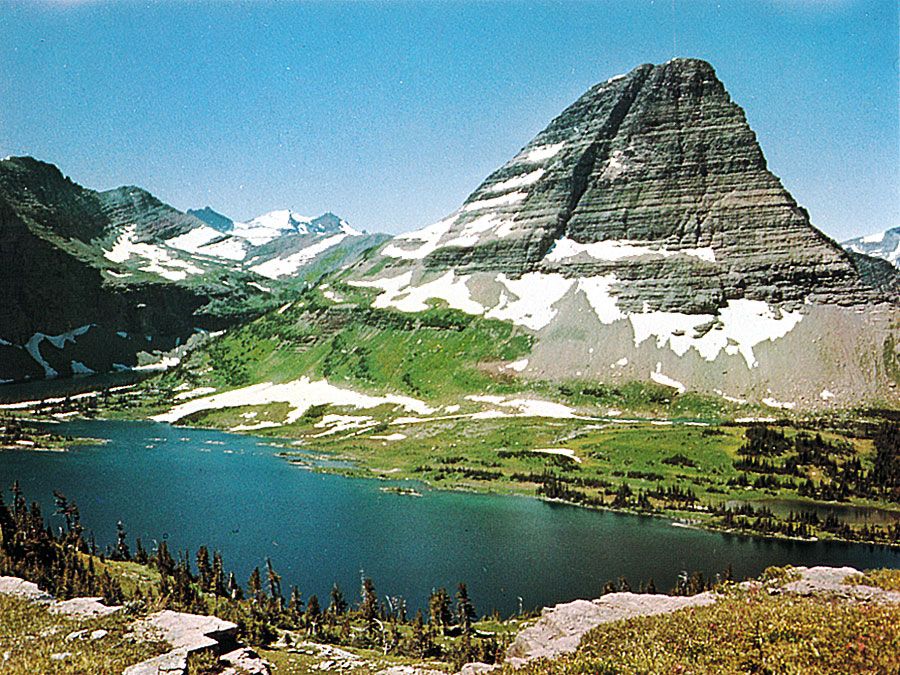
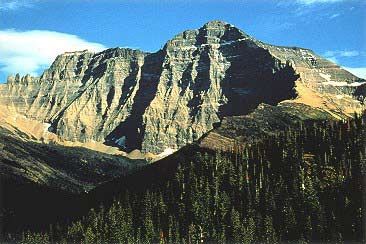
The Lewis Range is a segment of the northern Rocky Mountains that stretches approximately 160 miles (260 km) from the border of Alberta, Canada, to the Blackfoot River in northwestern Montana, U.S.1
Characterized by rugged terrain, many of its peaks rise above 10,000 feet (3,000 m), with Mount Cleveland serving as the highest point at 10,479 feet (3,194 m). The northern section of the range is protected within the Waterton-Glacier International Peace Park, while the southern portions are largely contained within the Flathead and Lewis and Clark national forests and the Bob Marshall Wilderness Area. While the park area is a hub for tourism, the southern reaches remain largely undeveloped due to their rugged, inaccessible nature.1
What is the Waterton-Glacier International Peace Park?
The Waterton-Glacier International Peace Park is a protected area spanning the U.S.–Canada border in the Rocky Mountains. Dedicated in 1932, it comprises two adjoining national parks: Glacier National Park in northwestern Montana, U.S., and Waterton Lakes National Park in southwestern Alberta, Canada.345
The park serves as a symbol of peace and cooperation between the two nations. Its significance is recognized globally; it was designated a UNESCO World Heritage site in 1995, and Glacier National Park was previously classified as a UNESCO International Biosphere Reserve in 1976. The region is renowned for its dramatic glacial-sculpted landscapes, diverse ecosystems ranging from prairie grasslands to alpine meadows, and rich wildlife, including grizzly bears, mountain goats, and bighorn sheep.53
How are mountain ranges formed by geological processes?
Mountain ranges are primarily formed through tectonic processes that elevate the Earth’s crust faster than erosion can wear it down. These processes, collectively known as orogeny, generally fall into three categories:678
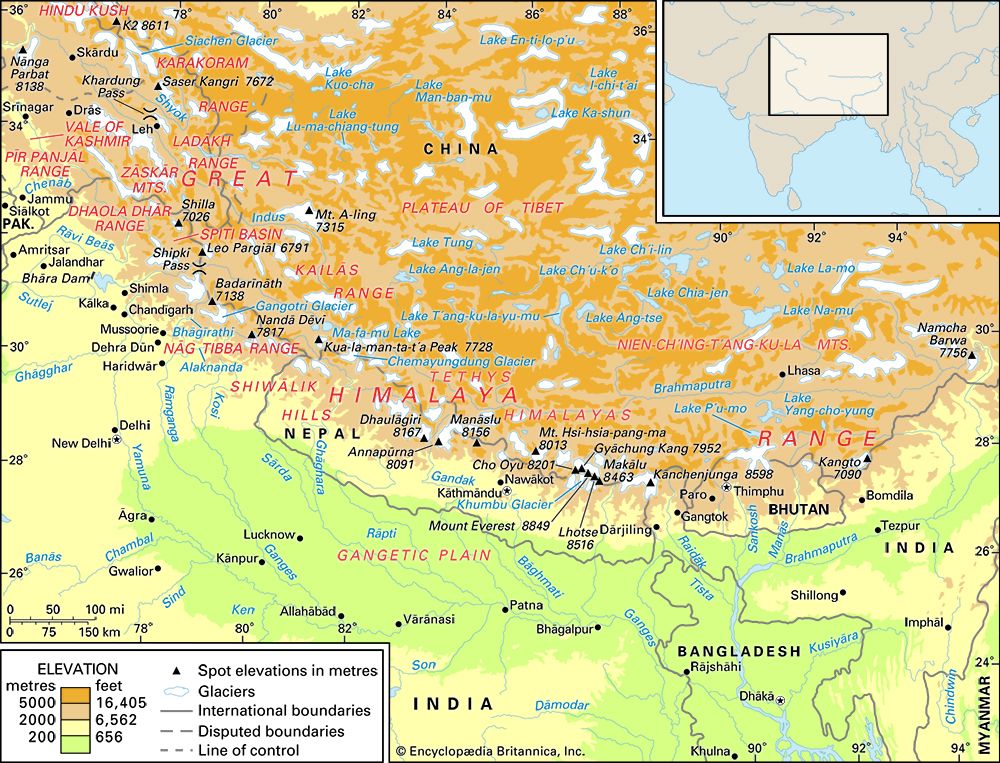
- Convergent Plate Boundaries: When lithospheric plates collide, the immense pressure causes the crust to fold, fault, and thicken. This includes continent-continent collisions, such as the formation of the Himalayas, and subduction-related orogenesis, where one plate sinks beneath another, often creating volcanic chains like the Andes.879
- Block Faulting: This occurs when the crust is stretched or pulled apart, causing large blocks of rock to tilt or be uplifted along faults. This process creates rugged terrain, such as the Sierra Nevada or the Basin and Range Province.1087
- Volcanism and Thermal Expansion: Mountains can form through the accumulation of volcanic rock or the heating and thermal expansion of large crustal terrains, which lifts the surface.116
While tectonic forces build these structures, erosion continuously sculpts them, sometimes leaving behind residual mountains after the original tectonic activity has ceased.1110
What is the significance of the Bob Marshall Wilderness Area?
Sorry, the Britannica knowledge base does not contain this information.
Sources
- Lewis Range — Encyclopædia Britannica
- Lewisian Complex — Encyclopædia Britannica
- Waterton Lakes National Park — Encyclopædia Britannica
- Waterton-Glacier International Peace Park — Merriam-Webster
- Glacier National Park — Encyclopædia Britannica
- continental landform - Orogenic geomorphic systems — Encyclopædia Britannica
- plate tectonics - Mountain building — Encyclopædia Britannica
- volcano - Determinants of size and shape — Encyclopædia Britannica
- tectonic landform — Encyclopædia Britannica
- mountain - Geomorphic characteristics — Encyclopædia Britannica
- mountain - Tectonic processes that produce high elevations — Encyclopædia Britannica
- mountain - Alpine- (or Himalayan-)type belts — Encyclopædia Britannica
- How are mountains formed? — Encyclopædia Britannica
- Beartooth Range — Encyclopædia Britannica
- Montana - Plant and animal life — Encyclopædia Britannica
Published on · 2 min read