Kamchatka River
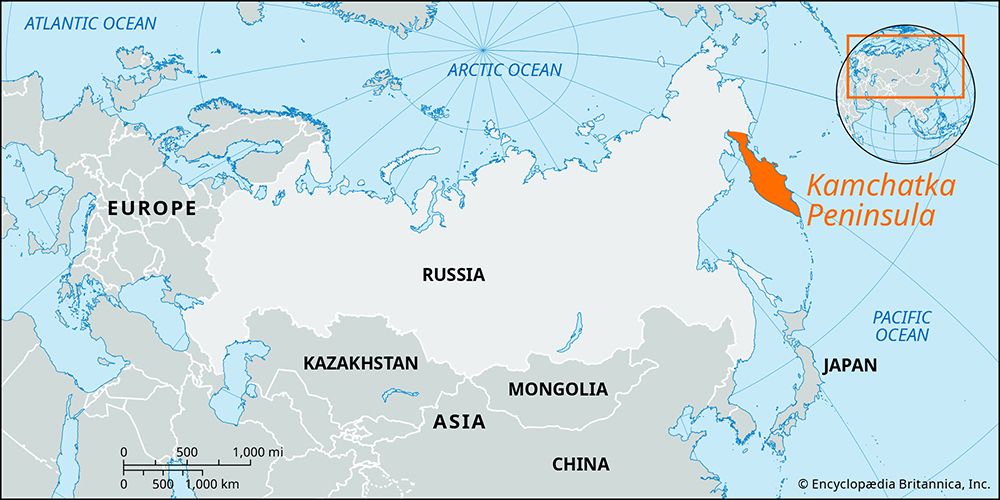
The Kamchatka River is a river located in far eastern Russia. It originates in the Sredinny ("Central") Range of the Kamchatka Peninsula and flows north and…
What is Kamchatka River?
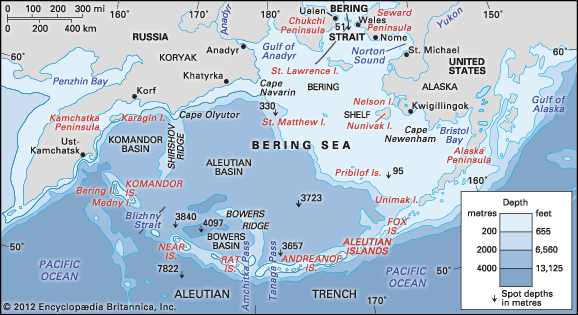
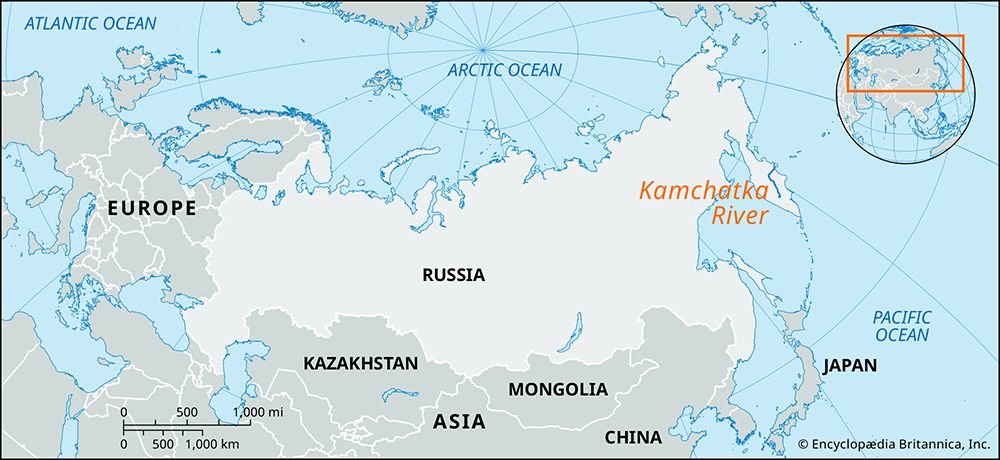
The Kamchatka River is a river located in far eastern Russia. It originates in the Sredinny (“Central”) Range of the Kamchatka Peninsula and flows north and east for approximately 478 miles (758 km) before emptying into the Bering Sea at the port of Ust-Kamchatsk.1
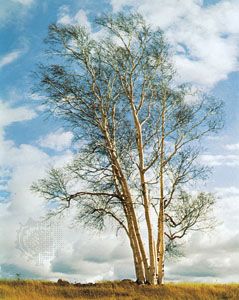
The river occupies a significant trough between the peninsula’s two main mountain chains, the Sredinny and Vostochny ranges. Its valley provides a sheltered environment that supports birch and larch forests, contrasting with the tundra found across much of the surrounding region. While the river typically freezes from November to May, certain areas remain ice-free due to the presence of hot springs.21
Economically, the river is utilized for timber transport, and its valley contains some of the limited agricultural land available in the region.13
What makes the Kamchatka Peninsula a volcanic hotspot?
The Kamchatka Peninsula is a major volcanic hotspot primarily because of its location along the Ring of Fire, a vast, seismically active belt that fringes the Pacific Ocean basin fringes the Pacific Ocean basin.6
Tectonic Context
The peninsula’s intense volcanic activity is driven by the process of subduction. In this region, the Pacific Plate converges with and descends beneath the adjacent continental plate. As the subducting plate sinks into the asthenosphere, the intense heat and pressure cause melting, which generates magma. This magma rises through the crust, fueling the peninsula’s numerous volcanic eruptions.24
Volcanic Features
The peninsula is home to 127 volcanoes, 22 of which are currently active. Key characteristics of this volcanic landscape include:56
- Geographic Distribution: Most active volcanoes are situated along a fault line on the eastern flank of the Vostochny (Eastern) Range.5
- Notable Peaks: The Klyuchevskaya Volcano is the highest point on the peninsula and one of the most active volcanoes in the world.57
- Geothermal Activity: Beyond its volcanoes, the region features numerous geysers and hot springs, which are direct results of the underlying tectonic and volcanic processes.58
How do hot springs affect the river’s ecosystem during winter?
During the winter months, when the Kamchatka River is typically frozen from November to May, the presence of hot springs creates localized areas of open water. These thermal features prevent the river from freezing completely in those specific locations, providing a critical refuge for aquatic life.1
By maintaining liquid water temperatures, these springs allow certain species to survive the harsh winter conditions that would otherwise be lethal. This creates unique micro-habitats within the frozen river system, supporting biodiversity that would not be possible in a fully ice-covered environment.1
Who are the indigenous peoples living in the Kamchatka region?
The Kamchatka region is home to several Indigenous groups, many of whom are categorized as Paleo-Siberian peoples. The primary Indigenous populations include:
- Koryak: The most numerous Indigenous group in the region, they primarily inhabit the northern half of the Kamchatka Peninsula. Traditionally, they are divided into inland reindeer-herding groups and coastal groups focused on maritime hunting and fishing.10113
- Itelmen: Historically the sedentary inhabitants of southern Kamchatka, the Itelmen traditionally relied on riverine fishing—particularly the annual salmon run—and the gathering of wild plants. They were formerly known as Kamchadal, a term that now often refers to an ethnically mixed group resulting from historical integration with Russian settlers.101211
- Evens: Closely related to the Evenk, these groups are found interspersed throughout the region.1011
- Chukchi: While their primary territory is further north, small numbers of Chukchi also reside within the Kamchatka region.10113
- Unangan: A small population of Unangan (Aleut) lives on Bering Island, part of the Komandor Islands. They were relocated there in the 19th century by the Russian-American Company to assist in the exploitation of fur-bearing resources.10
Sources
- Kamchatka River — Encyclopædia Britannica
- Kamchatka Peninsula — Encyclopædia Britannica
- Kamchatka — Encyclopædia Britannica
- volcano - Volcanoes related to plate boundaries — Encyclopædia Britannica
- world’s major volcanoes — Encyclopædia Britannica
- Ring of Fire — Encyclopædia Britannica
- Kamchatka Peninsula: Top Questions — Encyclopædia Britannica
- Klyuchevskaya Volcano — Encyclopædia Britannica
- East Asia - Geology and relief — Encyclopædia Britannica
- Arctic - North-central and northeastern Siberian groups — Encyclopædia Britannica
- Itelmen — Encyclopædia Britannica
- Koryak — Encyclopædia Britannica
Published on · 3 min read