Kola Nut
The harvesting and processing of kola nuts are relatively straightforward, labor-intensive processes centered on traditional methods.
How are kola nuts harvested and processed for commercial use?
The harvesting and processing of kola nuts are relatively straightforward, labor-intensive processes centered on traditional methods.
Harvesting and Processing
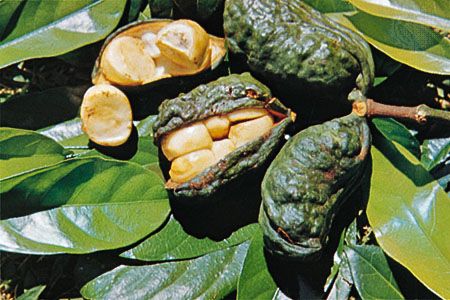
Kola nuts, which are the seeds of the Cola genus, are primarily harvested by hand from evergreen trees that can reach heights of up to 20 meters. Once the star-shaped fruit is collected, the fleshy, podded seeds—typically measuring 2.5 to 4 centimeters—are removed.12
For commercial use, these nuts are dried in the sun. While the nuts have a bitter taste when fresh, they develop an aromatic quality after aging. Once processed, the nuts are utilized for their caffeine, tannin, and theobromine content.12
Commercial and Local Use
While historically significant as an ingredient in soft drinks, many modern American and European manufacturers now utilize synthetic chemicals to replicate the flavor of the kola nut rather than the natural product itself. Locally, however, the nuts remain highly valued as a stimulant to reduce hunger and fatigue, as a digestive aid, and as a component in various social and medicinal rituals.12
What are the main chemical compounds found in kola nuts?
Kola nuts, the seeds of trees within the Cola genus, are primarily recognized for their stimulant properties, which are derived from three main chemical compounds:
- Caffeine: A well-known stimulant that acts on the central nervous system to reduce sensations of fatigue.13
- Theobromine: A xanthine alkaloid that is also found in cocoa. While it is chemically related to caffeine, it has significantly less stimulatory effect on the central nervous system.23
- Tannin: These compounds contribute to the astringent taste of the nuts and are often associated with the plant’s traditional use as a digestive aid.13
In medical applications, refined extracts containing these compounds are utilized as both cardiac and central-nervous-system stimulants.3
How is the kola nut tree cultivated and what are its environmental requirements?
The kola tree, a member of the Cola genus, is native to tropical Africa and is cultivated extensively across various tropical regions, including the American tropics and the West Indies.21
Environmental Requirements and Cultivation
To thrive, these evergreen trees require specific environmental conditions:
- Soil and Elevation: Kola trees grow best in sandy loams and prefer low-lying elevations.2
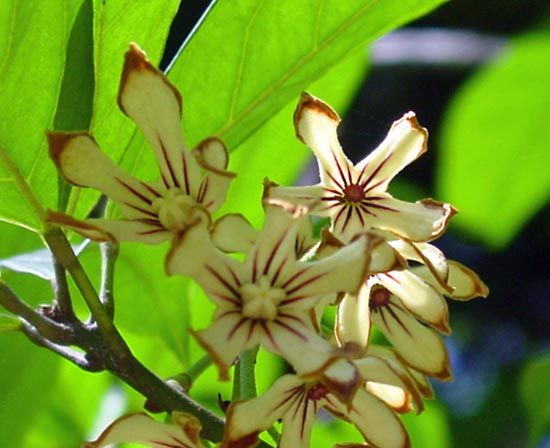
- Growth Characteristics: Mature trees can reach heights of 12 to 20 meters (40 to 65 feet). They are characterized by their oblong, leathery leaves and yellow flowers.2
- Propagation: The trees produce star-shaped fruit that contains large, fleshy, podded seeds—the kola nuts—which measure approximately 2.5 to 4 centimeters in length.21
While they are cultivated commercially for their caffeine, tannin, and theobromine content, the trees are also valued for their resilience and ability to flourish in tropical climates.24
How has the kola nut influenced the modern soft drink industry?
The kola nut has played a foundational role in the history of the soft drink industry, serving as the namesake and original source of flavoring for the popular beverage known as cola. Historically, the drink was formulated using extracts from the kola nut, combined with spice oils, aromatics, sweeteners, and carbonated water to create its signature profile.1
However, the modern soft drink industry has largely shifted away from using the natural nut. Today, most American and European manufacturers do not use actual kola nuts in their production processes. Instead, they rely on synthetic chemicals designed to replicate the traditional flavor of the nut. In diet versions of these beverages, the reliance on artificial flavorings and sweeteners is even more pronounced. While the industry was built upon the stimulant properties and unique taste of the Cola acuminata and Cola nitida species, the global commercial scale of modern soft drinks is now sustained through chemical engineering rather than botanical harvesting.21
Sources
- Kola nut — Encyclopædia Britannica
- Cola — Encyclopædia Britannica
- theobromine — Encyclopædia Britannica
- kola tree — Merriam-Webster
Published on · 3 min read