Khat
Khat (Catha edulis) is a slender evergreen tree or shrub native to the Horn of Africa and the Arabian Peninsula. It is an important cash crop in countries…

What is khat?
Khat (Catha edulis) is a slender evergreen tree or shrub native to the Horn of Africa and the Arabian Peninsula1. It is an important cash crop in countries such as Yemen, Somalia, and Ethiopia.1
When the plant’s bitter-tasting leaves and young buds are chewed, they release the stimulants cathinone and cathine. These substances produce a mild euphoria, often leading to feelings of excitement and increased talkativeness. While the plant is central to social life in some regions, it is classified as a controlled drug in many parts of the world, including the United States, China, and much of Europe.1
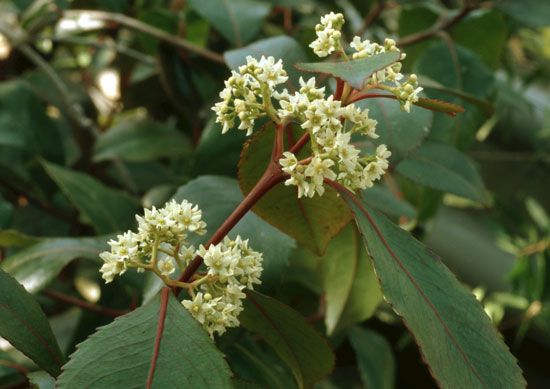
Physically, the plant is slow-growing and can reach heights of up to 25 meters. It features finely toothed, large oval leaves and small, five-petalled white flowers.1
What are the specific chemical stimulants found in khat leaves?
The primary chemical stimulants found in the leaves and young buds of the khat plant (Catha edulis) are:
- Cathinone: A potent stimulant that is primarily responsible for the plant’s psychoactive effects.
- Cathine: A related stimulant compound that also contributes to the physiological response when the leaves are chewed.1
These substances act as stimulants that produce a mild euphoria, often resulting in increased talkativeness and feelings of excitement in the user. Due to these properties, both the plant and the compound cathinone are classified as controlled substances in many regions, including the United States, China, and much of Europe.1
How does the geography of the Horn of Africa support khat cultivation?
The geography of the Horn of Africa is particularly well-suited for khat cultivation because the plant is highly adaptable to diverse environmental conditions.
A key factor in its success as a cash crop in regions like Ethiopia and Somalia is the plant’s ability to thrive in areas that are often unsuitable for other types of agriculture. Khat is known to tolerate a wide range of soil conditions, allowing it to be grown in environments where traditional crops might fail. Furthermore, the plant is a slow-growing evergreen that can be harvested multiple times throughout the year, providing a consistent economic resource for local farmers in these challenging landscapes.1
What are some other plants used as traditional stimulants around the world?
Throughout history, various cultures have utilized plants for their stimulating properties. Many of these contain caffeine, a natural alkaloid that increases alertness by inhibiting adenosine in the central nervous system inhibiting adenosine in the central nervous system.5
Notable traditional stimulants include:
- Kola nut: Native to tropical Africa, these nuts are chewed to reduce hunger and fatigue. They are also central to social rituals among groups like the Igbo people3.
- Mate: A popular South American beverage brewed from the leaves of Ilex paraguariensis. It is traditionally shared communally using a hollow gourd and a metal straw called a bombilla.3
- Guarana: A climbing plant from the Amazon Basin whose seeds are roasted to create a potent stimulant drink with a caffeine content significantly higher than that of coffee.45
- Betel: Widely used in southern Asia, a betel quid is created by wrapping areca palm seeds in betel pepper leaves with slaked lime. While culturally significant, it is addictive and linked to serious health risks, including oral cancer.6
- Coca: Indigenous peoples of the Andes have traditionally chewed these leaves to combat fatigue and hunger. The plant is also the source of the alkaloid cocaine.78
It is important to note that while these plants have historical and social roles, many contain substances that can lead to addiction or significant health complications.
Sources
- khat — Encyclopædia Britannica
- khat — Merriam-Webster
- Kola nut — Encyclopædia Britannica
- mate — Encyclopædia Britannica
- caffeine — Encyclopædia Britannica
- Betel — Encyclopædia Britannica
- cocaine — Encyclopædia Britannica
- guarana — Encyclopædia Britannica
- stimulant: Top Questions — Encyclopædia Britannica
- guarana — Merriam-Webster
- drug cult - Other psychedelic substances — Encyclopædia Britannica
Published on · 3 min read