Kootenay River
The Kootenay River holds deep historical and cultural significance for the Indigenous peoples of the region. The name "Kootenay" itself is derived from an…
How has the Kootenay River played a role in the history and culture of indigenous peoples in the region?
The Kootenay River holds deep historical and cultural significance for the Indigenous peoples of the region. The name “Kootenay” itself is derived from an Indigenous word meaning “water people,” reflecting the profound connection between the river and the communities that have long inhabited its banks.1
Throughout the region, the river and its surrounding valleys have served as vital corridors for travel and settlement since prehistoric times. Archaeological evidence, including pictographs found near hot springs in the area, indicates that human presence in the region dates back 11,000 to 12,000 years. These river systems have historically functioned as essential north-south travel routes, facilitating movement and communication across the rugged landscape of the Rocky Mountains.23
While the river remains a central feature of the landscape today, its historical role as a lifeline for Indigenous populations underscores the enduring importance of these waterways to the region’s heritage.12
Where is the Kootenay River located, and what are its major tributaries?
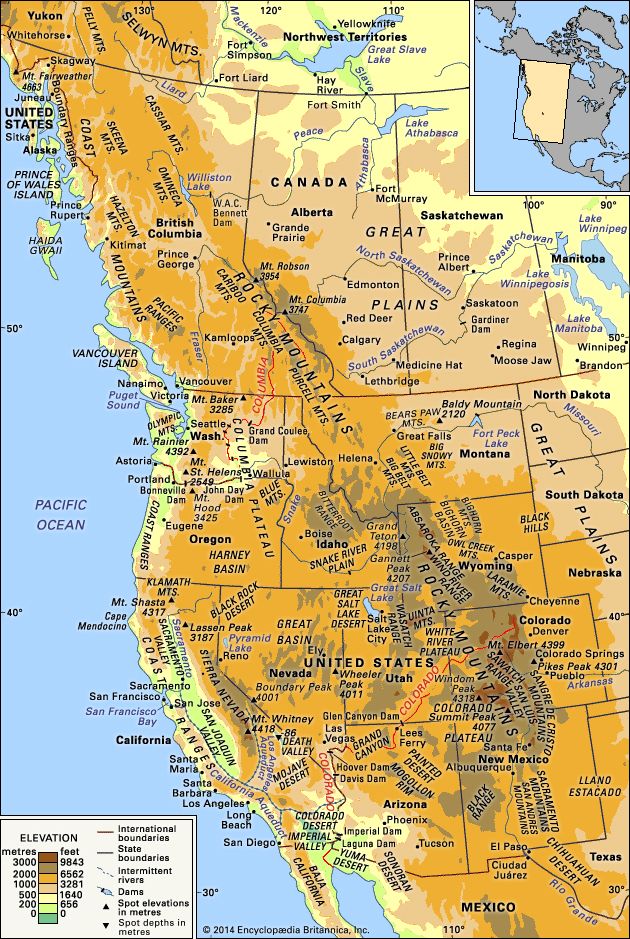
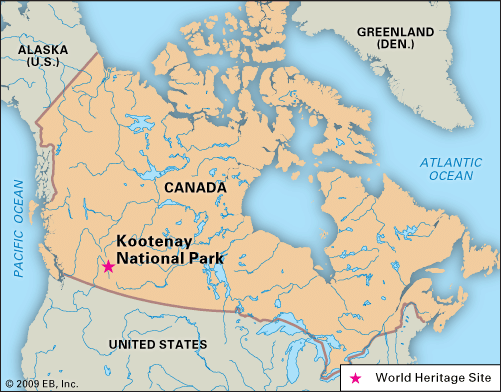
The Kootenay River is a 485-mile (780-kilometre) stream in western North America. It rises in the Rocky Mountains west of Banff, Alberta, and flows southward through Kootenay National Park in British Columbia. The river follows a U-shaped path, dipping into Montana and Idaho before returning to Canada. It eventually broadens into Kootenay Lake and flows into the Columbia River at Castlegar.1
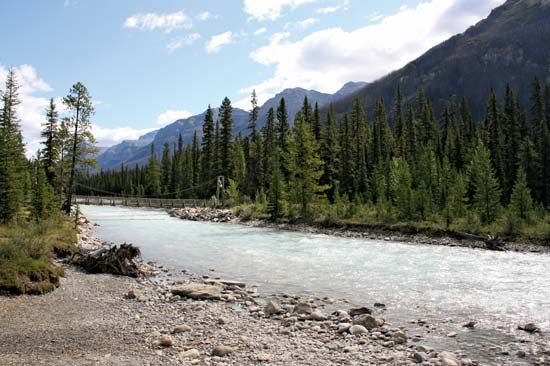
Regarding its tributaries, the Kootenay River system is fed by several waterways, particularly within the mountainous regions of its headwaters. For instance, Kootenay National Park is drained by the Kootenay, Vermilion, and Simpson rivers.2
How long is the Kootenay River, and what is its drainage basin size?
The Kootenay River has a total length of 485 miles (780 kilometres).1
Regarding the size of its drainage basin, the provided search results do not specify the exact area of the Kootenay River’s individual watershed. However, the Kootenay is a major tributary of the Columbia River, which has a total drainage basin of approximately 258,000 square miles (668,000 square kilometres).5
What is the origin of the name ‘Kootenay’ for this river?
The origin of the name “Kootenay” is considered to be of uncertain derivation. While some sources suggest the name may be linked to an Indigenous word meaning “water people”, linguistic research indicates that such interpretations are often considered folk etymologies.31
The name is closely associated with the Ktunaxa people, who use the term ktunaxa as a self-designation. It has been suggested that the name may have originated from the Blackfoot word kutunáiua, which itself may derive from the Ktunaxa self-designation. Because the term ktunaxa has no clear etymological root, attempts to trace it to specific verb stems—such as those meaning “to go out into the open” or “to eat lean meat”—are generally viewed by scholars as lacking linguistic evidence.37
Sources
- Kootenay River — Encyclopædia Britannica
- Kootenay National Park — Encyclopædia Britannica
- Kootenai — Merriam-Webster
- British Columbia - Settlement patterns — Encyclopædia Britannica
- British Columbia - Drainage — Encyclopædia Britannica
- Columbia River - Physiography and hydrology — Encyclopædia Britannica
- Ktunaxa — Merriam-Webster
Published on · 2 min read