Korea Strait
The Korea Strait does not connect directly to the Pacific Ocean; rather, it serves as a passage between the East China Sea and the Sea of Japan (East Sea).
How does the Korea Strait connect to the Pacific Ocean?
The Korea Strait does not connect directly to the Pacific Ocean; rather, it serves as a passage between the East China Sea and the Sea of Japan (East Sea).12
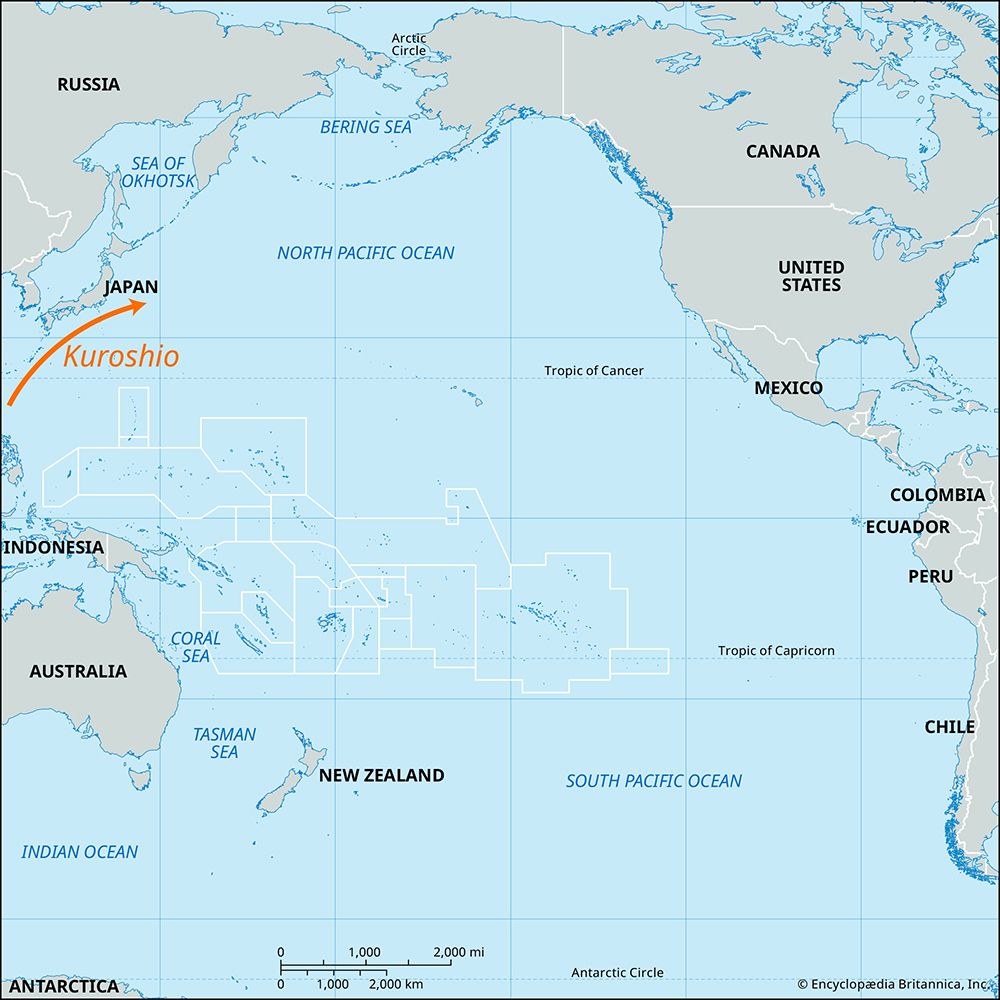
The connection to the Pacific is indirect, facilitated by the flow of the Tsushima Current, a branch of the Kuroshio. This current enters the Sea of Japan through the Korea Strait and eventually flows toward the Pacific Ocean via other passages, such as the Tsugaru Strait, which provides a direct link between the Sea of Japan and the Pacific Ocean. Consequently, the Korea Strait acts as an inflow point for water entering the semienclosed Sea of Japan, while other straits serve as the primary outlets to the broader Pacific.123
What is the Korea Strait and where is it located?
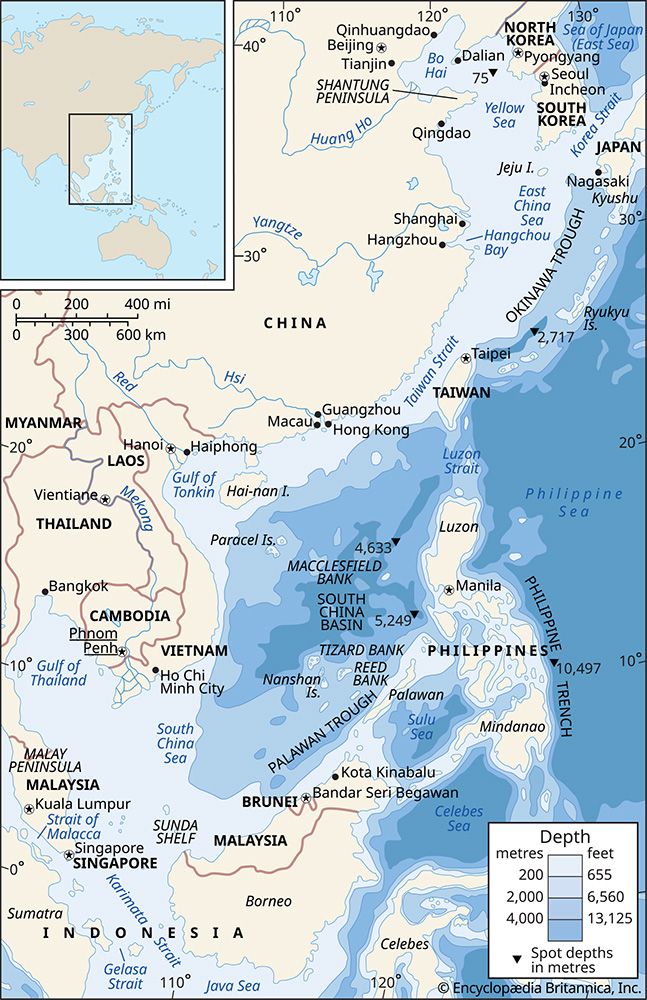
The Korea Strait is a vital maritime passage in the northwest Pacific Ocean. It extends northeast, connecting the East China Sea to the Sea of Japan (also known as the East Sea).1
Located between the southern coast of the Korean peninsula to the northwest and the Japanese islands of Kyushu and Honshu to the southeast, the strait spans approximately 120 miles (193 kilometers) in width. The passage is bisected by the Tsushima Islands, with the eastern channel often referred to as the Tsushima Strait and the western channel historically known as the Chosen Strait.14
The strait reaches a depth of about 300 feet (90 meters) and serves as a conduit for the warm Tsushima Current, a branch of the Kuroshio. This current plays a significant role in the regional marine environment as it flows northward through the passage.1
Are there any islands within the Korea Strait?
Yes, there are islands located within the Korea Strait. The strait is bisected by the Tsushima Islands, which serve as a geographic divider within the passage.1
Specifically, the island of Tsushima is situated between northwestern Kyushu and southeastern South Korea. Its presence effectively splits the waterway into two distinct channels: the western channel, historically known as the Chosen Strait, and the eastern channel, which is commonly referred to as the Tsushima Strait.15
What are the main geographical features of the Korea Strait?
The Korea Strait is a significant maritime passage in the northwest Pacific Ocean, characterized by several key geographical features:
- Connectivity: It serves as a vital link between the East China Sea and the Sea of Japan (East Sea), separating the southern coast of the Korean peninsula from the Japanese islands of Kyushu and Honshu.1
- Dimensions: The strait spans approximately 120 miles (193 kilometers) in width and reaches a depth of about 300 feet (90 meters).14
- Division: The passage is bisected by the Tsushima Islands. This division creates two distinct channels: the eastern channel, often called the Tsushima Strait, and the western channel, historically known as the Chosen Strait.1
- Oceanography: The Tsushima Current—a branch of the Kuroshio—flows northward through the strait, significantly influencing the regional marine environment.1
We could dive deeper into the historical significance of the Battle of Tsushima or explore how the Tsushima Current affects the climate of the surrounding regions.
Sources
- Korea Strait — Encyclopædia Britannica
- Sea of Japan / East Sea - Physiography — Encyclopædia Britannica
- Sea of Japan / East Sea: Top Questions — Encyclopædia Britannica
- Korea Strait — Merriam-Webster
- Japan - Land — Encyclopædia Britannica
Published on · 2 min read