Kukenaam Falls
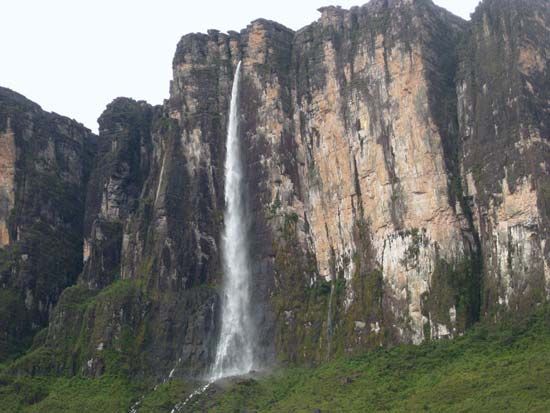
Kukenaam Falls are high waterfalls located on the border between Guyana and Venezuela. They originate from the Kukenaam table mountain, which stands at an…
What is Kukenaam Falls?
Kukenaam Falls are high waterfalls located on the border between Guyana and Venezuela. They originate from the Kukenaam table mountain, which stands at an elevation of 8,620 feet (2,627 metres), situated to the northwest of Mount Roraima.1
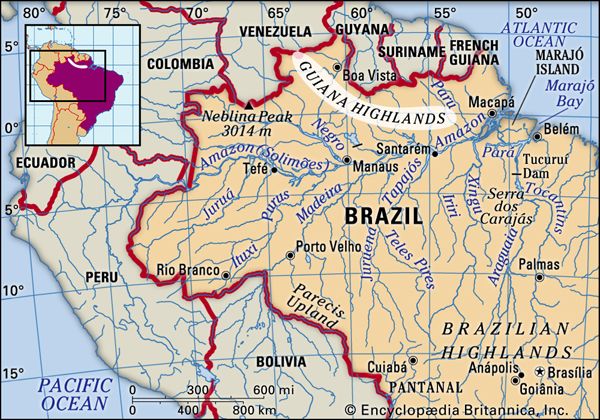
These falls are notable for having a 2,000-foot (600-metre) drop, ranking them among the highest in South America. They serve as the source of the Cuquenán River, which is a tributary of the Caroni River. The region is characterized by tepuis—massive, steep-sided mesas capped with erosion-resistant sandstone—which are a prominent feature of the Guiana Highlands.12
What is a tepui and how are these unique landforms created?
How does Angel Falls compare to Kukenaam Falls in height and location?
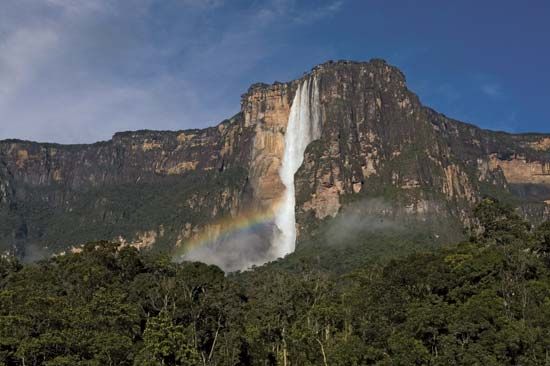
Angel Falls and Kukenaam Falls are both iconic cataracts located within the Guiana Highlands of Venezuela, but they differ significantly in scale and setting.
Height Comparison
Angel Falls holds the title of the highest waterfall in the world, with a total drop of 3,212 feet (979 metres). In comparison, Kukenaam Falls features a 2,000-foot (600-metre) drop, which, while substantial, is shorter than that of Angel Falls.14
Location and Context
- Angel Falls: Situated in Bolívar state within Canaima National Park, it flows from the Auyán-Tepuí plateau into the Churún River.1
- Kukenaam Falls: Located on the border between Guyana and Venezuela, these falls originate from the Kukenaam table mountain, situated northwest of Mount Roraima. They serve as the source of the Cuquenán River.4
Both waterfalls are integral parts of the region’s dramatic landscape, characterized by their origins on high, flat-topped plateaus.
What kind of wildlife lives in the Canaima National Park region?
Canaima National Park, located in the Guiana Highlands of southeastern Venezuela, encompasses a vast and diverse landscape of rivers, savannas, and tepuis (table mountains) that support a wide range of plant and animal life.35
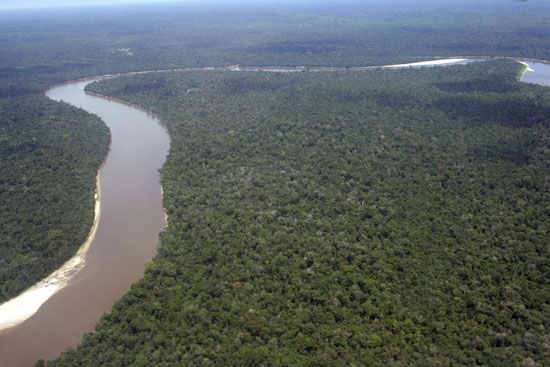
While the park is a remote and complex ecosystem, it shares many biological characteristics with the broader Amazon Basin region. The area is home to a rich variety of wildlife, including:
- Mammals: The region hosts various species such as tapirs, peccaries, and deer. Arboreal species are particularly common, including several types of monkeys like howler monkeys and spider monkeys, as well as sloths and anteaters. Large predators, such as the jaguar and ocelot, are also present but have become increasingly rare.2
- Birds: The region is exceptionally rich in birdlife, featuring vibrant species such as parrots, macaws, toucans, and various waterbirds like herons and ibises.2
- Reptiles and Aquatic Life: The rivers and streams are inhabited by alligators, turtles, and diverse fish species, while snakes such as the anaconda and boa constrictor are found in the forest environments.2
Sources
- Kukenaam Falls — Encyclopædia Britannica
- Venezuela - Relief — Encyclopædia Britannica
- Venezuela - Conservation — Encyclopædia Britannica
- Angel Falls — Encyclopædia Britannica
- Guiana Highlands — Encyclopædia Britannica
- Amazon River - Animal life — Encyclopædia Britannica
Published on · 2 min read