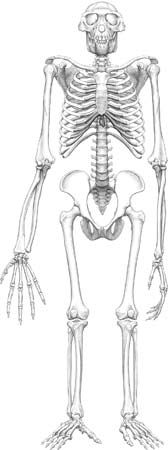
Koro Toro
The Koro Toro site in central Chad is a significant location for paleoanthropology, primarily because it provided the first evidence of an early hominin in…
How does the Koro Toro site contribute to our understanding of human evolution in Africa?
The Koro Toro site in central Chad is a significant location for paleoanthropology, primarily because it provided the first evidence of an early hominin in Central Africa.1
The site’s importance to our understanding of human evolution includes:
- Geographic Expansion: The 1995 discovery of a fossilized lower jaw, assigned to the species Australopithecus bahrelghazali, extended the known geographic range of the genus Australopithecus 2,500 km (1,500 miles) west of East Africa.1
- Species Diversity: While the remains share similarities with East African A. afarensis, the differences observed in the Koro Toro specimen were significant enough to classify it as a distinct species, highlighting the diversity within early hominin lineages.1
- Chronological Context: The fossils were found in sediments dated to approximately 3.5–3 million years ago. Additionally, more recent excavations at the site have yielded a fragmentary skull likely belonging to Homo ergaster, providing further insight into later hominin presence in the region.1
What is the significance of Koro Toro as an anthropological and archaeological site in Chad?
Koro Toro is a vital paleoanthropological site in central Chad that fundamentally reshaped our understanding of early hominin distribution. Its primary significance lies in the 1995 discovery of a lower jaw fragment, which provided the first evidence of an early hominin in Central Africa.1
Key contributions of the site include:
- Geographic Expansion: The discovery of Australopithecus bahrelghazali extended the known range of the genus Australopithecus 2,500 km (1,500 miles) west of East Africa, challenging previous assumptions that early hominin evolution was restricted to the East African Rift Valley.1
- Taxonomic Insight: While the fossils share characteristics with A. afarensis, the distinct features of the Koro Toro specimen confirmed the existence of a separate species, illustrating the diversity of the human lineage.1
- Chronological Depth: The site contains sediments dating back 3.5–3 million years. Furthermore, the recovery of a fragmentary skull attributed to Homo ergaster from more recent deposits provides evidence of later hominin activity in the region.1
What specific hominid fossils have been found at Koro Toro, and what do they tell us about our ancestors?
The Koro Toro site in central Chad has yielded two significant hominin fossil discoveries that have expanded our understanding of human evolution:
- Australopithecus bahrelghazali: Discovered in 1995, this fossil consists of a lower jaw fragment found in sediments dated to 3.5–3 million years ago. It represents the first early hominin identified in Central Africa, extending the known geographic range of the genus *Australopithecus 2,500 km (1,500 miles) west of East Africa. While it shares similarities with the East African species A. afarensis, its distinct features confirm it as a separate species, highlighting the diversity of early hominin lineages.1
- Homo ergaster: More recent excavations at the site have uncovered a fragmentary skull attributed to Homo ergaster (often referred to as African *Homo erectus).1
These findings are crucial because they demonstrate that early human ancestors were not confined to the East African Rift Valley, providing a broader spatial and temporal context for the development of the human lineage.1
When was Koro Toro discovered, and what major findings have been made there?
Koro Toro, a significant paleoanthropological site in central Chad, gained international prominence in 1995 following the discovery of a fossilized lower jaw fragment.1
Major findings at the site include:
- Australopithecus bahrelghazali: This 3.5–3 million-year-old specimen represents the first early hominin discovered in Central Africa. Its identification was groundbreaking because it extended the known geographic range of the genus *Australopithecus 2,500 km (1,500 miles) west of East Africa, challenging the long-held view that early human evolution was confined to the East African Rift Valley.1
- Homo ergaster: Excavations in more recent deposits at the site have uncovered a fragmentary skull attributed to Homo ergaster, which is considered the African form of *Homo erectus.1
These discoveries have been instrumental in the study of human evolution, as they provide evidence of a wider distribution of early hominins than previously understood.1
Sources
- Koro Toro — Encyclopædia Britannica
- Australopithecus - Early species and Australopithecus anamensis — Encyclopædia Britannica
- Tertiary Period - Primates — Encyclopædia Britannica
- Ardipithecus - Origins of Ardipithecus — Encyclopædia Britannica
Published on · 3 min read