Krakatoa
The 1883 eruption of Krakatoa was a transformative event that destroyed much of the original island, leaving behind a caldera submerged under 900 feet of…
How has Krakatoa changed since the 1883 eruption?
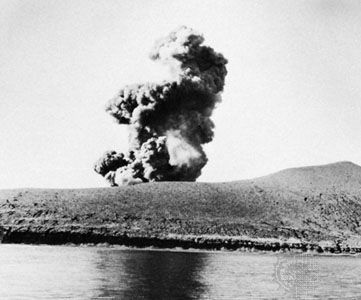
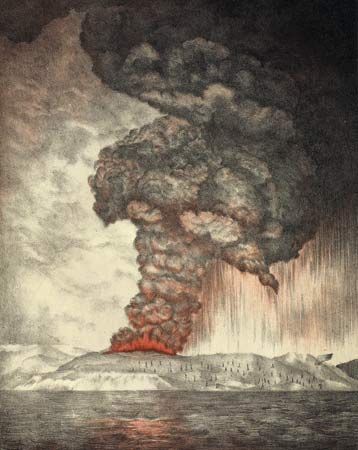
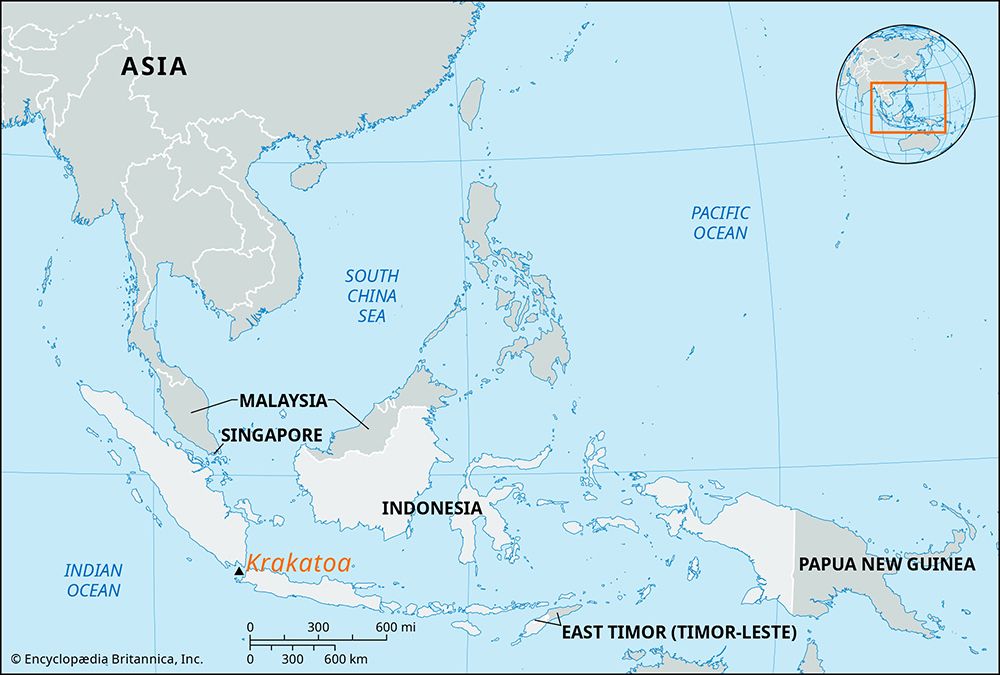
The 1883 eruption of Krakatoa was a transformative event that destroyed much of the original island, leaving behind a caldera submerged under 900 feet of water. The collapse of the volcano triggered devastating tsunamis and buried the remaining island group in sterile ash, temporarily eliminating all local life.12
In 1927, volcanic activity resumed within this caldera, leading to the emergence of a new island in 1928 known as Anak Krakatau (“Child of Krakatoa”). This new cone grew steadily over the decades, reaching an elevation of approximately 1,000 feet by 2018. However, in December 2018, a significant portion of the island collapsed into the sea during an eruptive phase, generating another deadly tsunami and drastically reducing the volcano’s height. Anak Krakatau remains a highly active volcanic complex, continuing to experience significant eruptive episodes, including notable activity in 2026.12
How has tourism been affected by Krakatoa’s volcanic activity?
Sorry, the Britannica knowledge base does not contain information regarding the specific effects of Krakatoa’s volcanic activity on tourism. While the provided text notes that recent eruptive episodes, such as those in 2026, have severely disrupted air travel in western Indonesia, it does not explicitly detail the impact on the tourism industry.2
How does Krakatoa compare to other famous volcanic eruptions in history?
The 1883 eruption of Krakatoa is categorized among the most destructive volcanic events in recorded history, primarily due to the massive tsunamis it triggered, which claimed over 36,000 lives. When compared to other major historical eruptions, its impact and characteristics provide significant context:13
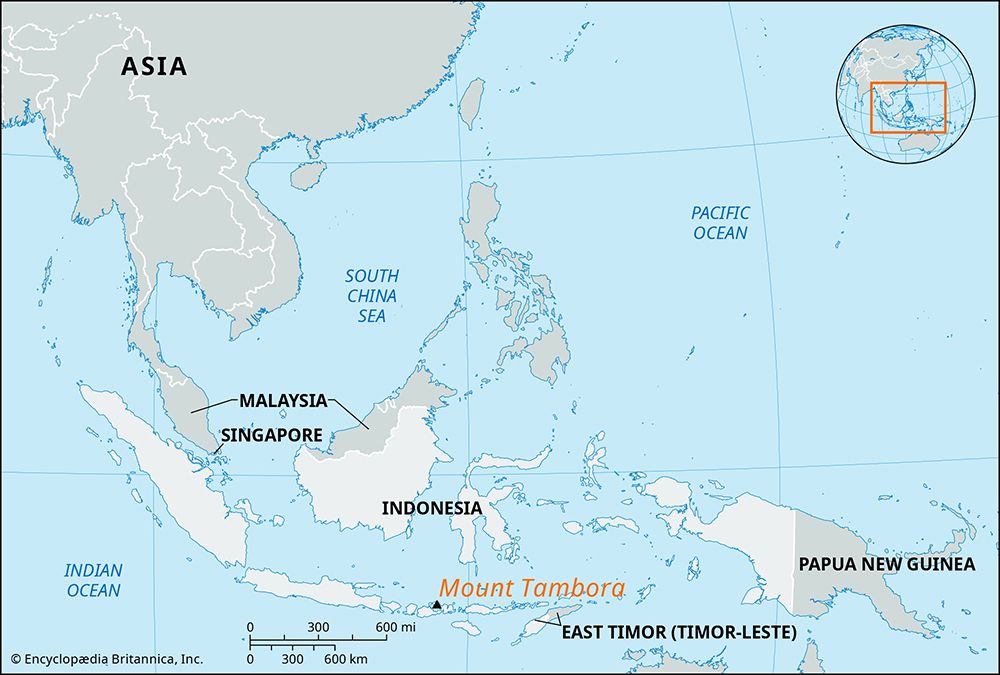
- Mount Tambora (1815): This eruption was larger than Krakatoa, expelling approximately 50 cubic km of magma compared to Krakatoa’s 18 cubic km. While Krakatoa’s death toll was high, Tambora caused an estimated 92,000 deaths, largely due to subsequent famine and disease.4
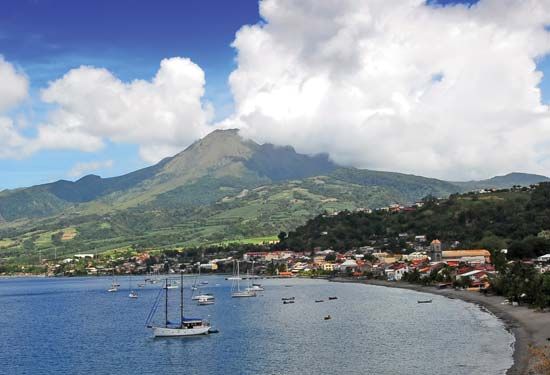
- Mount Pelée (1902): Unlike the broad regional devastation of Krakatoa, this eruption was characterized by a high-velocity pyroclastic flow that incinerated the town of Saint-Pierre, killing nearly 29,000 people in minutes.4
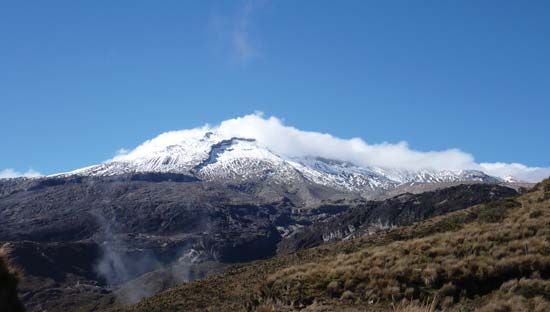
- Mount Ruiz (1985): This event highlights the danger of mudflows caused by melting glacial ice. Despite being a smaller eruption than Krakatoa, it resulted in 25,000 deaths when mudflows buried the town of Armero.4
Like Tambora and Pinatubo, Krakatoa’s high ash clouds injected aerosols into the stratosphere, which are believed to have lowered global temperatures by approximately 0.5 °C for several years.2
What role did Krakatoa play in Indonesian mythology and culture before and after the eruption?
The provided search results do not contain information regarding the role of Krakatoa in Indonesian mythology or culture. The available documentation focuses exclusively on the geological history, the mechanics of the 1883 and 2018 eruptions, and the physical evolution of the Krakatoa volcanic complex and Anak Krakatau.
Because the Britannica knowledge base does not currently provide details on the cultural or mythological significance of the volcano, I cannot offer an analysis of its role in local belief systems.
Sources
- Krakatoa: Top Questions — Encyclopædia Britannica
- Krakatoa — Encyclopædia Britannica
- volcano - Long-term environmental effects — Encyclopædia Britannica
- volcano - Four of the worst eruptions in history — Encyclopædia Britannica
Published on · 2 min read