Mount Pelée
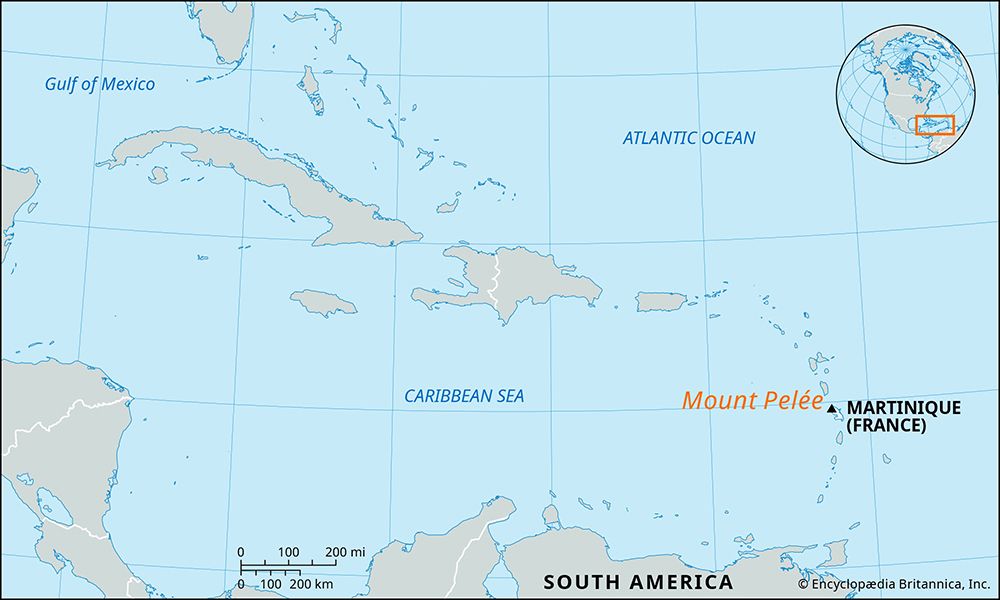
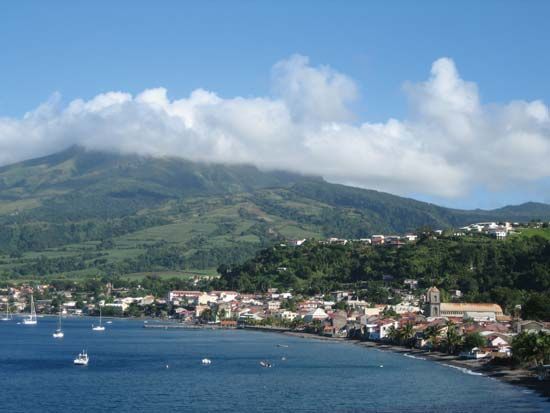
Mount Pelée is an active volcanic mountain located on the Caribbean island of Martinique. Reaching an elevation of 4,583 feet (1,397 meters), its name is…
What is Mount Pelée?
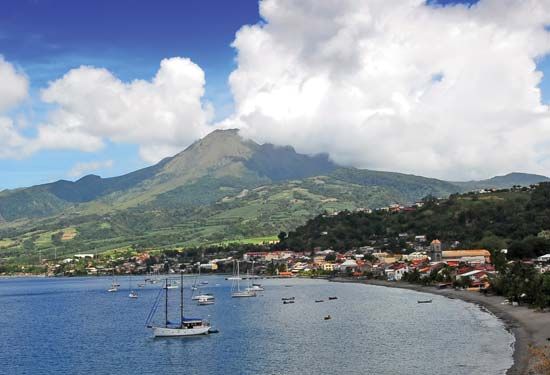
Mount Pelée is an active volcanic mountain located on the Caribbean island of Martinique. Reaching an elevation of 4,583 feet (1,397 meters), its name is derived from a French term meaning “Bald,” and the mountain is composed of layers of volcanic ash and lava.1
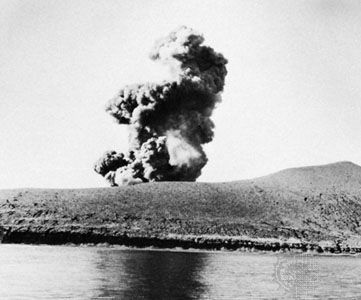
The volcano is historically significant for its catastrophic eruption on May 8, 1902, which destroyed the port of Saint-Pierre and resulted in the deaths of approximately 30,000 people. This event was so distinctive that the term “pelean” was adopted to describe eruptions characterized by the release of ash, gas, and deadly nuée ardente (“fiery cloud”). While minor eruptions were recorded in 1792, 1851, and 1929, the 1902 disaster remains its most infamous occurrence.1
What is a nuée ardente?
A nuée ardente (French for “glowing cloud”) is a highly destructive, fast-moving, and incandescent mass of gas-enveloped volcanic particles. These phenomena are a specific type of pyroclastic flow, which are considered the most dangerous and lethal aspects of explosive volcanism.234
Key characteristics of a nuée ardente include:
- Composition: A fluidized emulsion of volcanic fragments, eruption gases, and entrapped air.43
- Mobility: They are dense enough to hug the ground but possess low enough viscosity to travel at high speeds, often exceeding 100 km (60 miles) per hour and reaching up to 160 km (100 miles) per hour.43
- Temperature: The internal gases and particles can reach temperatures between 100 and 700 °C (212 to 1,300 °F), incinerating nearly everything in their path.43
- Behavior: Unlike lava flows, which are composed of viscous molten rock and move slowly, these flows are turbulent and can travel over uneven terrain or even uphill due to their high velocity and gas expansion.3
The term is famously associated with the 1902 eruption of Mount Pelée on the island of Martinique, which destroyed the city of Saint-Pierre.35
How do volcanic eruptions affect the surrounding environment?
Volcanic eruptions exert profound influences on the surrounding environment, ranging from immediate, localized destruction to long-term global climatic shifts.
Immediate Hazards
Explosive eruptions generate several lethal hazards, including pyroclastic flows—turbulent, high-speed clouds of hot gas and rock fragments that incinerate everything in their path. Other immediate threats include lava flows, tsunamis, mudflows, and ash falls, which can cause structural collapse and widespread crop failure.6738
Long-Term Environmental and Climatic Effects
While destructive, volcanic processes are fundamental to the evolution of Earth’s oceans, atmosphere, and continents. Over time, volcanic ash weathers into nutrient-rich soils that support dense populations and agriculture.98
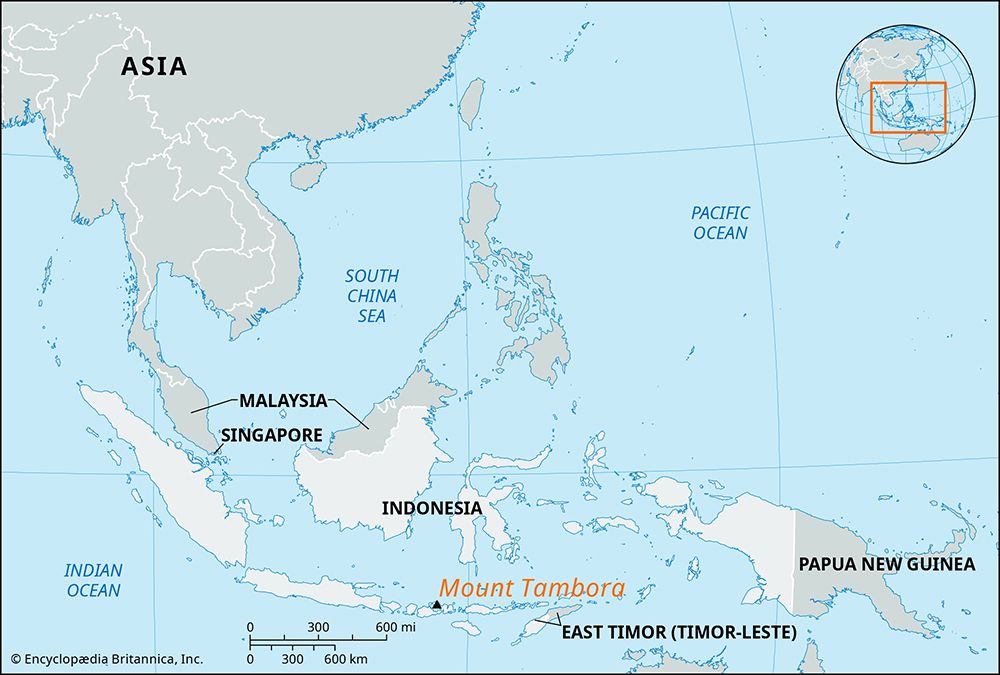
Conversely, large eruptions can impact global climate. High ash clouds rich in sulfur dioxide inject aerosol droplets of sulfuric acid into the stratosphere, which can reduce solar radiation reaching the surface and lower global temperatures for several years. For example, the 1815 eruption of Mount Tambora led to the “year without a summer” in 1816. Additionally, the release of carbon dioxide over geologic timescales contributes to long-term atmospheric chemistry changes.910
What are the different types of volcanoes?
Volcanoes are categorized based on their shape, eruptive habits, and the composition of their volcanic products. While there are over 1,500 potentially active volcanic areas, most can be classified into nine primary categories.12
Major Volcano Types
- Stratovolcanoes: Also known as composite volcanoes, these are steep, symmetrical cones built by alternating layers of ash and lava. They are the most common type and often result from moderately explosive eruptions.1312
- Shield volcanoes: These are large, broad, dome-shaped mountains with gentle slopes, formed by the accumulation of fluid lava flows over long periods.8
- Pyroclastic cones: Often called cinder cones, these are smaller, conical hills built from loose pyroclastic fragments (cinders) that accumulate around a volcanic vent.1412
- Submarine volcanoes: These form underwater and often feature steeper slopes than land-based counterparts due to rapid cooling by water.1512
- Volcanic fields: Areas containing multiple small vents that erupt only once or a few times, often resulting in clusters of small cones rather than a single large edifice.1512
- Calderas: Large, basin-shaped depressions formed when a volcano collapses, typically following a massive explosive eruption.1512
- Complex and compound volcanoes: These result from changing eruptive habits or multiple vent locations over time, leading to a mixture of landforms.1512
- Lava domes: Steep-sided mounds formed when highly viscous lava is too thick to flow away and instead piles up over the vent.1617
- Fissure vents: Long cracks in the Earth’s crust that erupt fluid lava, often building lava plateaus or low ridges.1512
Sources
- Mount Pelée — Encyclopædia Britannica
- nuée ardente — Encyclopædia Britannica
- volcano - Pyroclastic flows — Encyclopædia Britannica
- pyroclastic flow — Encyclopædia Britannica
- volcano - Six types of eruptions — Encyclopædia Britannica
- volcano - Long-term environmental effects — Encyclopædia Britannica
- Climate change - Volcanic activity — Encyclopædia Britannica
- volcano - Determinants of size and shape — Encyclopædia Britannica
- volcano - Lava , gas, and other hazards — Encyclopædia Britannica
- volcano - Ash falls — Encyclopædia Britannica
- volcano - Submarine volcanoes — Encyclopædia Britannica
- volcano - Shield volcanoes — Encyclopædia Britannica
- cinder cone — Encyclopædia Britannica
- volcano - Major types — Encyclopædia Britannica
- volcano - Stratovolcanoes — Encyclopædia Britannica
- volcanic dome — Encyclopædia Britannica
- volcano - Lava domes — Encyclopædia Britannica
Published on · 4 min read