Krishna River
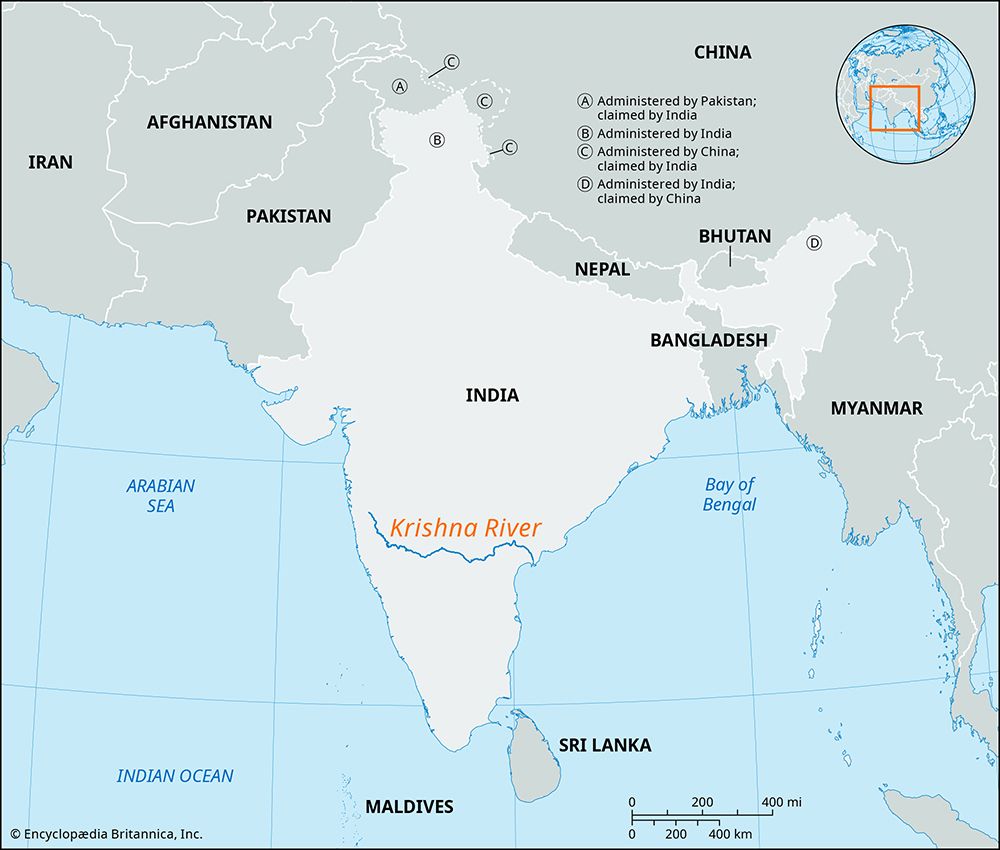
The Krishna River is one of the longest rivers in India, flowing through the states of Maharashtra, Karnataka, Telangana, and Andhra Pradesh before reaching…
What are the major tributaries of the Krishna River?
The Krishna River is one of the longest rivers in India, flowing through the states of Maharashtra, Karnataka, Telangana, and Andhra Pradesh before reaching the Bay of Bengal.1
The two largest tributaries of the Krishna River are:
- Bhima River: Located to the north, this major tributary rises in the Western Ghats and flows southeastward through Maharashtra and Karnataka. Its own primary tributaries include the Sina and Nira rivers.12
- Tungabhadra River: Located to the south, this significant tributary features a dam at Hospet that supports hydroelectric power generation.1
What are some of the important cities located along the banks of the Krishna River?
Several significant cities and towns are situated along the banks of the Krishna River as it traverses south-central India. Key locations include:
- Mahabaleshwar: Located in the Western Ghats of Maharashtra, this town is near the river’s source.1
- Wai: A town in Maharashtra where the river flows eastward during the early stages of its course.1
- Sangli: A prominent city in Maharashtra located along the river’s southeasterly path toward the Karnataka border.1
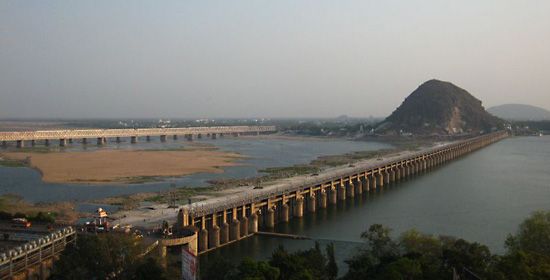
- Vijayawada: Situated in Andhra Pradesh, this major city serves as the head of the river’s delta. It is a significant road and rail junction and a center for pilgrimage, featuring the Prakasam Barrage, which is vital for regional irrigation.13
Additionally, the river’s basin supports various other settlements, and its delta region includes important urban centers such as Machilipatnam and Gudivada, which are central to the economy of the surrounding district.2
What are some major dams and hydroelectric projects built on the Krishna River?
The Krishna River is a vital resource for south-central India, supporting several major multipurpose projects that provide irrigation and hydroelectric power.
Key dams and hydroelectric installations on the river and its tributaries include:
- Nagarjuna Sagar Project: Inaugurated in 1967, this major project is located on the Krishna River along the border of Telangana and Andhra Pradesh. It is essential for regional irrigation and electricity generation.15
- Srisailam Dam: Also situated on the border of Telangana and Andhra Pradesh, this facility is a significant hydroelectric installation on the main stem of the Krishna River.1
- Tungabhadra Project: Located on the Tungabhadra River, a major tributary of the Krishna, this project includes a dam at Hospet completed in 1957. It serves as a critical source for flood control, irrigation, and power generation.15
- Vijayawada Weir: While primarily a control structure rather than a large-scale hydroelectric dam, this weir at Vijayawada is crucial for managing water flow into the delta’s extensive canal system.1
Where does the Krishna River originate, and what regions does it flow through in India?
The Krishna River originates in the Western Ghats range near the town of Mahabaleshwar in the state of Maharashtra, India, situated not far from the Arabian Sea coast.1
Spanning approximately 800 miles (1,290 km), the river flows through several Indian states:
- Maharashtra: It begins its course, flowing east to Wai and then southeast toward the Karnataka border.1
- Karnataka: The river follows an irregular course across the north-central part of the state.1
- Telangana: It enters the southwestern region of the state, eventually forming part of the border with Andhra Pradesh.1
- Andhra Pradesh: The river flows into the state, reaching its delta head at Vijayawada before continuing southeast and south to empty into the Bay of Bengal.1
We could dive deeper into the seasonal monsoon patterns that influence the river’s flow or explore the geography of its fertile delta.
Sources
- Krishna River — Encyclopædia Britannica
- Bhima River — Encyclopædia Britannica
- Vijayawada — Encyclopædia Britannica
- Krishna — Encyclopædia Britannica
- water infrastructure in India - Dams — Encyclopædia Britannica
Published on · 3 min read