Kollidam River
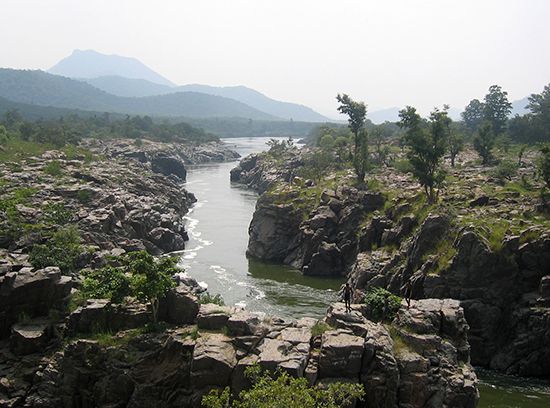
The Kollidam River (also known as the Coleroon River) is a major northern stream of the Kaveri River delta in the state of Tamil Nadu, southeastern India.
What is Kollidam River?
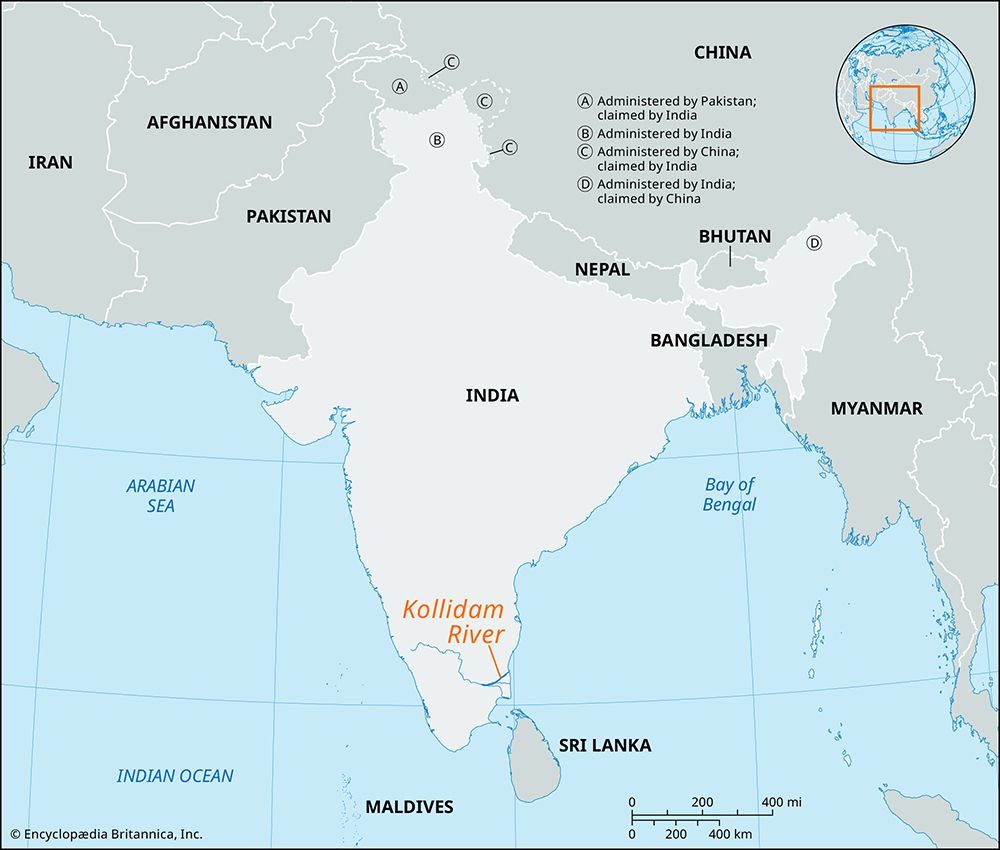
The Kollidam River (also known as the Coleroon River) is a major northern stream of the Kaveri River delta in the state of Tamil Nadu, southeastern India.12
Formed by the northern bifurcation of the Kaveri just west of Srirangam, the river flows for approximately 95 miles (150 km) in an easterly and northeasterly direction before emptying into the Bay of Bengal the Bay of Bengal. It serves as the primary northern channel of the Kaveri delta, a region renowned for its dense population and high agricultural productivity, particularly in rice cultivation.1
To support this vital agricultural area, the river was dammed between 1836 and 1838 to prevent silting and expand irrigation capabilities. The town of Chidambaram is situated along its banks.12
Why is the Kaveri River considered sacred in India?
The Kaveri River is deeply revered in India, where it is known to devout Hindus as Daksina Ganga (“Ganges of the South”). Its entire course is considered holy ground, and the river is celebrated for its sanctity and beauty in Tamil literature.2
The river’s sacred status is further reinforced by the presence of significant religious sites along its path. For instance, the river forms the sacred islands of Srirangapatnam and Sivasamudram in Karnataka. Additionally, Srirangam—a major pilgrimage center located on an island in the Kaveri—is regarded by many as bhuloka vaikuntham, or “heaven on earth”. As with many rivers in India, the Kaveri is central to the spiritual landscape, where its waters and the sites along its banks are deeply intertwined with myths, pilgrimage, and the cultural identity of the region.21
How do dams and anicuts help with irrigation in river deltas?
Dams and anicuts (weirs) are essential components of water infrastructure that regulate river flow to support agriculture, particularly in deltaic regions.
Functions in Irrigation
- Flow Regulation: Dams impound water in reservoirs, allowing for a controlled release that ensures a steady supply of water for irrigation throughout the year, rather than relying solely on seasonal rainfall.24
- Water Diversion: Anicuts and dams are strategically placed to divert water into canal networks, which distribute the resource across vast agricultural fields.2
- Silting Prevention: By managing the velocity and flow of water, these structures help prevent the accumulation of silt in irrigation channels, which is critical for maintaining the functionality of older canal systems.2
- Expansion of Arable Land: Projects like the Mettur Dam or the Grand Anicut have historically transformed regions into productive agricultural hubs by extending irrigation to areas that would otherwise lack sufficient water.2
Beyond irrigation, these structures often serve multipurpose roles, including flood control, the generation of hydroelectric power, and the provision of drinking water.24
What are some other major river deltas in India?
In addition to the Ganges-Brahmaputra delta, which is the largest in India, the eastern coastal plain features several other significant river deltas. These regions are characterized by deep sedimentation and are vital for agriculture in the country.5
The major deltas along India’s eastern coast, listed from south to north, include:
- Kaveri Delta: Located in the south, this delta is a highly fertile region that has long been central to the agricultural and cultural history of the area.5
- Krishna-Godavari Delta: These two rivers form a continuous, highly productive deltaic system. The Krishna River utilizes a weir at Vijayawada to control water flow into an extensive canal network for irrigation.56
- Mahanadi Delta: Situated in Odisha, this delta was historically prone to severe flooding, earning the river the nickname “the sorrow of Odisha.” The construction of the Hirakud Dam has since helped control these floods and supports irrigation and power generation across the region.57
These deltas are essential to India’s agricultural output, though they face ongoing challenges related to water management, seasonal monsoon fluctuations, and environmental changes.8
Sources
- Kollidam River — Encyclopædia Britannica
- Kaveri River — Encyclopædia Britannica
- Hinduism - Myths of holy rivers and holy places — Encyclopædia Britannica
- water infrastructure in India - Dams — Encyclopædia Britannica
- India - The Ganges-Brahmaputra river system — Encyclopædia Britannica
- India - Coastal areas — Encyclopædia Britannica
- Ganges River - Physiography — Encyclopædia Britannica
- Krishna River — Encyclopædia Britannica
- Mahanadi River — Encyclopædia Britannica
- economy of India - Agriculture — Encyclopædia Britannica
- river - Morphology of deltas — Encyclopædia Britannica
Published on · 3 min read