Kudzu
Kudzu (Pueraria montana) was introduced to North America in the late 19th century. Its introduction was deliberate, driven by two primary motivations:
How and why was kudzu introduced to the United States?
Kudzu (Pueraria montana) was introduced to North America in the late 19th century. Its introduction was deliberate, driven by two primary motivations:12
- Ornamental Use: It was initially brought to the United States as an attractive plant for decorative purposes in gardens.12
- Erosion Control: Farmers were later encouraged to plant the vine to anchor steep banks of soil, as its rapid growth and extensive root system were believed to be effective in preventing erosion.12
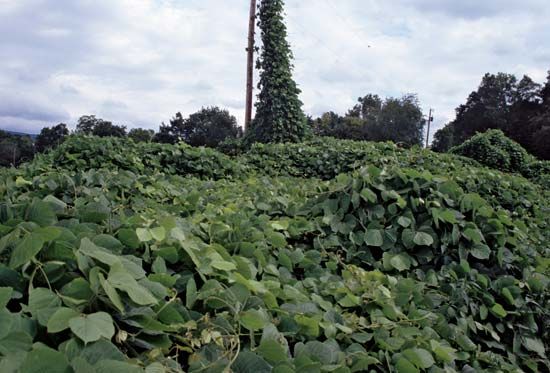
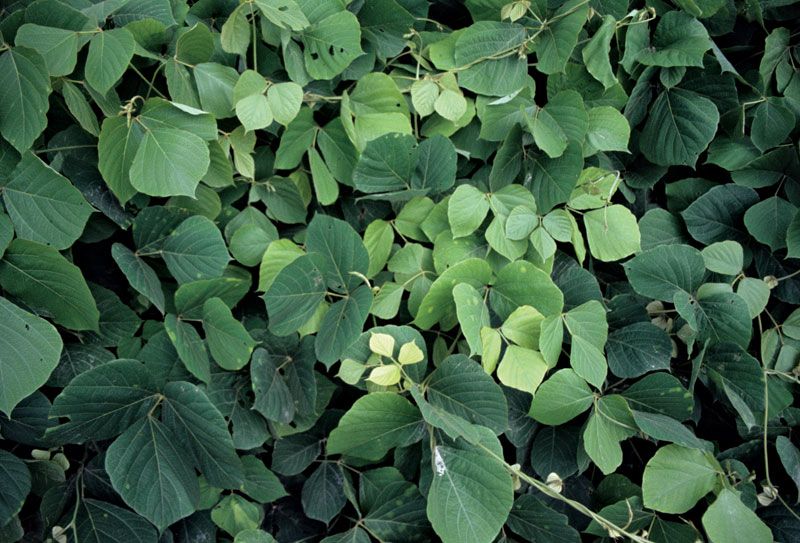
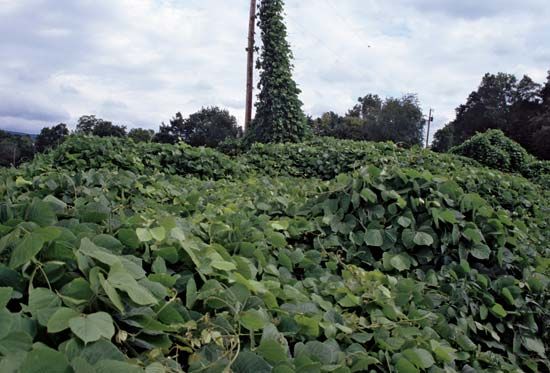
Despite these intended benefits, kudzu has become a rampant invasive species in the southeastern United States. Often called “the vine that ate the South,” it spreads aggressively over trees and shrubs, depriving native plants of sunlight and often killing them in the process.12
How has kudzu affected agriculture and forestry in the southeastern United States?
Kudzu has significantly impacted the southeastern United States by acting as an aggressive invasive species that disrupts local ecosystems and land management efforts.1
Its primary negative effects on forestry and agriculture include:
- Destruction of Vegetation: The vine grows rapidly, sometimes reaching 18 meters (60 feet) in a single season. It spreads over trees and shrubs, effectively smothering them by blocking necessary sunlight, which often leads to the death of the host plants.1
- Management Challenges: Because it spreads vegetatively through stolons and rhizomes that root to form new clonal plants, it is notoriously difficult to eradicate. Controlling the vine requires intensive efforts, including the use of herbicide sprays, consistent mowing, manual cutting, and the introduction of livestock like goats and sheep to graze the foliage.1
While kudzu was originally promoted as a useful fodder crop for livestock and a tool for soil stabilization, its unchecked growth has made it a major ecological burden in the region.1
What are the main characteristics of kudzu that make it invasive?
Kudzu (Pueraria montana) possesses several biological characteristics that contribute to its status as a highly aggressive invasive species:
- Rapid Growth: It is an exceptionally fast-growing, woody vine capable of extending up to 18 meters (60 feet) in a single growing season.1
- Vegetative Reproduction: The plant spreads through stolons and rhizomes that root into the ground, allowing it to form new clonal plants and expand its territory effectively.1
- Resilient Root System: It features a substantial taproot that allows the plant to survive even when harsh northern winters kill off its above-ground stems.1
- Smothering Capability: Its tendency to grow over trees and shrubs allows it to outcompete native vegetation for sunlight, often resulting in the death of the host plants.1
These traits, combined with its ability to thrive in various environments, make it difficult to manage and eradicate once established.1
What methods are used to control or eradicate kudzu?
Controlling or eradicating kudzu is a challenging task due to the plant’s aggressive growth and resilient root system. Because it spreads through stolons and rhizomes, simply removing the surface vines is often insufficient.
Effective management strategies include:
- Herbicide Application: The use of herbicide sprays is a common method to target and weaken the plant’s growth.1
- Mechanical Removal: Manual cutting and consistent mowing can help suppress the spread of the vine, though these methods require persistence to prevent regrowth from the taproot.1
- Biological Control: Grazing by livestock, specifically goats and sheep, is an effective way to manage kudzu foliage and reduce the plant’s overall vigor.1
Because northern winters typically only kill the above-ground stems while leaving the roots intact, long-term management requires a combination of these techniques to successfully exhaust the plant’s energy reserves.1
Sources
- kudzu — Encyclopædia Britannica
- invasive species - A global problem — Encyclopædia Britannica
Published on · 3 min read